Grove Center

  • Home
  • About Us
    • Our Philosophy
    • Hospital Policy
    • Working Hours
    • Our Team
  • Services
  • Emergencies
  • Contacts
    • New Client
    • Pet History
  • Blog
  • Home
  • About Us
    • Our Philosophy
    • Hospital Policy
    • Working Hours
    • Our Team
  • Services
  • Emergencies
  • Contacts
    • New Client
    • Pet History
  • Blog

Grove Center

Grove Center

  • Home
  • About Us
    • Our Philosophy
    • Hospital Policy
    • Working Hours
    • Our Team
  • Services
  • Emergencies
  • Contacts
    • New Client
    • Pet History
  • Blog
dogs Tag
Home dogs Page 13

Tag: dogs

8087622
July 23, 2024
grovecenter grovecenterAllDogs

Canine Heartworms and Preventing Disease  

Canine heartworms, Dirofilaria immitis, are parasitic worms that pose a serious threat to dogs. These long, slender worms live in the pulmonary arteries (and, occasionally, within the heart) of dogs and can measure up to a foot in length. They can cause substantial damage to the lungs and heart.

Adult heartworms cause inflammation of the blood vessels in the lungs, resulting in respiratory issues and pulmonary hypertension. In some cases, this leads to weight loss, weakness, right-sided congestive heart failure, reduced quality of life, and even death.

The prevention of heartworms and early detection are crucial in managing heartworm disease.

Mosquitoes and the Heartworm Lifecycle

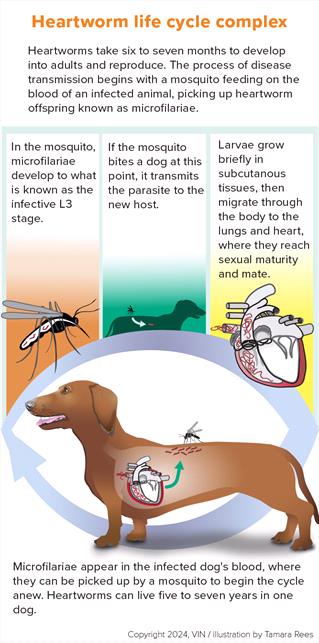
Mosquitos are vectors of heartworm disease. A vector is a carrier and transmitter of disease from an infected individual to a non-infected individual. Certain species of mosquito can ingest young heartworms, called microfilariae when they feed on an infected animal. Once inside the mosquito, the microfilariae develop into third-stage larvae (known as L3) over a few weeks, provided that the environmental conditions are conducive (temperatures above 58oF). The larvae pass through the puncture wound the mosquito makes when it bites another animal.  

The larvae grow under the skin of the newly infected animal over several weeks, progressing through additional larval stages. At a certain point, the larvae enter the bloodstream and float into the pulmonary arteries (the arteries carrying blood from the heart to the lungs). Here, they mature into adults. It takes about six to seven months for the larvae to reach adulthood. Adult heartworms mate, and then the females begin to release tiny larvae, the microfilariae, back into the bloodstream, continuing their lifecycle.
Prevention is Key 

Preventing heartworms is much easier (especially for your dog) than having to treat an active heartworm infection.

Studies show that exposure to heartworm depends on factors such as:

  •  The presence of wild canine populations (foxes, coyotes, wolves) in the surrounding area can continue the spread of heartworm.
  •  Regional differences in climate and ecosystems (elevation, humidity, rainfall, temperature)

The Prevalence of Heartworms Around the World

Heartworms exist in many parts of the world, but the prevalence greatly varies. In warmer climates with higher mosquito populations, such as tropical and subtropical areas, the risk of heartworm transmission is higher. These areas make excellent habitats for mosquitoes and the development of heartworm larvae, so dogs living in these regions are at a greater risk of heartworms. On the other hand, there are fewer heartworm infections in cooler or drier regions with smaller mosquito populations.

The travel, relocation, and presence of infected animals can allow heartworms to start infecting animals where they are less common. Climate change (and temperature increase) is also expanding mosquito ranges, creating longer active seasons and better environmental conditions for larvae.

Environmental Considerations

More recent recommendations for preventing heartworm infections advise reducing mosquito bites.  This can be done by avoiding places with heavy mosquito populations when possible to reduce the chances of being bitten and contracting heartworms (for example, some studies have shown that indoor dogs in high-risk areas tend to have fewer infections than outdoor dogs). 
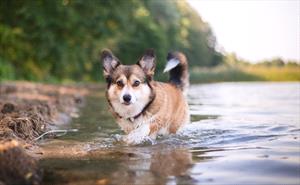
Avoid visiting permanent and semi-permanent (seasonal) bodies of water like lakes, streams, and floodplain areas with your dog, especially when large mosquito hatches are taking place (usually in warmer, humid weather). Check around your home for areas with standing water and eliminate containers or reservoirs that may be prime real estate for mosquito larvae.

There may always be an ideal climate for mosquitoes, and other preventative methods such as lawn alteration, porch nets, and other mosquito barriers may be helpful, depending on your location. Talk to your local health department if you have concerns about mosquitoes on your property and what you can do to help control them.

Preventative Medications

Heartworm preventatives are prescribed by your veterinarian and come in oral, topical, and injectable forms. As mentioned before, preventing heartworms is much easier than treating them, and the American Heartworm Society recommends FDA-approved heartworm preventatives year-round.

In areas where mosquitoes are endemic (native or regularly present), your dog can be infected if just one preventative dose is missed. The risk varies depending on your location, and even people who live in places with cold winters should give heartworm preventatives year-round for the best possible prevention.  

Detecting Heartworm Infection

Blood tests for heartworm infections are recommended yearly for all dogs over seven months. If you do not give preventatives regularly every month or if you switch preventatives, more frequent testing may be recommended. If your dog has tested positive for heartworms, your veterinarian will discuss the treatment options available.  

LEARN MORE
5186764
July 23, 2024
grovecenter grovecenterAllDogs

Body Language of Dogs

Body language in dogs is all about communication. Since dogs can’t form words, they use body language to “talk.” This includes different body postures, facial expressions, movements, and types of barks. These communication behaviors are used to respond to their surroundings, convey messages about ongoing situations, or to respond to someone else’s body language. A dog’s body language is often instinctive and happens naturally, such as trying to settle down a tense environment through actions or responding to an invitation to play. 

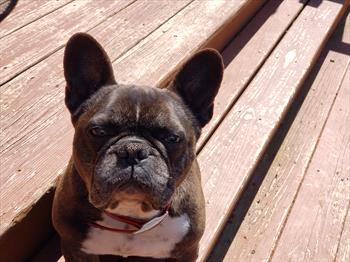
Photo courtesy of Dr. Teri Ann Oursler

This form of communication can be used between dogs, during dog and human interactions, or between dogs and other animals. Knowing what your dog is communicating can help you understand his needs better and keep him comfortable in any given situation.

Below are some common types of body language that dogs use. It is important to recognize that many of these types of body language can mean different things in different settings and should be used in context of whatever is happening in the moment. A common example of this is panting, which could mean “I am nervous,” or “Gosh, it’s hot out,” or even “I’m tired.”

Diffusive Behaviors

These are types of body languages that dogs use to avoid conflict, help diffuse a potentially intense or threatening situation, and keep interactions from getting out of hand. Some refer to these behaviors as calming signals because, in a way, they signal to others such sentiments as “everything is ok,” “things have gotten a little too tense,” or “I am not a threat.” That being said, these types of behaviors indicate more than just calming; they communicate both how the dog is feeling and her ability to react and interact with others.

Be aware that some of these behaviors can be misinterpreted as signs of guilt, such as the slow, creeping walk towards or away from you when you correct your dog for doing something wrong. This behavior does not mean your dog is acting guilty for getting into the trash. It means she is trying to diffuse the situation and lessen the intensity of your correction. She honestly may have no clue at all why you are upset with her, and she just wants you to stop yelling.

Happy/Relaxed

  • Keeping the mouth open, often with the tongue lolling out, is typically a very relaxed posture for a dog.
  • Bowing down on the front legs, often known as a play bow, can be an invitation to play or a diffusive tool indicating that the dog is not a threat to someone or something else.
  • Tail wagging can often be content, happy, or excited body language. In certain settings, it’s important to know that tail wagging can indicate nervousness, anxiety, or an effort to diffuse a tense situation. Be mindful of what else is happening in the dog’s environment and remember that a wagging tail does not always mean a happy dog. 

Anxiety/Fear/Worry

  • Cowering or making the body small, and crouching low to the ground can be a sign of fear.
  • Yawning frequently, especially when not obviously tired can be a sign of stress, fear, or anxiety. It can be a way to diffuse a tense situation the dog either finds himself in the middle of or in his immediate surroundings (e.g., other dogs fighting, intense talking amongst a dog’s owners, or being spoken to harshly by an owner).
  • Licking the lips or nose, even when no food or water is around, can be a sign of anxiety or fear. This is frequently used as a diffusive behavior.
  • Panting but not interested in water, or hot, can be a sign of fear, anxiety, or stress.
  • Combination of the ears positioned low and out to the side and the pet’s brows down or furrowed can be seen with anxiety or worry. This can often occur with other postures such as lowering the head and neck, and keeping the mouth closed. Be aware that lowering the head, neck, and ears can also be a sign of assertiveness or aggression in really tense situations, so assess what else is happening.
  • Creeping around or moving slowly when walking can be a sign of fear or anxiety. It is frequently a diffusive signal. This type of walking can also be a hunting maneuver, such as if a dog has spotted potential prey. Moving away quickly and darting around is also a sign of anxiety or fear.
  • Appearing on alert and trying to look around at everything quickly is a sign of anxiety or fear.
  • Unwillingness to eat or take a treat during a potentially stressful situation is a common sign that a dog is anxious or afraid.
  • Pacing around and unwillingness to settle down in one place can be a sign of anxiety.  It can also be a sign of excitement and happiness.
  • Averting the eyes, turning the head away or to the side can be a sign of anxiety.  This can also be a diffusive tool as well, to avoid conflict or help diffuse a situation.
  • Pausing, holding position, or freezing can be a hunting behavior (sometimes called pointing), a sign of anxiety or uncertainty, or a diffusive behavior.
  • Tail tucked between the legs is often a sign of fear or anxiety and can occasionally be a diffusive behavior.
  • Sniffing or snuffling along the ground can mean several things; it is often a way for dogs to get a feel for the environment, follow the trail of a recent inhabitant, discover signals left behind by other dogs or animals, or just enjoy the delights of nature. It can also be a sign of anxiety and a diffusive tool, such as when being approached by someone or something that may be a potential threat.
  • Raising a front paw can be a diffusive behavior or indicate anxiety/stress.
  • Rolling onto the back is often a sign of fear, although the occasional very confident dog may have learned to do so in order to get tummy rubs.
  • Barking or whining could be due to fear, anxiety, or being excited and worked up. Growling could be assertiveness and/or aggression, or fear. High-pitched barking often means the dog is too excited and is vocalizing to try to calm herself down. Barking can also serve as a warning that the dog is too scared or too aggressive and a bite may come next.

 Assertiveness and Aggression

These types of body language behaviors may occur in a dog attempting to use diffusive behavior that has been ignored, or may occur without initial signals such as in an overly excited/worked up or aggressive dog on high alert. Dogs that are too worked up or excited are said to be highly aroused. Assertive or aggressive posturing can frequently be seen in dogs exhibiting these body languages. Often the more aroused the dog, the more intensely she will respond to perceived threats or issues in the environment.

  • Direct eye contact is the most common initial body signal for displaying assertiveness or aggression, often when a dog is in a threatening situation. Assertiveness in combination with aggression is not always the case, of course, because your own dog may stare directly at you with his “sad, puppy dog eyes” when he wants something. Thus, other body signals or the situation itself should be evaluated (e.g., a new dog showing up) before determining if aggression is involved. In other words, a confident dog can be assertive and use body language to get what he wants without demonstrating aggression, which involves behavior that can result in damage to someone else.
  • Pulling the lips back and displaying teeth can also be a signal of assertiveness or aggression.
  • As the dog’s perceived threat continues, holding the head, ears, and neck up initially may be seen (it makes the dog appear bigger to the threat), but lowering the head and flattening the ears can be a signal that the dog feels the threat is worsening and the problem is escalating. This progression is an instinctive way to appear even larger and to protect important organs from attack.
  • The tail held straight up or curved over the back can sometimes mean a high alert or a threatening situation is occurring. Slow tail movements or rapid wagging that looks more like vibrating (known as flagging) can also be a sign the dog is feeling threatened and responding in an assertive or aggressive manner.
  • The dog’s weight may appear shifted toward the front of his body, which allows for quick action if needed.
  • The hair along the dog’s back may be standing on end, sometimes referred to as raised hackles. This can be an unconscious way of making the dog appear larger and more threatening. Hair standing on end indicates high alert and increased arousal, so it can sometimes be seen during intense play without any aggression.

A Note about Snapping and Biting

Bites have different degrees of severity, but a bite is still a bite even if skin is not broken. A dog may snap at something without making contact; this is generally the dog’s effort at communicating a more intense warning. In this case, anxiety, fear, or aggression have been occurring and the signals have gone unnoticed. It is important to understand that generally, the dog is the one who has decided not to make contact or cause harm. Dogs are fast and can bite hard when they feel it is necessary, so take this warning snap seriously.

When an actual bite occurs, again, degrees of severity exist. Dogs can bite without drawing blood, bite superficially, or in more highly aroused states, give multiple and/or deep bites. Bites that occur without drawing blood are likely inhibited by the dog, meaning she held herself back from inflicting damage. It is important to understand that these bites and other superficial ones are still bites without major harm. They are likely to result in worse bites in the future if the dog doesn’t receive the help needed to move past the cause for the biting. Multiple and/or deep bites, those with no inhibition from the dog, means the dog bit without thought, acting on reaction alone.  Any snaps or bites require prompt assessment and assistance for the behavior issue.

LEARN MORE
6259502
July 23, 2024
grovecenter grovecenterAllDogs

Bite Levels in Dogs

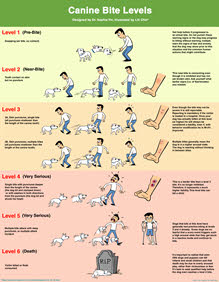
One way to find out how serious a bite may be is to acknowledge that different levels of bites exist. Bite levels range from minor to so severe they lead to death. Dr. Ian Dunbar first developed this bite levels system and Dr. Sophia Yin created a modified description of the levels.

Level 1 (pre-bite)

The dog snaps or air bites but makes no contact with the person. People tend to say, “The dog tried to bite me but I moved away.” Humans have slow reactions compared to the speed of a biting dog and dogs have good aim when trying to grab things. If the dog actually meant to bite rather than warn, it would have succeeded. This air snap indicates there were earlier signs of the dog’s displeasure or fear. Owners should get help before this pre-bite behavior progresses to an actual bite. Avoid punishing warning signs or the dog may progress to biting without warning. Instead, learn the signs of fear and anxiety that the dog probably showed prior to this situation and learn to spot the common inappropriate human actions that may have contributed to the snap.

Level 2 (near-bite or highly inhibited bite)

The dog snaps and makes tooth contact on skin but there’s no actual puncture. Often the dog runs up to or lunges for a person but just puts front teeth in contact with the skin in a sort of near-bite. In other cases, the dog actually opens his mouth and clamps but in an inhibited manner such that no skin is broken. Again the owners should ask, “What earlier signs did we miss to warn us that this could happen?” The owners should realize, the near-bite or inhibited bite could turn into a real bite down the road.

Level 3A

The dog bites once and punctures skin, but the puncture is shallower than the length of the canine tooth. Even though this bite may not be severe, it is still reportable. And painful, too. Reporting is mandatory if the victim is treated in a hospital. Once your dog has actually bitten at this level (or higher) he will always be considered a liability, even if, with behavior modification, he is 99.9% improved.

Level 3B

The dog bites multiple times leaving skin punctures shallower than half of the canine. Multiple bites generally mean the dog is in a higher arousal state. That is, the dog is reacting without thinking between bites.

Level 4

The dog bites once with punctures deeper than the length of the canine (the dog bit and clamped down) or the bite produces slashes in both directions from the puncture which indicates that the dog bit and shook his head. This type of bite is very serious. While any of the lower bite levels should act as warning signs telling the owners to seek help from a qualified and educated behavioral modification specialist, the level 4 bite indicates this has been building up and you should have gotten help long ago. Level 4 bites are much harder than level 3 bites and show no inhibition in strength. A dog biting at this level presents a liability to the owners, both in terms of money and family members because this type of bite can kill a child.

Level 5

The dog gives multiple bites with deep punctures. Dogs who bite at this level generally have had practice biting at levels 3 and 4. Some dogs are so fearful that a scary event triggers a high arousal state and they get stuck in a reactive mode, continuing to bite hard.

Level 6

The dog kills the victim or consumes their flesh. It’s important to realize that even little dogs and puppies can bite hard enough to kill infants and small children. Dogs can bite this hard due to fear, but they can also bite and cause death due to over aroused play.

What Should You Do If Your Dog Bites?

Now that you know dogs can bite at different levels and early snapping and low-level bites can, and often do, lead to more severe bites, you can start addressing the biting as soon as you see any low-level warning signs.

LEARN MORE
6598568
July 23, 2024
grovecenter grovecenterAllDogs

Behavior and the Senior Dog

Introduction

Dogs are living longer these days than ever before due to advanced veterinary care and better nutrition. However, as they get older, age-related diseases such as arthritis, dental disease, diabetes, Cushing’s disease, thyroid disease, cancer, and decreases in vision and hearing can all result in subtle or more obvious behavioral changes in dogs. These changes can include decreased activity, loss of appetite, and even aggression.

What about Canine Cognitive Dysfunction Syndrome (CCDS)?

Similar to Alzheimer’s disease in humans, another disease to consider in older dogs is canine cognitive dysfunction syndrome (CCDS). This disease affects the brain, causing behavioral changes such as disorientation, decreased social interactions, vocalization, increased restlessness at night, house soiling, anxiety, irritability, and, in some cases, agitation. We may think of cognitive decline as an “old dog” disease, but clinical signs can start to emerge as early as 5 years of age in some dogs, especially larger breeds.

Clinical Signs of CCDS

D:  Disorientation
I:   Changes in social interaction
S:  Changes in sleep-wake
H:  House soiling
A:  Changes in activity level and anxiety

Determining the Cause

When determining the cause for behavioral changes in older dogs, we must first rule out underlying medical diseases with lab tests such as a complete blood count, serum chemistry, thyroid profile, and urinalysis.  Diagnostics such as radiographs can show signs of arthritis or certain types of cancers. Specific exams to look at teeth, eyes, and even the nervous system can also help narrow down the cause. Cognitive disease is often diagnosed based on behavioral signs alone once other medical causes have been ruled out. 

Treatment

The goal for these dogs is to improve their welfare rather than to cure. Pain is often a common factor resulting in decreased activity, increased anxiety, restlessness, and in some cases even aggression. Anti-inflammatories (NSAIDs) and other pain medications often improve the dog’s comfort level and subsequent quality of life. Behavioral supplements, pheromones, prescription diets, and anti-anxiety medications may also be helpful.

In addition to medications, enrichment using interactive food dispensing or puzzle toys can provide mental stimulation, sharpen problem-solving skills, and exercise the brain. Using a variety of new smells hidden around the house or in the yard often stimulates interest and physical activity.

Positive reinforcement training is another form of enrichment for older dogs, can be used when teaching new tricks or playing memory games. This training helps to sharpen your dog’s memory while providing positive human interactions. Many of these techniques can be just as mentally tiring as if you just took your final exam for chemistry. They can also help your dog sleep better at night and slow down the progression of canine cognitive dysfunction syndrome in some dogs.

     
If you are observing behavior changes in your older dog, a trip to the veterinarian is encouraged. What you are seeing may not just be your dog slowing down. There may be more to the picture than meets the eye or assuming that’s the way it goes; you may be able to significantly enhance your dog’s quality of life in their senior years. 

LEARN MORE
6790016
July 23, 2024
grovecenter grovecenterAllDogs

Barking Dogs

Your dog is barking what feels like day and night, but why?

Dogs bark to alert everyone around them of something new or worrisome. Although you may not see the squirrel or another dog, there could be something that you cannot smell, see, or hear that they can. A barking dog might be undesirable to you – and your neighbors – but understand that this behavior is not excessive to your dog. It is nearly impossible to keep your dog from barking completely because this is how they communicate. Nonetheless, when barking becomes excessive, it could result in complaints from your neighbors or distress for you. 

Dogs bark for many reasons. Some bark in warning, others to greet. Some are uncertain about something new, whereas others are afraid or anxious. Dogs often bark when excited or for attention. Certain breeds, such as Beagles and Shelties, were bred to bark for hunting purposes or to alert humans of predators, like birds, in the area of their flocks.  

How do we stop barking? 

Start by identifying why your dog is barking. It is useful to journal the times of day and what is in the environment during barking episodes. Teaching alternative behaviors incompatible with barking, like checking in with their person or relaxing on a mat can be helpful to change this behavior. It is important to use positive reinforcement when teaching these behaviors, meaning a reward is given for each desired behavior. A reward does not have to be a treat. Learn what your dog likes. Some rewards include a favorite toy, attention, or verbal praise.  Force or pain, including yelling, painful collars, and physical punishment, are often not helpful. These techniques and devices can increase anxiety, causing the barking to get worse rather than better.

Another way to decrease barking is to make sure your dog has opportunities to exercise their brain and body. This doesn’t mean taking mile-long walks or runs unless they are sniff walks through the neighborhood, woods, or fields. Sniffing is a great way to burn calories and enrich the mind about the world around them. Playing nose-work games and introducing your dog to food dispensing and puzzle toys are great ways to exercise your dog’s mind and keep your dog busy throughout the day.

When your dog barks in response to some stimuli, such as someone walking by with another dog outside or the doorbell ringing, it’s helpful to teach your dog to go to a mat where they have learned to be quiet. Basically, you train your dog to go to a specific rug or place and reward them when they are calm and not barking, no matter what else is going on. Remote treat dispensers can easily help you reward your dog for being in place with a click of the remote.

Excessive outdoor barking is likely the most common source of neighbor complaints. If your dog barks too much while outside, you need to go out and bring the dog in. It is important not to leave your dog outside unsupervised. Instead, call them to you and bring them inside right away. You may need to keep your dog on a long leash to achieve this. You don’t want them practicing and perfecting their barking behaviors.

Should your dog bark for attention, make sure you are reinforcing your dog for other behaviors, such as touch or eye contact before giving them the attention they want.

If you need help, certified professionals are an option. When choosing one, you want to look for specific things. Ask for references from both friends and family. Your veterinarian might also have suggestions for professionals in the area.

First, credentials are important. Anyone can label themselves as a dog trainer, so ask for proof. Ask where they received their training and what they are certified in. 

Secondly, confirm that they only use positive reinforcement. Ask directly if they use shock, choke, or prong collars. Training methods that inflict pain on your dog are punishment, not the positive reinforcement methods recommended here and by veterinary behaviorists. 

Thirdly, make sure the program is the right duration of time. A relationship cannot be built between your dog, you, and your trainer overnight. Realize that training will take a significant amount of time and effort so that the results will last beyond the program length. Training classes and trainers don’t teach your dog so much as they teach you to train your dog, so you must do the work.

Regardless of whether you use a certified professional or work on your own, remember that it will take time because barking is a natural behavior that you can shape but not eliminate. This work is a learning opportunity for both you and your dog that will help build a stronger, more understanding relationship. Stay patient and optimistic!

LEARN MORE
4128436
July 23, 2024
grovecenter grovecenterAllDogs

Bladder Stones (Struvite) in Dogs  

There are many types of bladder stones, and each type forms under specific circumstances. In almost all cases, struvite bladder stones in dogs are caused by bladder infection with specially enabled bacteria.  Staphylococci (often simply called Staph) and Proteus bacteria are the usual culprits, and they gain access to the bladder by simply crawling up from the lower urinary tract.

  • 85% of patients with struvite bladder stones are female.
  • Breeds felt to have an increased risk for the formation of struvite stones are the Miniature Schnauzer, Shih Tzu, Yorkshire terrier, Labrador retriever, and Dachshund.

The average age of patients with struvite bladder stones is 2.9 years.

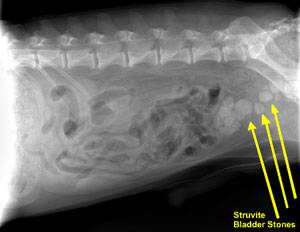
Some patients with bladder stones show no symptoms of any kind and the stones are discovered incidentally but there are some symptoms that might promote a search for stones. Bloody urine, recurrent bladder infection (especially by the same organism and especially if Staphylococci or Proteus is cultured), or straining to urinate all would raise suspicion. Fortunately, struvite stones are radio-opaque, which means they show up readily on radiographs.

Occasionally stones are simply passed and discovered by the pet owner. If this occurs, it is important to bring the stone to your vet’s office for analysis, have the dog examined, and have radiographs taken to check for more stones.  Patient care will be highly dependent on the stone’s mineral composition.

When to Suspect Struvite Stones

Bladder stones come in several mineral compositions. The most common stone types are oxalate and struvite. Since the approach is different for each type, it is crucial to determine the stone type. The stone type can be confirmed if a sample stone is available (either passed naturally or obtained via surgery, voiding urohydropropulsion, or cystoscopy). A laboratory analysis can easily determine the content of the stone and even determine if the stone consists of layers of different mineral types. Without a sample stone, there are still some hints that can be obtained through other tests.

As mentioned, struvite stones in dogs are almost always formed because of the urinary changes that occur with specific types of bladder infection: almost always Staphylococcal infection but occasionally a Proteus infection. If a urine culture from a patient with a bladder stone should grow either staph or proteus, this would make struvite more likely than oxalate. Also, struvite requires an alkaline pH to form while oxalate requires an acid pH to form; urine pH is a part of any urinalysis and thus provides another clue as to the stone’s identity.

An educated guess is better than nothing but does not replace the analysis of a stone. Remember, occasionally a stone of one type forms around a stone of another type. A complete analysis is needed to effectively prevent a recurrence.

How Do Struvite Stones Form?

Struvite is the name given to the crystal composed of magnesium, ammonium, and phosphate. (Struvite is also occasionally referred to as “triple phosphate” due to an old erroneous belief that the phosphate ion was bonded to three positive ions instead of just magnesium and ammonium.) Struvite crystals are not unusual in normal urine, and their presence alone does not require treatment. Combine them with certain bacteria, however, and a stone is created.

Stone creation is made possible by an enzyme called urease that certain bacteria, particularly Staphylococci and Proteus species, can produce. Urea is a substance seen in large amounts in urine. Where does all this urea come from? In short, when the body breaks down amino acids, it must contend with the ammonium that is generated in this process. The ammonium, which would be toxic if left alone, is converted to urea, which is much less toxic and is readily soluble in water, making for its easy disposal in urine. Unfortunately, adding urease-positive bacteria into the urinary bladder converts the urea back into ammonium. The combination of infection and inflammation caused by the ammonium creates a matrix that traps the struvite crystals and gels into an actual stone. This reaction can only take place in alkaline urine but the ammonium creates the perfect pH for stone formation. In dogs, the general rule is, if there is no infection, there are no struvite bladder stones.

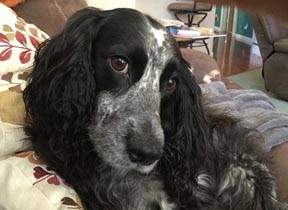
There are a few rare exceptions to this rule. Certain antacids and diuretics can produce struvite stones when there isn’t any infection. A hormone imbalance called hyperaldosteronism is associated with struvite stone development. The hereditary situation of the English cocker spaniel also represents an exception, as in at least one genetic line of this breed has the tendency to form a purely metabolic struvite stone has been documented. These situations are rare, and for most patients, the focus of struvite stone management is dealing with bladder infections and preventing future ones.

What Should Be Done About Struvite Bladder Stones?

Struvite stones can be removed surgically with a technique called voiding urohydropropulsion; removed with a cystoscope (if they are small enough); or dissolved by diet (also called dissolution). Stone dissolution with diet is the least invasive and probably the best option unless the patient really needs a faster treatment, such as if there is a risk of urinary obstruction in a male dog. Each approach has pros and cons. 

Dietary therapy to prevent new struvite stones is of secondary importance in dogs (except the English Cocker spaniel, for which this is a hereditary metabolic problem rather than a matter of infection).

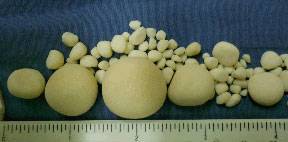
The English Cocker Spaniel has a unique genetic predisposition to make struvite stones even without any infection. Image courtesy of David Gjestson.

The focus is on preventing infection. If your dog has a history of struvite bladder stones, be sure to discuss long-term monitoring and understand what schedule of testing is best for your pet. Expect periodic urine cultures to be needed.

Dietary Dissolution

Dietary dissolution of the stone is not only possible with struvite bladder stones, it is actually the treatment of choice. There are several therapeutic diets available by prescription from your veterinarian that are designed to dissolve struvite bladder stones when they are in the bladder by creating urine that is not compatible with the solid state of struvite.

A therapeutic diet must be the only food fed until the stone is dissolved. Antibiotics are needed as long as stones are in the bladder (bacteria are encrusted within the stone and as the stone dissolves, they are released). Every 4 to 6 weeks, new radiographs are taken to evaluate the stone size. If it is at least 20 percent smaller, the process is continued. A urinalysis is also checked to be sure the proper urinary conditions for dissolution are being created by the diet.

On average, 2 to 3 months are needed to dissolve stones, but the diet should be continued for a full month after the stones are no longer visible on radiographs because small stones may not be large enough to see. Small stones are typically dissolved in just a few weeks as long as the infection is controlled.

After the stones are dissolved, periodic (usually quarterly) urine cultures are performed to check for infection recurrence. If stones do not shrink as expected on the dissolution diet, they may not be pure struvite stones, and another method described below should be selected.

The main advantage of the dissolution method is that it seems to be the lowest risk and most comfortable approach for the dog. That said, an important disadvantage of the dissolution approach is the possibility of urinary tract obstruction as the stone gets smaller and gets lodged in the urethra on the way out. This is potentially a life-threatening hazard for male dogs as they have a narrow urethra. The stone cannot be dissolved in the urethra as, for dissolution to work, the stone must be immersed in urine, which is not the case in the urethra. Furthermore, the inability to pass urine is an emergency, and the patient will die of uremic poisoning in a matter of days if urine flow cannot be restored. The stone can be pushed back into the bladder and dissolution re-attempted but at this point, it may be best to go for a faster resolution with surgery, lithotripsy, cystoscopy, or voiding urohydropropulsion.

Many dissolution diets are really high in fat and high in salt. They may not be appropriate for patients with a past or current history of pancreatitis, patients with heart disease, kidney insufficiency, or high blood pressure.

Surgery

Surgical removal is the most direct method. The advantage is that the stones are removed and healing may commence all in one day. The chief disadvantages are those inherent to surgery: anesthetic risks, post-operative pain, risk of contaminating the abdomen with infected urine, the possibility that not all stones will be removed, and the possibility that the bladder stitches will not properly hold. These risks are generally considered minor and complications associated with cystotomy (opening of the urinary bladder) are unusual. The patient usually stays in the hospital for a day or two to be sure urine production is normal, to properly confine the patient, and to assess pain.

If the dog has urethral stones, they can usually be flushed back into the urinary bladder for surgical removal. If the stone is lodged too tightly for this, it can be removed surgically from the urethra, although the potential for urethral scarring usually makes this a last-choice approach.

Voiding Urohydropropulsion

If the stones are small enough to pass, the bladder can be manipulated in a way to promote expelling them through the urethra. This is called voiding urohydropropulsion and involves filling the bladder, agitating it so the stones float freely in the urine, and then generating a high-pressure urine stream to force the stones out. The patient must typically be held vertically so that gravity may assist in the expulsion of the stones. This technique only works if the stones are small and the patient is not too large. Sedation or general anesthesia is needed. If there are numerous stones, several attempts are often needed if this is to be the only means of removal. Often, this technique is used to obtain a sample stone for analysis to determine if dietary dissolution is feasible.

Cystoscopic Retrieval/Laser Lithotripsy

If you wish to avoid surgery and the stones are small enough, a cystoscope can be passed into the patient’s bladder, and the stones retrieved with a basket (or fragmented via laser lithotripsy). This requires specific equipment most clinics do not have, and thus, usually needs referral to a specialty practice. It is generally more expensive than surgery, though recovery time for the patient is typically much faster.

Recurrence 

After stones are removed one way or another, the focus shifts to prevention. Often, patients are somehow predisposed to a bladder infection, which means they are also predisposed to form more struvite bladder stones. A stone can form as quickly as two weeks after infection if a urease-positive bacterium sets in.

After surgery, antibiotics must be continued until the infection is confirmed to have cleared (i.e., a negative urine culture is obtained). After this, a follow-up schedule of radiographs and/or urine testing is recommended. For a single stone episode, only a few follow-up visits may be necessary. Realize that some individual animals are predisposed to recurring bladder infections, and they may form new struvite stones repeatedly. Obviously, if stones were to recur, a more regular monitoring schedule would have to be revised.

Dietary therapy in the prevention of struvite stones is of secondary importance in dogs (with the exceptions being the rare situations mentioned above). The focus is on preventing infection. If your dog has had a history of struvite bladder stones, be sure to discuss long-term monitoring and understand what testing schedule is best for your pet. Expect periodic urine cultures to be needed.

LEARN MORE
1862771
July 23, 2024
grovecenter grovecenterAllDogs

Bladder Stones (Oxalate) in Dogs

There are many types of bladder stones, and each tends to form in a specific breed or species under specific conditions. 

Oxalate Bladder Stones in Dogs

  • 73% of calcium oxalate patients are male. 
  • Breeds at especially high risk include miniature schnauzers, Lhasa Apsos, Yorkshire terriers, miniature poodles, Shih Tzus, and Bichon Frises.
  • Most cases occur in dogs between ages 5 and 12 years of age.

How Are Stone Types Determined?

Although a urinalysis can provide a clue, the only way to know for sure that a dog’s bladder stone is an oxalate is to retrieve a stone and have a laboratory analyze it. If the stones are very small, flushing the urinary bladder and expressing it (known as voiding urohydropropulsion) may not only produce a stone sample for testing but remove all the stones and alleviate the current signs. When stones are too large to fit out the urethra, they can be removed to resolve signs and obtain sample stones by surgical removal from the bladder (the traditional method), retrieving them by sending a cystoscope up the urethra, or by using laparoscopy (percutaneous cystolithotomy – PCCL) to send a cystoscope through a small incision into the abdomen and then into the bladder and using a grabbing device in the cystoscope channel to retrieve them. Calcium oxalate stones cannot be made to dissolve over time by changing to a special diet (as can be done with struvite or uric acid bladder stones).

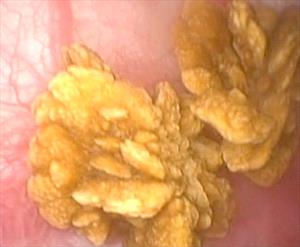
This endoscopic photograph of calcium oxalate bladder stones are in a dog. Bladder stones can be detected during periods of urinary discomfort or they might be discovered incidentally as a surprise. If allowed to remain in the bladder, they can lead to on-going infection, urinary obstruction or continuing discomfort so they must be addressed. Preventive measures must be taken to avoid the formation of new stones. Photo by Dr. Craig Stanton.

Why Would My Dog Form Calcium Oxalate Stones?

It shouldn’t be too surprising that there is a strong hereditary component to forming oxalate bladder stones; this is also true in humans. There is a substance (called nephrocalcin) in urine that naturally inhibits the formation of calcium oxalate stones.

This substance can be defective in both humans and dogs who form calcium oxalate bladder stones. This has been demonstrated in Miniature Schnauzers. Other breeds, such as English Bulldogs and related breeds have Hereditary Calcium Oxalate Urolithiasis Type 1, which is noteworthy for earlier age at the initial development of stones. There is also a Type 2 disorder from a different mutation. There are other potential genetic causes as well.

There is a bacteria that exists as part of the normal flora of the GI tract that metabolizes oxalate. Antimicrobial use may eliminate this good bacterium altogether. This would be expected to increase calcium oxalate stone risk and is being studied.

In humans, the genetic predisposition for stone formation is coupled with dietary issues (problem foods include spinach, peanuts, chocolate, dairy products, calcium supplements, vitamin C supplements, and tea). Dogs are more likely to eat simply a commercial brand of dog food without nearly the dietary variety that humans experience. This means that diet can often be used to manage the problem in the dog unless genetics (not diet) is the cause.

There are some metabolic diseases that might predispose a dog to create a calcium oxalate stone. For example, a dog with Cushing’s disease will be overproducing cortisol (commonly known as cortisone). This hormone increases calcium excretion in urine. The extra calcium present in the urine will promote a stone. Some animals may have an elevated blood calcium level (hypercalcemia) for any number of reasons, and this could lead to excess calcium in the urine as the body attempts to restore calcium balance. Again, extra calcium in the urine promotes a stone. Screening for such medical conditions is important and is generally part of the medical workup once stones are detected on a radiograph. If any such metabolic problems are uncovered, they will need to be treated separately. As these problems are resolved, no further stone prevention measures should be needed. Because of the complexity involving a variety of different causes and risk factors, this should be viewed as a group of diseases that result in the same endpoint, calcium oxalate stones. The specific cause does change what prevention measures are expected to help. Clues based on the breed can help; but it can be very difficult to know which disease and risk factors are present in any given dog, contributing to the high recurrence rate of these stones in dogs.

Why Can’t The Stones Stay Where They Are?

The most immediate concern for the dog with bladder stones is that the urinary opening may obstruct as the dog attempts to pass the stones. This is largely a male dog problem but the results can be life-threatening uremic poisoning. In such cases, the veterinarian will try to dislodge the stone, flushing it back into the bladder to restore the patency of the urinary opening. If the stone cannot be dislodged, a new urinary opening may have to be surgically created. The urethra (the narrow tube connecting the urinary bladder to the outside world) is a difficult place to perform surgery, so it is preferable to move the stone back into the bladder for removal rather than attempting removal from the urethra.

Bladder stones are irritating to the bladder simply by rubbing on the tender bladder lining. Bleeding typically results, and, of course, the chance of developing chronic bladder infections is markedly increased with the presence of bladder stones.

Because calcium oxalate stones cannot be dissolved by diet change, removing the stones is usually necessary. Studies have shown that 50% of dogs who have undergone such surgery will develop new calcium oxalate stones within three years unless proper prevention is instituted.

The following therapeutic plan has been devised to minimize the chance of recurrence after the stones have been removed.

Step One: Diet

While special diets cannot dissolve existing stones, they do help prevent new stones from developing. Prevention centers on creating a urinary environment with minimal calcium and oxalate as well as creating a urine pH that is not conducive to calcium oxalate formation.

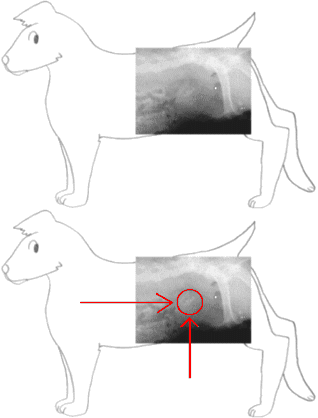
Illustration by Wendy Brooks, DVM

Further, high protein, high sodium diets should not be used and diets low in phosphorus may stimulate vitamin D production and could increase calcium absorption. Commercial specialty foods with these requirements are available. Work with your veterinarian to find an appropriate diet.

For each of the commercially available diets, the canned form is preferable to dry to increase water consumption and thus help dilute the urine. It is especially important to avoid table scraps when caring for an oxalate stone-forming dog. Still, no one wants their dog to live life without treats.

The following treats are acceptable for oxalate stone-forming dogs:

  • Plain, cooked chicken
  • Plain, cooked turkey
  • eggs
  • rice
  • peas
  • pasta
  • white potatoes
  • cabbage
  • cauliflower
  • bananas
  • melon

Selecting a diet that actually prevents stones but is also desirable to the picky pet may be challenging. It may be possible to have a veterinary nutritionist provide a recipe for an appropriate home-cooked diet. Please visit www.balanceit.com or www.petdiets.com for details.

Some medications can increase the risk of calcium oxalate stone development, and these should be avoided. Prednisone and other cortisone-type medications (commonly used for itchy skin, arthritis, inflammatory bowel disease, and other inflammatory conditions) should be avoided if possible. Furosemide (brand name: Lasix or Salix) is a diuretic mostly used in the treatment of heart failure. Both these medications lead to excess calcium in the urine. Should a diuretic be needed for a patient at risk for calcium oxalate stones, one from the thiazide class (see later) would be a better choice. Supplementation with Vitamins D or C also increases the risk of forming oxalate stones; such supplementation should be discontinued.

Step Two: Urinalysis and Radiographs

Two to four weeks after surgery, a urine sample is checked and the bladder is radiographed. If the urine is not adequately diluted (meaning the specific gravity is less than 1.020), water consumption will have to be increased (either by adding water to the food or increasing the amount of canned food).

If urinary pH is less than 6.5 or if oxalate crystals are seen, it is time to go to Step Three. If all is well, a urinalysis should be performed every three to six months or so for the rest of the dog’s life (the University of Minnesota’s current recommendation).

Radiographs are also taken every 6-12 months so that any new stones will still be small enough to be retrieved from the bladder by flushing. If you skip this monitoring, you may find stones have developed to a large size, and surgery is again needed to remove them.

Step Three: Potassium Citrate

By taking potassium citrate pills, citrate levels increase in the urine. Calcium binds to the citrate instead of the oxalate. This is a desirable event since calcium citrate tends to stay dissolved, whereas calcium oxalate tends to precipitate out as a mineral deposit. Potassium citrate also helps create alkaline urine (in which calcium oxalate stones have difficulty forming). Potassium citrate supplements are typically given twice a day.

Step Four: Urinalysis Again

Two to four weeks after potassium citrate is added to the therapeutic diet, a urine sample is checked. If the urine is not adequately diluted, water consumption will have to be increased either by adding water to the food or increasing the amount of canned food.

If urinary pH is less than 6.5 or if oxalate crystals are seen, it is time to go to Step Five. If all is well, urinalysis and radiographs should be performed every 6-12 months or so for the rest of the dog’s life (the University of Minnesota’s current recommendation). In other words, if the urinalysis shows all the desired parameters and radiographs show no new stones forming, then therapy is working, and the pet can go on a regular monitoring schedule. If testing shows the patient is still predisposed to stone formation, it is necessary to proceed down this list until control is achieved. Again, radiographs should be taken every six to 12 months.

Step Five: Thiazide Diuretics

A diuretic is a medication designed to increase the amount of urine produced. The thiazide class of diuretics does this in a way that reduces the calcium content of the urine. This medication is typically given twice a day and electrolytes are generally measured via blood test within the first two weeks of this treatment.

There will always be some dogs who continue to form stones no matter what is done. With radiographic monitoring, it is hoped that new stones can be detected while they are still small. As research continues, new developments may arise that will not require such frequent monitoring.

A Note On The Bichon Frise

The Bichon Frise appears to have a unique situation with oxalate bladder stones in that they seem to begin to recur virtually as soon as they have been removed. In a study presented by Jody Lulich’s group at the University of Minnesota at the 2004 meeting of the American College of Veterinary Internal Medicine, 24 out of 33 Bichons had oxalate stone recurrence after cystotomy (37% had had their first recurrence in the first year after surgery, by the end of the second year 57% had recurred, and by the end of the third year 73% had recurred, some more than once). Steps to prevent recurrence need to be particularly aggressive from the beginning in this breed as they seem to have 20 times the risk of oxalate stone formation compared to other breeds. 

Preventing Male Dog Obstruction

In male dogs, a bone called the os penis is located in the penis, surrounding the urethra. Urine passes through this hollow bone like water through a pipe. Because this area is made of bone, it cannot stretch or expand to accommodate a stone trying to pass. A stone blockage of this type leads to an emergency and death if it goes untreated.

In a perfect world, controlling the bladder stones controls the risk of obstructions, but controlling the bladder stones is not always easy, and treating a dog over and over for obstruction becomes expensive. A surgical procedure called a urethrostomy can be performed to prevent obstruction. This procedure involves creating a new urinary opening in the area of the scrotum. This allows urine to be expelled earlier in its course so that passage through the os penis does not occur. The flexibility of the non-bony part of the urethra plus the surgically enlarged urinary opening allows for smaller stones to pass rather than stick in the os penis.

To perform this surgery, the male dog must be neutered (which can be done at the time of the urethrostomy). The creation of the new opening usually requires the removal of the empty scrotum.

While this is not as good an outcome as preventing stone recurrence, at least the emergency obstruction is prevented.

Calcium oxalate bladder stones can be frustrating. Not only do they tend to recur, but following monitoring recommendations involves a visit to the veterinarian’s office every three to six months. It is up to every owner how rigid to be with guidelines, but keep in mind that the trouble and expense of a stone surgery weigh against the much less trouble and expense of monitoring.

Laser Lithotripsy

A new technique of stone removal involves the use of a laser to blast the stone into pieces small enough to pass. This option (called laser lithotripsy) is especially useful when the number of stones present is small and/or when a stone is lodged in the urethra and cannot be flushed into the bladder. It will not be helpful for a large number of stones as the process would be too time-consuming relative to a more conventional approach but for the right patient, it is less invasive than other procedures. 

LEARN MORE
5313917
July 23, 2024
grovecenter grovecenterAllDogs

Breeding Information for People Who Want to Breed Dogs

Factors to Consider

  • Will your dog contribute excellent health, temperament, working ability or conformity to the breed standard?
  • Do you understand that spaying and neutering will prevent some health problems that you risk by keeping your dog intact?
     
  • Are you aware of any and all health and temperament problems in your dog’s pedigree, looking at both depth and breadth of pedigree?
  • Are you willing to search for the best dog to breed your dog to, even if you have to travel out of state?
  • Do you have carefully screened buyers and deposits for all the puppies you may produce?
  • Do you have money set aside in case the dam or puppies need emergency care?
  • Can you or another responsible adult be present 24 hours a day for the first 3 weeks in case hand feeding is needed?
  • Have you read about what to prepare and expect for canine pregnancy, whelping and puppy rearing? (rec source: Canine Reproduction: A Breeder’s Guide 3rd Edition, Phyllis Holst)
  • Are you willing to keep and properly socialize all the puppies until good homes are found?
  • Are you willing to take back any or all puppies any time in their lives that they may no longer be wanted?
  • Are you willing to serve as a lifetime resource for the buyers of your puppies?

Pre-Breeding Procedures

  • Annual CERF eye certification.
  • Wait until 2 years of age before breeding, then have OFA hip and elbow certification performed.
  • Have all breed-specific health clearances performed – check with veterinarian and national breed club (may include heart, thyroid, genetic testing, many others).
  • Have Brucella canis test performed 1 month in advance.
  • Have a complete physical examination performed on your dog prior to breeding. 
         – This should include a digital vaginal exam to check for vaginal band/stricture.
LEARN MORE
4126766
July 23, 2024
grovecenter grovecenterAllDogs

Birthing Puppies  

Prenatal Care

Preparing for your dog’s labor and puppy care can be both exciting and fun; still, awareness of potential problems is of paramount importance. It is a good idea to keep track of your dog’s breeding date so as to know when to expect what. We will first present some prenatal care suggestions, but for more details, read specifically about care during pregnancy; you may wish to begin there.

After about 35 days of pregnancy, the mother’s nutritional needs will begin to increase. In general, she should require about twice as much food as usual, whereas when she begins nursing, she will need three times as much food. The best nutritional plan is to buy a dog food approved for growth (i.e., puppy food) and feed according to the package; such diets are balanced and require no supplementation, plus they typically have the extra calories needed by the pregnant or nursing mother. Exercise of the pregnant mother need not be restricted until after the first 4-6 weeks of pregnancy. Do not supplement calcium as this can cause metabolic imbalances; also, excess vitamins may be harmful to the puppies.

Sometime around the 45th day, your dog should be examined by a veterinarian. At this time, the skeletons of the unborn pups will have mineralized and are thus going to be visible on an x-ray.  Your dog’s abdomen should be x-rayed so that you know how many pups to expect. This is important as you will need to know when her labor is finished so you can be sure none of the puppies have been retained. Ultrasound may be used to confirm pregnancy much earlier (after 25 days, the embryonic heart may be seen beating), but it is more difficult to count the number of pups using this method. A general pregnancy blood test can be performed around day 35 just to confirm whether or not she is pregnant, but neither this nor ultrasound will tell you how many puppies to expect; only radiographs can do that.

A comfortable area should be set aside for whelping (giving birth) and raising the puppies. The mother should feel at home here and should be able to come and go as she likes while the puppies must remain confined.

It is important that the mother be isolated from all other dogs for three weeks prior to labor through three weeks after delivery to prevent herpes infection. Herpes is spread by sniffing and licking between two dogs. Adult dogs rarely have any symptoms but the newborn or unborn puppies generally die.

The dog’s gestation period is considered to be 63 days, though this is not written in stone, and a normal range might be 58 to 68 days.

Impending Labor

When your dog’s due date is approaching, you should begin monitoring her rectal temperature. When her temperature drops below 100°F (normal canine temperature is 101-102°F), labor may be expected within 24 hours.

It is a good practice to know how to take your pregnant dog’s temperature as her due date approaches. Ask your veterinarian to show you how.

The First Stage of Labor

During this stage, uterine contractions begin. The mother will appear restless and may pace, dig, shiver, pant, or even vomit. This is all normal and all an owner can do is see that she has water available should she want it. This stage of labor is long, lasting 6 to 12 hours and culminates with full dilation of the cervix in preparation to expel a puppy.

The Second and Third Stages of Labor

Puppies are born covered in membranes that must be cleaned away or the pup will suffocate. The mother will bite and lick the membranes away. Allow her a minute or two after birth to do this; if she does not do it, then you must clean the pup for her. Simply remove the slippery covering and rub the puppy with a clean towel. The umbilical cord may be tied in a knot about one inch from the pup and cut with scissors on the far side of the knot. Be careful not to pull on the umbilical cord as this can injure the puppy. The mother may want to eat the placenta but this is probably not a good idea as vomiting it up later is common; it is best to clean away the placenta yourself.

Expect one pup every 45 to 60 minutes with 10-30 minutes of hard straining. It is normal for the mother to take a rest partway through delivery and she may not strain at all for up to four hours between pups. If she is seen straining hard for over 30 minutes or if she takes longer than a 4-hour break, consult a veterinarian.  This is where it is important to know whether she has delivered the entire litter that was counted on the X-ray. Expect some puppies (probably half of them) to be born tail first, which is normal for dogs.

Most of the time nature handles things according to plan and there are no complications. The important thing is to be prepared and know what constitutes a deviation from normal. During the delivery, a puppy can get stuck either because of size or positioning, the mom can get too tired or dehydrated to complete the mission without help, or any number of unexpected problems can arise. Problems can happen during the actual delivery or in the days following.

Call your veterinarian if:

  • 30 to 60 minutes of strong contractions occur with no puppy being produced.
  • More than 4 hours pass between pups and you know there are more inside.
  • She fails to go into labor within 24 hours of her temperature drop.
  • She is obviously in extreme pain.
  • Greater than 70 days of gestation have passed.

It is normal for the mother to spike a fever in the 24 to 48 hours following birth. Clinical signs of illness should not accompany this fever.

Normal vaginal discharge after giving birth should be odorless and may be green, dark red-brown or bloody and may persist in small amounts for up to 8 weeks.

Green discharge is a bit special as this is the discharge indicating separation of a placenta from the uterus. During the birth of a litter, many placentas are separating so there will be plenty of green discharge. Where this becomes important is on the very first puppy, as when the first placenta separates, its associated puppy will need oxygen very soon, so a live puppy should appear within 30 minutes of seeing green discharge. If not, there is a problem, and you should consult a veterinarian.

Problems to Watch for in the Following Days 

Metritis (Inflammation of the Uterus)

Signs of this condition are as follows:

  • fever
  • foul-smelling vaginal discharge
  • listlessness
  • loss of appetite
  • no interest in the puppies
  • decreased milk production

If these signs are noted, usually in the first day or two postpartum, a veterinarian should be consulted. Your dog may have retained a placenta or have suffered some trauma during delivery. Animals who require assistance with delivery are often predisposed to metritis. She will likely need to be spayed.

Eclampsia

This condition results when the mother has trouble supporting the calcium demand of lactation and is a particular concern for toy breed dogs. Calcium supplementation predisposes a new mother to this condition. Usually affected animals are small dogs. They demonstrate:

  • nervousness and restlessness
  • no interest in the pups
  • stiff, painful gait

This progresses to:

  • muscle spasms
  • inability to stand
  • fever
  • seizures

This condition generally occurs in the first three weeks of lactation and a veterinarian should be consulted immediately.

Mastitis (Inflammation of the Breasts)

Normal nursing glands are soft and enlarged. Diseased glands are red, hard, and painful. In general, the mother does not act sick; the disease is confined to the mammary tissue. The mother may be sore and discourage the pups from nursing; however, it is important to keep the pups nursing the affected glands. This is not harmful to the puppies and helps flush out the infected material.

Warm compresses may be helpful.

Agalactia (Not Producing Milk)

Milk production and secretion (let down) is essential for the puppies’ nutrition. If the puppies are nursing but it appears that milk is simply not flowing, there are a few simple things to try at home before going to the veterinarian. First, make sure the puppy room is not too warm and that the mother has plenty of food and water and that she seems to be healthy in other respects. If these issues seem controlled, the next step is to determine if milk is being produced and not “let down” or simply not being produced as different hormones are involved in each process. Your veterinarian will need to intercede with treatment for the mother. If the pups cannot so much as get colostrum, that all-important first milk that provides immunity from common infections, they may need to receive injections of canine plasma to replace the antibodies they did not get from their mother.

Most dogs are excellent mothers and problems are few. The basic rule is to seek veterinary care if she seems to feel sick or if she ceases to care for her young. Puppies nurse until they are about six weeks old but can begin solid foods as early as four weeks of age. A good age for adoption to a new home is eight weeks or later.

LEARN MORE
5313942
July 23, 2024
grovecenter grovecenterAllCatsDogs

Brachycephalic Airway Obstruction Syndrome in Flat-Faced Dogs  

Dogs with Short Faces

Most people are not familiar with the term brachycephalic, but if you own a Pug, Boston Terrier, Pekingese, Boxer, Bulldog, Shih Tzu, or any one of the other breeds with pushed-in or short faces, you should become familiar with this word. The word comes from the Greek roots brachy, meaning short, and cephalic, meaning head.

Brachycephalic dogs have been bred so as to possess a normal lower jaw that is in proportion to their body size and a compressed upper jaw. In producing this cosmetic appearance, we have compromised these animals in many important ways, and you, as an owner, must be familiar with the needs of your pet.

The Respiratory System and Brachycephalic Airway Obstruction Syndrome

Brachycephalic breeds make a lot of snorting respiratory sounds, as a matter of course, simply because of the way their throats and faces are shaped. These sounds are generated from a combination of several anatomic deformities that will be described below. These deformities occur to varying degrees of severity. Most brachycephalic dogs are not hampered by their anatomy on a day-to-day basis, but they do have limitations that must be recognized. Severely affected individuals require surgical intervention.

Stenotic Nares

This is a fancy name for narrowed nostrils. The brachycephalic dog’s respiratory passage begins with very small, often slit-like, nasal openings for breathing. This leads to a great deal of open-mouth breathing and panting as the nasal breathing route is limited by its small opening. In selecting a puppy for adoption, it is a good idea to look at the nostril sizes on each member of the litter and look for the widest opening. Stenotic nares can be surgically corrected after the age of five months.

Enlarged Tongue (Macroglossa)

The brachycephalic dog’s tongue can be particularly thick and large, which contributes to the overall obstruction. The French and English bulldogs seem particularly predisposed to this issue.

Elongated Soft Palate

It is difficult to fit the soft tissues of the canine mouth and throat into the brachycephalic’s short face. As a result, the soft palate, which separates the nasal passage from the oral cavity, flaps loosely down into the throat, creating snorting sounds. Virtually all brachycephalics suffer from this, but actual respiratory distress is rare except in English Bulldogs. The English Bulldog tends to have more severe symptoms in almost all aspects of brachycephalic syndrome. Excess barking or panting may lead to swelling in the throat, which can, in turn, lead to trouble. Again, the soft palate can be surgically trimmed.

Tracheal Stenosis/Hypoplastic Trachea

The trachea is also known as the windpipe. The brachycephalic dog’s windpipe may be dangerously narrowed in places. This condition creates tremendous anesthetic risk and should be ruled out by chest radiographs prior to any surgical procedures, as anesthetic safety depends on the placement of a tube in the windpipe to secure air passage. If the trachea is too small, intubation may not be possible, and it is important to know this in advance of any planned procedure. The English bulldog is particularly predisposed to this anatomical defect.

Everted Laryngeal Saccules

The normal larynx has two small pockets called ventricles or saccules. When a dog has increased effort to breathe, over time, these little pockets will actually turn inside out inside the throat. When this occurs, it obstructs the throat. This condition can be corrected surgically; however, in many cases, it resolves on its own after the stenotic nares are corrected, so surgery is generally only performed in severe situations. The pug is especially predisposed to this situation.

Heat Stress, Excitement, and Exercise 

Because of all these upper respiratory obstructions, the brachycephalic dog pants inefficiently. A dog with a more conventional face and throat is able to pass air quickly over the tongue through panting. Saliva evaporates from the tongue as air is passed across and the blood circulating through the tongue is efficiently cooled and circulated back to the rest of the body.

In brachycephalic dogs, so much extra work is required to move the same amount of air that the airways become inflamed and swollen. This inflammation leads to a more severe obstruction, distress, and further overheating, which is potentially a life-threatening problem. It should always be a consideration during stressful situations, especially air travel. 

The American Veterinary Medical Association has travel guidelines for brachycephalic dogs.  

The American College of Veterinary Surgeons has further information on brachycephalic obstructive airway syndrome.

Brachycephalic dogs are the most likely candidates for heat stroke.

Altogether, the upper airways of the brachycephalic dog compromise the ability to take in air. Under normal conditions the compromise is not great enough to cause a problem; however, an owner should take care not to let the dog become grossly overweight or get too hot in the summer. Be aware of what degree of snorting and sputtering is usual for your pet, and should your dog require general anesthesia or sedation, your vet may want to take extra precautions or take radiographs beforehand to assess the severity of the syndrome. Anesthetic risk is higher than usual in these breeds, though under most circumstances the necessary extra precautions are readily managed by most animal hospitals.

To be clear, brachycephalic syndrome can be progressive if it is not corrected at an early stage. Severely affected dogs can experience collapse of the larynx and require a permanent tracheostomy (a hole in the throat for breathing).

Gastrointestinal Tract

There appears to be a constellation of stomach and swallowing issues that correlates to the respiratory obstruction. In brachycephalic breeds, the esophagus (the tube that conducts swallowed food from the throat to the stomach) experiences reflux of stomach contents backward. 

This reflux generates pain and inflammation. Compounding this problem is the retention of food in the stomach for prolonged periods. The pooling of food in the stomach creates a sensation of nausea and increases the potential for vomiting and/or stomach acid reflux. The English bulldog seems particularly predisposed to GI complications in this way. This sounds like a separate issue from the respiratory syndrome, but in fact, the reflux, regurgitation, and even herniation of part of the stomach into the chest cavity stems from the extreme inhalation efforts made against the upper airway obstruction that comes from the shape of the brachycephalic head. Medications are helpful for intestinal issues as is weight control, but often correcting the respiratory obstruction corrects the intestinal problems as well.

Eye Problems

With most of the nasal bones compacted, brachycephalic dogs tend to have trouble with the way their eyes seat in their heads. The eye sockets are shallow making the eyeballs especially prominent and vulnerable. Often a nasal fold of skin rubs on the eyeball and/or there are eyelashes rubbing on the eye.

Lagophthalmos

Sometimes, the eyes are so prominent that the lids cannot close all the way over them. This will lead to irritation and drying of the center of the eye unless surgical correction is performed. If you cannot tell by watching your pet blink, watch as your pet sleeps to be sure the eyelids close all the way. If the eyelids cannot protect the eyes, blinding pigmentary changes will form where the eyes become irritated.

Nasal Fold Irritation

Many brachycephalic dogs have a fold of skin between the nose and eyes. This skin fold may need regular cleaning as it tends to collect skin oil and moisture but it can also be prominent enough to rub on the actual eyeball. Chronic irritation will show as a pigmented area on the eye surface, especially on the side nearest the nose. This is hard to see without a bright light but if it is noted, a search for the cause is warranted. Depending on the location of the pigmentation, surgery may be recommended.

Entropion (Turned-In Eyelids)

The shortened face leads to rolling of the eyelids in such a way that the eyelashes or even haired skin can rub the eye. This is not only uncomfortable but will damage the eye. Some dogs have eyelids that droop or turn out in one area but turn inward in another area (usually the corner of the eye). Surgical correction may be needed to protect the eye and restore comfort.

Dry Eye (Keratoconjunctivitis Sicca)

Brachycephalic breeds tend to get more than their share of tear production problems. In this situation, inadequate tears are produced so a thick, goopy, yellow eye discharge results. In response to the irritation, the eye becomes pigmented and can become blind if treatment is not instituted. This condition is treatable with medication so it is important to recognize it before it progresses to a point where vision is lost and the goal is simply restoring comfort. 

Risk of Proptosis

Recognize the prominence of the eyes on brachycephalic. The bony eye sockets are very shallow. This means that any blow to the back of the head, even a fairly minor one, can cause an eye to pop from its socket (proptosis) and require surgical replacement or even removing the eye. This can happen also with too much pulling against the leash if the pet is wearing a collar. You may wish to consider a harness for your pet. Traumatic proptosis is frequently blinding to the eye that was popped out.

Other Concerns

The normal dog has 42 teeth in the mouth. The brachycephalic dog also has 42 teeth but a lot less space to fit them in. This means that the teeth will be crowded and growing in at odd angles which, in turn, traps food debris and leads to periodontal disease at a far younger age than in non-brachycephalics. The earlier you begin using home care dental products, the longer you will be able to postpone full dentistry under general anesthesia.

As mentioned, skin fold infections are common amid the facial folds of the brachycephalic breeds. Be sure to examine these areas periodically for redness. Even if the fold does not rub on the eyeball, it will likely need regular cleaning and topical disinfection.

The broad-headed nature of these breeds makes reproduction a tricky matter as a Caesarean section is frequently needed. Difficult labor is common and, as surgical assistance is often necessary, it is important not to breed females with tracheal stenosis (see above). Brachycephalic breeding is not for the inexperienced. 

Altogether, the brachycephalic breeds show plenty of personality and intelligence, just as all dogs do, but because of their specific needs, their owners need extra knowledge. If you have any questions about your brachycephalic dog, don’t hesitate to call your veterinarian.

LEARN MORE
  • 1
  • …
  • 11
  • 12
  • 13
  • 14
  • 15
  • 16
CATEGORIES
  • All
  • Cats
  • Dogs
  • Small Mammals

Recent Posts

  • Fur Mowing in Cats  
  • Plasma Cell Stomatitis in Cats 
  • Mealtime Enrichment for Cats
  • Mammary Tumors in Cats
  • Notoedric Mange in Cats (Feline Scabies)  
TAGS
Antibiotics Aural Hematoma Bloat Cannabis Toxicity cat and dogs cats cats & dogs cats and dogs Cellular Delinquent Clinical Signs Corticosteroids Cyclosporine Dental Disease Diagnosis Diarrhea dog dog & cats dogs dogs & cats Dogs and Cats Fluids gastrointestinal Glomerulonephritis Guinea Pigs Hepatic Necrosis Hyperplasia Keratoconjunctivitis Sicca mammals Milbemycin Oxime Moxidectin muzzle Nutrition pets Prevention Prognosis rabbits rats Small Mammals Symptoms Trilostane veterinarian veterinarians Vomiting and diarrhea Whipworm Infection Workups for Itchy

Copyright © 2021 Pawscare by WebGeniusLab. All Rights Reserved