Tag: cats

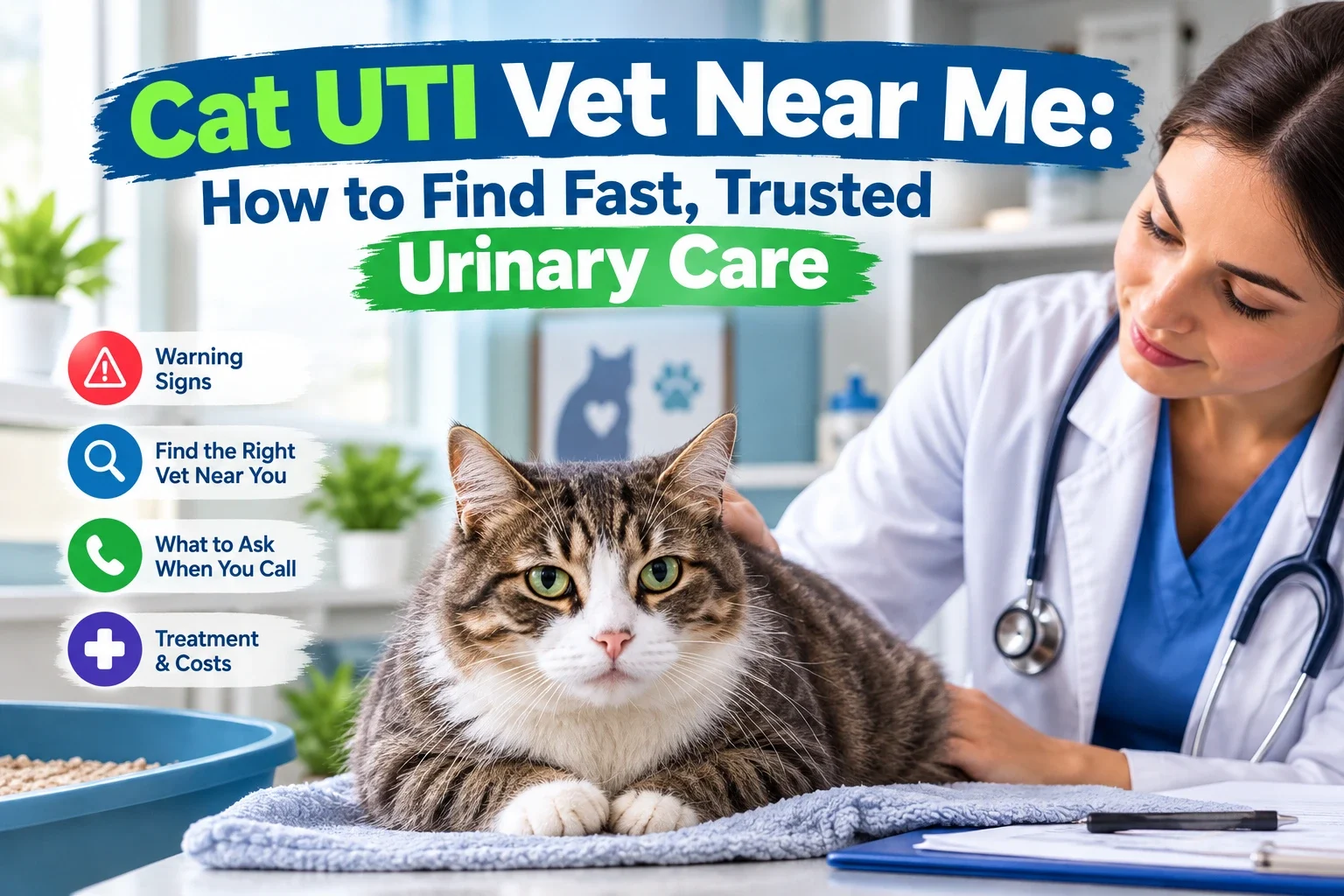
Cat UTI Vet Near Me

Cat UTI Vet Near Me: How to Find Fast, Trusted Urinary Care

Cat Urinary Tract Infection: How to Get Help Fast

Your cat has been crying in the litter box, peeing in odd places, or squatting again and again with almost nothing coming out. You grab your phone and type cat UTI vet near me, hoping for someone who can see your pet today. That instinct is right. Urinary problems in cats can turn serious quickly, and knowing what to look for, who to call, and what to say on the phone saves precious time.

Quick answer: If your cat is straining to urinate, passing little or no urine, crying in pain, or vomiting, go to the nearest emergency clinic immediately. For milder signs like frequent small pees or blood in the urine, search for a cat UTI vet near me and book a same-day appointment, since symptoms need a urine test to diagnose.

What Is a Cat UTI?

A urinary tract infection happens when bacteria travel up the urethra and multiply in the bladder or, less often, the kidneys. Many owners use the term “UTI” for any cat peeing problem, but the reality is more nuanced. In young and middle-aged cats, most urinary signs are not caused by bacteria at all. They come from stress-related bladder inflammation, crystals, or stones, a group of problems vets call feline lower urinary tract disease.

True bacterial infections are more common in older cats and in cats with kidney disease, diabetes, or an overactive thyroid, because these conditions produce dilute urine that bacteria thrive in. That is exactly why you need a vet visit. The signs look the same, but the treatment is completely different.

Signs Your Cat May Have a Urinary Problem

Cats hide discomfort, so watch for small changes in bathroom habits:

  • Going to the litter box much more often, passing only a little urine each time
  • Straining, crying, or yowling while peeing
  • Blood in the urine, which may look pink or red
  • Urinating outside the box, often on cool surfaces like tile or the bathtub
  • Strong-smelling or cloudy urine
  • Licking the genital area more than usual
  • Hiding, restlessness, reduced appetite, or low energy

Do not assume your cat is constipated or acting out. Straining in the litter box is one of the most commonly misread signs in feline medicine.

Is It an Emergency?

A urethral blockage is the most dangerous urinary emergency, and it is far more common in male cats because their urethra is narrow. When urine cannot leave the body, the bladder swells and waste and potassium build up in the blood, which can affect the heart and kidneys. Without treatment, a blocked cat can die within a day or two.

Skip the regular appointment and go straight to an emergency clinic if your cat:

  • Strains repeatedly but produces little or no urine
  • Cries out, hides, or is licking constantly at the genital area
  • Has a firm, painful belly
  • Is vomiting, weak, or collapsing

If your search for a cat UTI vet near me turns up only clinics that are closed, look for 24-hour emergency hospitals instead. Call ahead, tell them it is a possible urinary blockage, and they will prepare for your arrival.

How to Find the Right Cat UTI Vet Near Me

Whether it is midday or midnight, a few smart steps will help you reach the right clinic fast.

Search with specific terms. Try “emergency vet open now,” “24-hour animal hospital,” or “cat urinary vet” in your maps app. Results are sorted by distance and show opening hours, phone numbers, and live traffic so you can see how long the drive will take.

Check recent reviews. Before choosing any cat UTI vet near me, look for comments about how quickly the team responds, how clearly they explain treatment, and whether they handle cats gently. A clinic that is experienced with cats, or a dedicated feline practice, is a bonus.

Call before you drive. Phone the clinic and confirm that a vet is on site, that they can run a urinalysis and bladder ultrasound or X-ray, and that they can treat a blocked cat. Not every clinic is equipped to place a urinary catheter or hospitalize a patient overnight.

Save a backup option. Once you find a reliable cat UTI vet near me, keep the number of your regular vet and the nearest 24-hour hospital in your phone before you ever need them. Emergencies are stressful, and having the details ready makes the decision easier.

Be cautious with online-only advice. Telehealth chats can help you decide how urgent things are, but a urinary infection cannot be diagnosed without testing a urine sample.

What to Ask When You Call

When you phone a cat UTI vet near me, a few questions will help you plan:

  • Do you have a vet available today, and how long is the wait?
  • Can you collect and test a urine sample during the visit?
  • Are you equipped to treat a urinary blockage if that is what it turns out to be?
  • What is the exam fee, and can you give a rough estimate of testing costs?
  • Should I keep my cat from peeing before the visit so you can collect a sample?

Bring a short list of your cat’s symptoms, how long they have lasted, any medications, and a recent photo of the litter box if you saw blood. If you use a non-absorbent litter or a clean tray, you may be able to catch a fresh urine sample. Ask the clinic first, since they will usually prefer to collect it themselves.

Cat UTI & Urinary Issues: What You Need to Know

Your cat has been crying in the litter box, peeing in odd places, or squatting again and again with almost nothing coming out. You grab your phone and type cat UTI vet near me, hoping for someone who can see your pet today. That instinct is right. Urinary problems in cats can turn serious quickly, and knowing what to look for, who to call, and what to say on the phone saves precious time.

Quick Answer:

If your cat is straining to urinate, passing little or no urine, crying in pain, or vomiting, go to the nearest emergency clinic immediately. For milder signs like frequent small pees or blood in the urine, search for a cat UTI vet near me and book a same-day appointment, since symptoms need a urine test to diagnose.

What Is a Cat UTI?

A urinary tract infection happens when bacteria travel up the urethra and multiply in the bladder or, less often, the kidneys. Many owners use the term “UTI” for any cat peeing problem, but the reality is more nuanced. In young and middle-aged cats, most urinary signs are not caused by bacteria at all. They come from stress-related bladder inflammation, crystals, or stones, a group of problems vets call feline lower urinary tract disease.

True bacterial infections are more common in older cats and in cats with kidney disease, diabetes, or an overactive thyroid, because these conditions produce dilute urine that bacteria thrive in. That is exactly why you need a vet visit. The signs look the same, but the treatment is completely different.

Signs Your Cat May Have a Urinary Problem

Cats hide discomfort, so watch for small changes in bathroom habits:

  • Going to the litter box much more often, passing only a little urine each time
  • Straining, crying, or yowling while peeing
  • Blood in the urine, which may look pink or red
  • Urinating outside the box, often on cool surfaces like tile or the bathtub
  • Strong-smelling or cloudy urine
  • Licking the genital area more than usual
  • Hiding, restlessness, reduced appetite, or low energy

Do not assume your cat is constipated or acting out. Straining in the litter box is one of the most commonly misread signs in feline medicine.

Is It an Emergency?

A urethral blockage is the most dangerous urinary emergency, and it is far more common in male cats because their urethra is narrow. When urine cannot leave the body, the bladder swells and waste and potassium build up in the blood, which can affect the heart and kidneys. Without treatment, a blocked cat can die within a day or two.

Skip the regular appointment and go straight to an emergency clinic if your cat:

  • Strains repeatedly but produces little or no urine
  • Cries out, hides, or is licking constantly at the genital area
  • Has a firm, painful belly
  • Is vomiting, weak, or collapsing

If your search for a cat UTI vet near me turns up only clinics that are closed, look for 24-hour emergency hospitals instead. Call ahead, tell them it is a possible urinary blockage, and they will prepare for your arrival.

How to Find the Right Cat UTI Vet Near Me

Whether it is midday or midnight, a few smart steps will help you reach the right clinic fast:

  1. Search with specific terms. Try “emergency vet open now,” “24-hour animal hospital,” or “cat urinary vet” in your maps app. Results are sorted by distance and show opening hours, phone numbers, and live traffic so you can see how long the drive will take.
  2. Check recent reviews. Before choosing any cat UTI vet near me, look for comments about how quickly the team responds, how clearly they explain treatment, and whether they handle cats gently. A clinic that is experienced with cats, or a dedicated feline practice, is a bonus.
  3. Call before you drive. Phone the clinic and confirm that a vet is on site, that they can run a urinalysis and bladder ultrasound or X-ray, and that they can treat a blocked cat. Not every clinic is equipped to place a urinary catheter or hospitalize a patient overnight.
  4. Save a backup option. Once you find a reliable cat UTI vet near me, keep the number of your regular vet and the nearest 24-hour hospital in your phone before you ever need them. Emergencies are stressful, and having the details ready makes the decision easier.
  5. Be cautious with online-only advice. Telehealth chats can help you decide how urgent things are, but a urinary infection cannot be diagnosed without testing a urine sample.

What to Ask When You Call

When you phone a cat UTI vet near me, a few questions will help you plan:

  • Do you have a vet available today, and how long is the wait?
  • Can you collect and test a urine sample during the visit?
  • Are you equipped to treat a urinary blockage if that is what it turns out to be?
  • What is the exam fee, and can you give a rough estimate of testing costs?
  • Should I keep my cat from peeing before the visit so you can collect a sample?

Bring a short list of your cat’s symptoms, how long they have lasted, any medications, and a recent photo of the litter box if you saw blood. If you use a non-absorbent litter or a clean tray, you may be able to catch a fresh urine sample. Ask the clinic first, since they will usually prefer to collect it themselves.

Diagnosis

Vets use a variety of signs to diagnose a cat UTI. Your veterinarian will begin with a physical exam, using gentle palpation of the bladder. Then they will test, to see what is the cause:

  • Urine test: Detects any bacteria, blood, crystals in the urine and the level of concentration.
  • Urine culture: The “gold standard” for confirming a bacterial infection and for selecting an antibiotic.
  • Older cats: Blood tests should measure the function of the kidneys, blood sugar, and thyroid.
  • X-ray or ultrasound: Identifies bladder stones, tumors or structural issues.
  • Cystocentesis: A fine needle is used to obtain urine for culture directly from the bladder, which a quick and non-contaminated process provides the most accurate result.

Treatment and Recovery

The treatment dictates solely on the results of the tests.

  • Bacterial Infections: Treatment of a confirmed bacterial infection typically involves a course of prescribed antibiotics and pain relief and lots of fluids.
  • Sterile Cystitis or Crystals: If it is a sterile cystitis or crystal, then antibiotics won’t work and the treatment your vet will recommend will include a urinary diet, stress reduction, and occasionally medication to relax and alleviate the pain.
  • Urinary Blockages: Treatment for a blocked cat will include sedation, urinary catheter, IV fluids and hospitalization. Recovery is generally good if treatment is begun promptly but certain cats may require special diet for life and a few may require surgery if blockages recur.

Important Notes:

  • Do not skip doses, even if it seems that your cat is feeling better in a few days. A recheck urine test is recommended by many veterinarians to check for the resolution of the infection.
  • Never use human medicines. Ibuprofen (Naproxen), paracetamol (acetaminophen) and other common pain medications are poisonous to cats. Internet recommendations and supplements can be ineffective and may not begin timely treatment.

What Is the Cost of Treatment?

The cost of a foot reflexology treatment can differ from clinic to clinic, country to country and city to city. The simplest and least expensive test is usually a urinalysis, and more complex tests such as culture testing, imaging, and emergency hospitalization cost more. If you call the veterinarian for cat UTI treatment near me, request to have a written estimate and check if they have any payment plans in place. If you have pet insurance, contact your insurance company as soon as possible, as many policies do cover urinary ailments.

Steps to Take to Avoid Urinary Issues

These practices reduce the risk of recurring problems, but don’t guarantee that every case will be avoided:

  • Increase water consumption by daily feeding of wet food
  • Provide fresh water at multiple locations, or provide a pet fountain
  • Maintain clean litter boxes (1 per cat + 1 extra)
  • Use hiding spots, perches, scratching posts, and play often to minimize stress
  • Eat sensibly and in portions to keep a good weight
  • Schedule regular check-ups and discuss any change in bathroom behavior, particularly for older cats

Additionally, keep a cat UTI vet near me as your contact so that in the event that the UTI strikes again, you can check it out swiftly.

Conclusion

If your cat is having trouble urinating, time is of the essence. Know the warning signs, consider any straining where little or no urine is passed an emergency and call ahead before going out. A cat UTI vet near me search a few thoughtful questions and a urine test can make a doozy of a situation into a manageable one. Have the details of your clinic on hand, understand and monitor litter box and watering patterns, and never wait to see if symptoms will go away.

Frequently Asked Questions

What can I do to tell if my cat has a UTI or not?

It is not possible to diagnose by symptoms. The signs are the same in all cases of bacterial infections, bladder inflammation, crystals, and blockages. The only way to determine which is your cats is by having a urinalysis and sometimes a urine culture done.

Will a feline UTI improve without treatment?

A few days later, some bladder inflammation can resolve; however, if a bacterial infection is present, antibiotics are required. It is important that each episode be examined by a veterinarian, since a blockage can occur in a matter of hours, particularly in males.

If my cat is straining and unable to pee, what do I do?

Treat is it a crisis. Call nearest emergency clinic and leave immediately. If a cat is blocked, he or she may become very ill in a few hours.

What is the time frame for antibiotics to be effective?

Usually, the cat improves in a few days, but it is necessary to complete the course, which lasts for one week or more, depending on the recommendations.

May I use cranberry or home remedies on my cat?

There is little evidence of cranberry in cats and home remedies should not replace diagnosis. Please consult your vet before administering any supplements and do not administer human painkillers.

Which cats are at highest risk?

Bacterial infections are more common in older cats, cats with kidney disease, diabetes, or hyperthyroidism, and in cats that don’t drink enough water. Males who are overweight, kept indoors and neutered are at a higher risk of blockages.

Where can I get a urine sample at home?

Ask your vet first. Some clinics provide a litter that does not absorb. Some clinics offer a litter to collect. Often the vet will take the sample directly from the bladder during the visit for the most accurate test.

Can other pets or humans get urinary problems from a cat with an infection?

No. Urinary tract infections and inflammation of the bladder are not contagious in cats. But, if there is the conflict between the cats in the same house, then there are flare-ups.
Diabetes in Cats: Symptoms

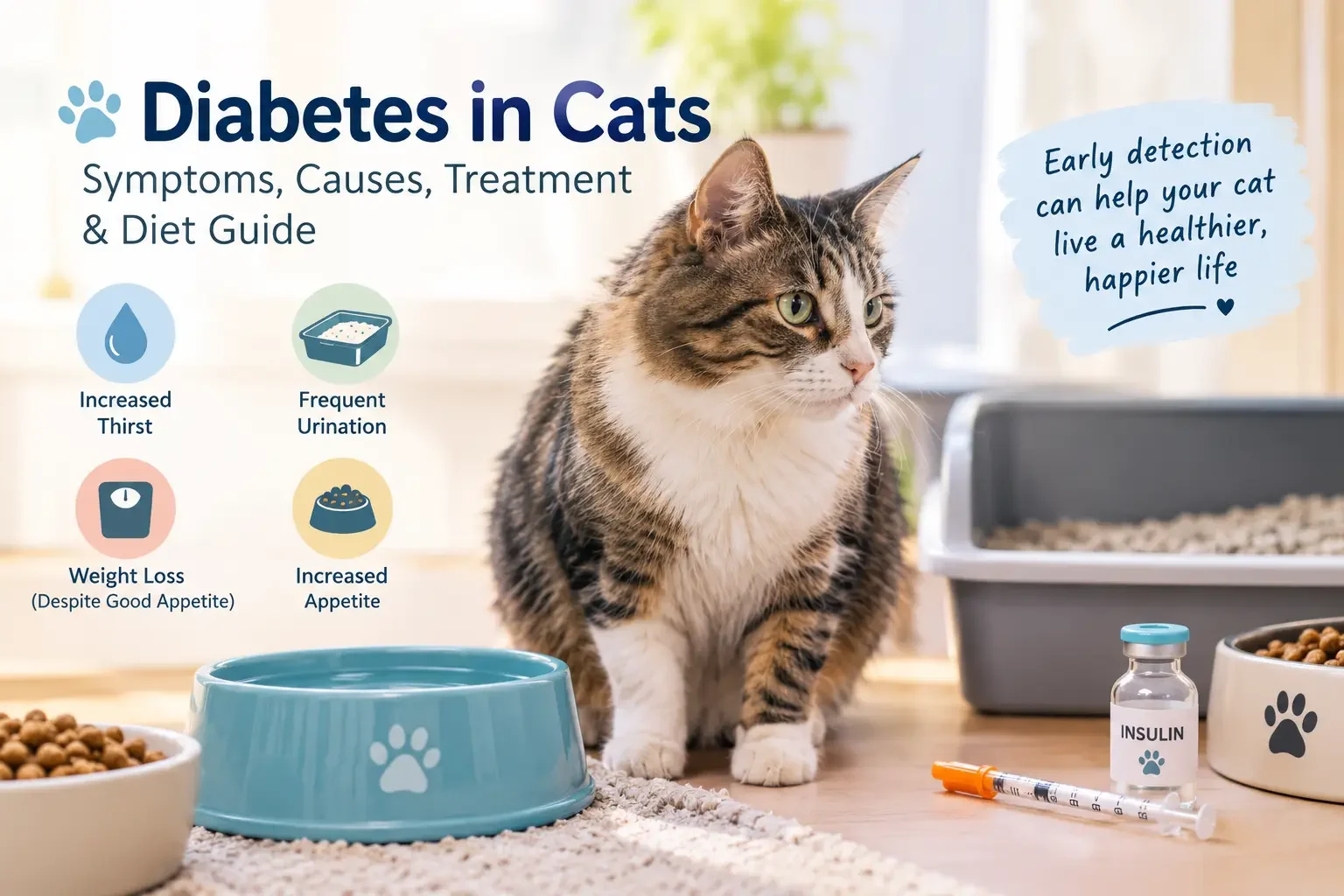
Diabetes in Cats: Symptoms, Causes, Treatment & Diet Guide

Feline Diabetes Mellitus: A Practical Guide for Cat Owners

When your cat begins drinking more water, making big lumps in the litter box, and then continues to lose weight even though he’s eating a lot, it’s time to consult with a veterinarian about cat diabetes. This chronic disease is more common among older cats and occurs in about 1 in every few hundred cats. The great thing about diabetes is that many diabetic cats live long, happy and comfortable lives with insulin and the right food, and some even enter into remission.

In other words, the answer is: A diabetes mellitus is a disease in which the blood sugar remains elevated in cats, due to a inability to produce or effectively use insulin. The classic symptoms include an excessive thirst, frequent urination, weight loss and the insatiable appetite. It can be treated with diet, insulin and regular monitoring.

Diabetes in Cats?

Insulin is a hormone responsible for transporting glucose from the blood to the cells inside the body to give the cells energy. Diabetes mellitus in cats occurs when the cat’s pancreas no longer produces enough insulin, or when the cat’s body no longer uses it normally. Subsequently, glucose accumulates in the blood, passes into the urine and is able to remove additional water from the body. While a cat’s cells are deprived of fuel, the body begins to use fat and muscle for fuel.

The majority of cats with diabetes have a similar type to type 2 diabetes in humans. Eventually the cells become insuline-resistant and the insulin-producing cells of the pancreas begin to deteriorate. Fewer cats get diabetes as a secondary disease, from another more primary disease (such as diabetes from pancreatitis or from chronic use of steroids).

Symptoms to Watch For

Early signs are hard to discern, as they are gradual. Symptoms of diabetes in cats include:

  • Increasing water consumption beyond usual levels
  • Urinating more frequently, in larger amounts in the litter box
  • Weight loss with high appetites
  • Sluggishness, decreased play or jump activity
  • A dull, greasy or unkempt coat

In severe cases, vomiting or decreased appetite may occur.

Weak hind legs and heels on the ground (a flat-footed gait)

This final posture is referred to as plantigrade posture. This is due to damage to the nerves that results from high blood sugars for a prolonged period. This is a good reason to make a vet appointment ASAP since it will often improve when glucose is under control.

So, what causes diabetes in cats?

Often, there’s no single cause. Rather, multiple risk factors are compounded.

  • Obesity: The greatest modifiable risk factor is excess body fat. Fat tissue makes cells less responsive to insulin, which increases the likelihood of disease in overweight cats by several times.
  • Age: Most cats are diagnosed after 8 years of age.
  • Sex and neutering: Males are at a greater risk than females.
  • Breed: The condition is more common in Burmese cats, especially in Australia, the UK and NZ.
  • Diet and inactivity: Cats that are kept indoors and fed dry high-carbohydrate food and do little exercise to get their energy needs are at a higher risk for weight gain.
  • Other diseases and drugs: All of the following can contribute: pancreatitis, changes in the treatment of hyperthyroidism, acromegaly, and use of steroids.

Emergency Warning: Diabetic Ketoacidosis

Without enough insulin, a cat’s body will start to burn fat too fast, resulting in the accumulation of acids in the blood called ketones. This is a life-threatening complication that is called diabetic ketoacidosis – or DKA. Undiagnosed cats often present to the clinic initially like this.

If your cat:

Seek emergency veterinary attention immediately if your cat:

  • Repeated vomiting or not eating at all
  • Looks very weak, wobbly or doesn’t respond
  • Is short of breath or gasps for air
  • Produces sweet, or nail polish remover-like, smelling breath
  • Has yellow gums or skin

DKA typically needs to be treated at a hospital, where one is given intravenous fluids, insulin and electrolyte support. Early treatment is best to increase the likelihood of recovery.

Vets Diagnose Feline Diabetes

More than one high glucose reading is necessary to diagnose as stressed cats may have a temporary spike referred to as ‘stress hyperglycemia’. Your veterinarian will check for elevated glucose levels in your blood, urinalysis for glucose, and associated clinical signs. Common tests include:

  • Blood glucose: indicates the amount of sugar in the blood at a given moment
  • Fructosamine: measures the average glucose levels in the blood over the last 2 to 3 weeks, and can be used to distinguish diabetes from stress.
  • Urine tests – urinalysis and urine culture – check for glucose, ketones, and infection
  • Blood chemistry and thyroid tests: check for kidney disease, pancreatitis and hyperthyroidism

Treatment Options

Diabetes treatment for cats is a joint effort between you and your veterinarian. Most plans include three components- insulin, diet and monitoring.

  • Insulin therapy: Insulin is typically administered twice daily, under the skin, to most cats. Needles are very small and most cats don’t mind them at all – if they do, it’s best to offer them a meal or treat simultaneously. Your veterinarian will determine the type of insulin and initial dosage and adjust it over a period of several weeks, do not adjust the dose without your vet’s instructions.
  • Oral/newer options: In some countries, an oral medication of the SGLT2 inhibitor class has been approved for cats who are stable and do not require insulin. Your veterinarian will be able to determine if it is right for your cat.
  • Home monitoring: Many owners will learn to use a small glucose meter and/or wearable continuous glucose monitor, and maintain a very simple daily record of their pets’ appetite, water intake, and litter box output.
  • Regular rechecks: Early on expect frequent visits, and then every few months once your cat’s stable.

Cat Diabetic Diet

One of the strongest weapons you can use is food. Cats are obligate carnivores and a diet rich in protein and low in carbohydrates helps to maintain stable blood sugar levels after eating. This is typically accomplished by feeding canned wet food, and there are also diabetic diets for prescription use.

Have a scheduled meal time, with insulin doses, and don’t leave food on the table all day. If your cat is overweight, gradually lose the weight with your vet’s advice; rapid weight loss can result in a serious liver issue. Always have fresh water available.

Low Blood Sugar: Become familiar with the signs and symptoms

Hypoglycemia occurs when a person’s blood sugar gets too low, typically after taking too much insulin or forgetting a meal. Symptoms are trembling, wobbliness, glassy eyes, weakness and seizures. Rub a tiny bit of honey, or corn syrup, on the gums, if your cat is awake and can swallow, and call your vet right away. Take your cat to an emergency clinic if he is unresponsive or is having a seizure. A cat should not be given insulin if it is not eating, unless your veterinarian approves.

Is it possible to have remissions of diabetes?

Yes. Remission is when a cat is able to maintain normal blood sugar without insulin. It is more likely if treatment is started early in the disease process, if the cat is on a low carbohydrate diet, and if blood sugar is kept well controlled during the first few months of treatment. The disease may recur, so always feed the appropriate diet and have regular veterinary checkups – remission is not a cure.

Guide your cat to reducing the risk

Help your cat to reduce the risk.

While not all cases are preventable, there are a few habits that decreases the likelihood of diabetes in cats:

  • Feed your cat using measured amounts (not free-fed) to keep him lean.
  • Eat a diet high in protein with fewer carbohydrates (wet food)
  • Encourage playing with wand toys, climbing trees and puzzle feeders every day.
  • Have regular check-ups at the veterinarian’s office year-round, and twice a year for cats over 10 years old.
  • If taking steroids for a long time, please consult your vet first

Conclusion

In cats, diabetes is a serious, but manageable disease. If you notice any of these symptoms, such as increased thirst, frequent urination, and weight loss despite good appetite, watch for them and get them seen by your vet as soon as possible. On the other hand, there are many cats that live years on insulin, a low carbohydrate, high protein diet, and regular monitoring and many cats achieve remission. The most important thing you can do for your cat is to take action early on.

Frequently Asked Questions

  1. What are the first signs of feline diabetes?

The initial symptoms are thirst, increased urination and weight loss despite a normal diet. Some symptoms you might notice are that your cat is less active or has a dull coat.

  1. Can you cure diabetes in cats?

It’s not a disease that can be cured, but it can enter into remission. If a cat is in remission, his blood sugar remains normal without insulin and this is typically achieved through early treatment and using a low carbohydrate diet.

  1. What is the life span of a diabetic cat?

With proper management, the cat lives for several years after diagnosis and some do live to normal life span. Affects outcomes depending on age, other diseases, and adherence to treatment.

  1. Do insulin injections in cats cause problems?

Most owners find it to be less difficult than they anticipated. The needle is very fine, and usually cats will only minimally flinch, especially if injections are administered during feeding time. Your veterinarian or technician will demonstrate how to do this.

  1. What are the costs of treatment?

Depending on the country and clinic, costs will differ. The initial testing and stabilization costs will be the highest, followed by insulin, syringes, special food and periodic rechecks.

  1. Is dry food a cause of feline diabetes?

The disease is not caused directly by the dry food, but a high carbohydrate diet may lead to obesity, which is a significant risk factor. A lot of vets recommend a high protein food that is moist.

  1. Are treats safe for diabetics?

If the treats are low in carbohydrates and within the daily calorie limit, then, yes, occasionally. They are often given plain cooked meats or freeze dried meat treats, although it is essential to consult with your vet.

  1. When is it an emergency?

Take your cat to an emergency vet if he/she is dragging its feet, wobbly, seizing, has sweet smelling breath, vomiting and is very weak. They can indicate dangerously low blood sugar or tell of ketoacidosis.

FLUTD in Cats: Symptoms

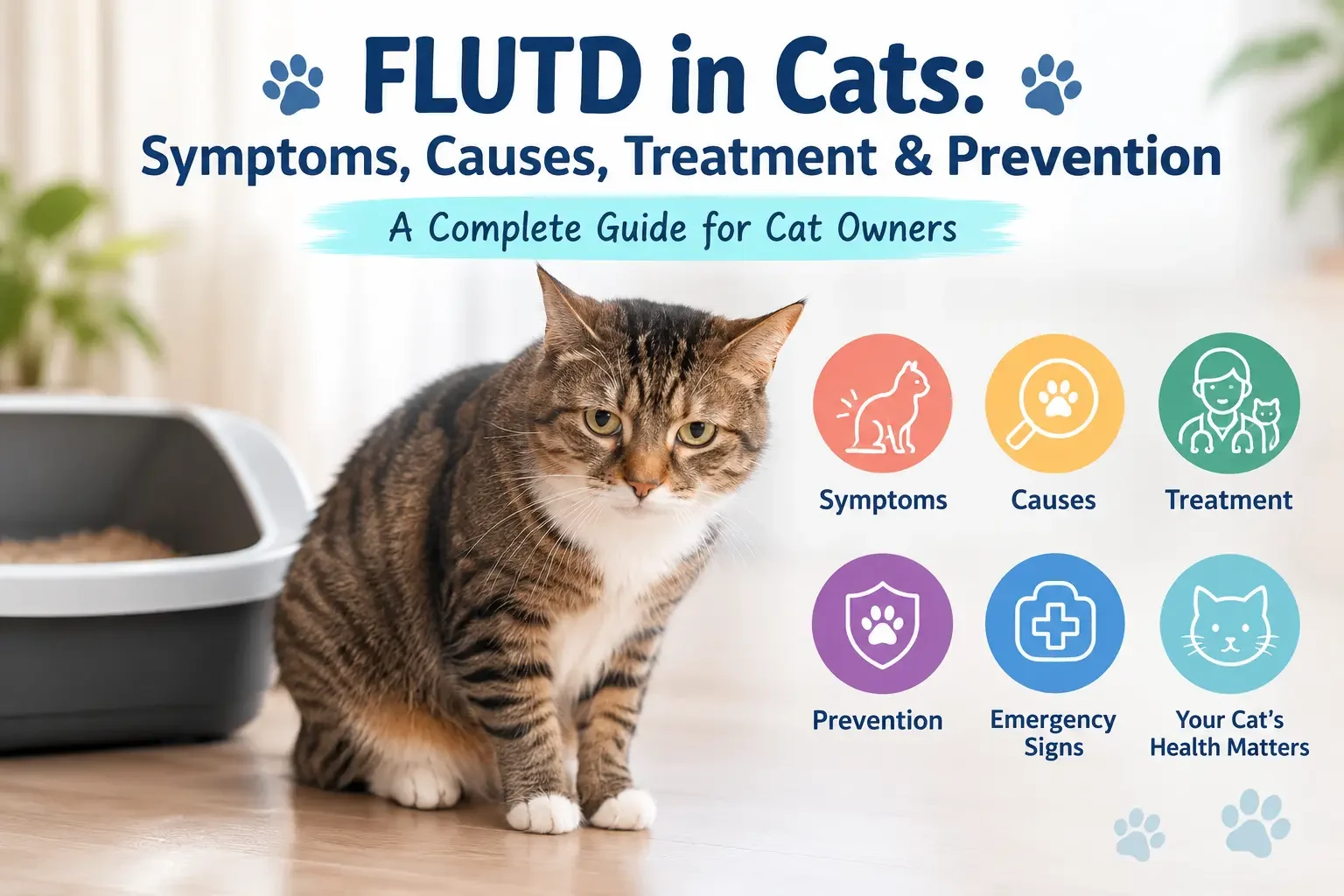
FLUTD in Cats: Symptoms, Causes, Treatment & Prevention

Feline Lower Urinary Tract Disease: A Complete Guide for Cat Owners

Your cat may be suffering from FLUTD if the litter box is often being approached, if your cat cries while urinating or if there are small puddles around the house. It is a common cause of veterinary visits in cats, and is also known as feline lower urinary tract disease (FLUTD). It may be fatal in male cats in just hours. This is a guide to what you’re looking for, why it occurs, how to get your cat’s vet to help, and how you can reduce the risk at home.

So, the short answer is that FLUTD refers to a number of conditions affecting the bladder and urethra of a cat, which lead to difficulty urinating, or urination that is painful and/or frequent. If the cat is straining to pee and is not producing urine, it requires emergency veterinary treatment right away.

What is FLUTD in Cats?

Feline lower urinary tract disease is an umbrella term and not a diagnosis in its own right. It involves any issue that involves the bladder and the tube that carries urine out of the body (urethra). FLUTD is not diagnosed by any single test as many conditions can give the same uncomfortable symptoms.

It can affect cats of any age, but is most common in middle-aged, obese, indoor cats who consume a diet of dry food and do not exercise much. Male cats are at more risk since the urethra is thinner and crystals, mucus plugs or small stones can block it.

Some signs and symptoms of the disease include:

Cats will never display any type of pain, so it’s important to look out for small changes. Symptoms of FLUTD are:

  • Urine is passed regularly but small amounts of urine are passed.
  • Urinating is prolonged or challenging due to straining, crying or yowling
  • Blood in the urine (pink/red colour)
  • Urinating outside the litter box, which is frequently on cool, smooth surfaces, such as tiles or bathtubs.
  • Too much licking of the genitals
  • Restlessness, hiding or sudden irritability

In more severe cases, vomiting, lethargy or lack of appetite occurs.

Straining is often confused by owners for constipation. If the cat squatts continuously and does not get anything out treat it as an emergency.

What Causes FLUTD?

Causes are in several broad categories and occasionally multiple.

  • Idiopathic cystitis: This is the most common cause which makes up over 50% of cases. If no cause for the disease is found, it’s called “idiopathic.” Changes in routine, increased stress, living with other pets, and a lack of enrichment inside are all suggested to be closely associated with flare-ups.
  • Urolithiasis (stones in the bladder) and urinary crystals: Crystals or stones, like struvite and calcium oxalate, can irritate the bladder lining and cause blockages in the urethra.
  • Urethral plugs: A combination of mucous, cells and crystals can form a plug, especially in males.
  • Bacterial infection: Urinary tract infections are uncommon in cats, but they do happen, particularly in older cats and those with other diseases that affect the urinary tract, such as kidney disease and diabetes.
  • Other causes: Less common, but possible, are tumors, anatomy abnormalities and injury to the urinary tract.

Some of the risk factors are obesity, low water consumption, living in an indoor environment, having multiple cats in the household, and being neutered and a male cat.

Is It an Emergency? Urethral Obstruction

The most serious complication of FLUTD is a blockage of the urethra. As the urine builds up in the bladder, the toxins and potassium levels increase in the blood and the heart and kidneys are severely affected. If not treated, a cat with a blocked litter box can die in 24 to 72 hours.

Go to an emergency vet immediately if your cat:

  • Repeatedly strains, but doesn’t pass very much urine
  • Is constantly crying or whimpering and hides
  • Has hard, painful belly
  • Vomits, weak or collapses

Don’t wait and see if it passes. If treated early, the outcome is much more satisfactory, and it is delaying treatment that can make a manageable problem into a crisis.

How Vets Diagnose the Problem

Your veterinarian will begin with a physical exam by palpating or feeling the bladder to determine if it is enlarged or painful. From there, standard tests performed are:

  • Test of the urine (urinalysis) to look for blood, crystals, bacteria and urine concentration.
  • Urine culture: confirmation of infection or elimination of infection
  • Blood tests: to check kidney function and electrolyte levels (particularly in blocked cats)
  • X-rays or ultrasound: shows bladder stones, tumors or abnormalities in structure.

If all the tests are negative, the diagnosis is typically idiopathic cystitis, but not “cured” and it is treated.

Treatment Options

The treatment of FLUTD will depend on the cause and the severity of the signs.

  • Unblocking the urethra: A sedated cat will have a catheter inserted to allow urine to flow. Typically, hospitalization with intravenous fluids, pain medication and observation are required.
  • Control of pain and spasms: Numerous cats require pain medication and urethral relaxant drugs even if there is no blockage.
  • Prescription diets: Foods that are good for the kidneys can break up stones and crystals, and can prevent the growth of new stones.
  • Antibiotics: Only used in the case of a confirmed bacterial infection. Giving them to uninfected individuals won’t help, and may build resistance.
  • Surgery: It may be necessary to remove large stones. Cats which have had multiple blockages may be suitable for a procedure called perineal urethrostomy which enlarges the urethral opening.
  • Stress reduction: Whereas, in idiopathic cystitis, environment changes are as significant as any medication.

Preventing FLUTD in Cats

But the key is that this can be managed most of the time with basic lifestyle changes. Dilute urine, calm environment and healthy weight are the answers to prevention.

  • Increase water intake: Provide moist food on a daily basis, because it is much wetter than kibble! Get a pet water fountain, set several water bowls around the house and avoid having them near the litter box.
  • Give a doctor-approved diet: If your cat has any previous urinary issues, be sure to consult your vet and use a prescription urinary diet. Do not make abrupt changes in foods.
  • Ensure that litter boxes are both clean and there: One box per cat plus one additional Box that should be scooped each day and located in quiet areas. Dirty boxes are not used and many cats can hold their urine, aggravating the irritation.
  • Reduce stress: Offer hiding places, vertical space including cat trees, scratching posts and window perches. Continue feeding & play routine. Some anxious cats can benefit from a pheromone diffuser.
  • Play and exercise encouraged: Interactive play helps to burn calories, reduce stress and curb boredom on a daily basis.
  • Maintain a healthy weight: Portion control and a target weight from your veterinarian will help reduce the risk of urinary issues due to obesity.
  • Schedule regular check-ups: Once a cat has had one episode, it is likely to occur again, so it helps to monitor their litter box habits and to follow up with urine testing.

Outlook and Recurrence

Most cats improve after the cause is identified, but it is common for them to return. Particularly, cats with idiopathic cystitis tend to return. Research indicates that, if left untreated, a large percentage of cats will suffer another episode within a year or two. This is the reason why long-term management is as important as the first treatment.

Maintain a simple notebook to track litter box behaviors, water consumption, and changes in your environment, including visitors, rearranging furniture or getting a new pet. Patterns can occur that indicate triggers. Take this log with you to future visits as it will aid your veterinarian in making further dietary and environmental adjustments.

If you see early indications, like additional time in the litter box or a number of spills of blood, contact your Vet the same day rather than delay. It’s best to catch a flare-up early, as this could lead to a speedy recovery and a reduced bill.

Conclusion

FLUTD is a frequently occurring, painful and potentially harmful condition; however it is very manageable if detected early. Know the signs, consider any straining that does not produce urine as an emergency and consult with your veterinarian regarding diet, hydration and stress control. Simple steps such as giving wet food, more water bowls and a more peaceful home can help maintain your cat’s urinary tract health for many years. If your cat changes his or her bathroom habits, take it seriously and contact your veterinarian.

Frequently Asked Questions

  1. What are the first signs of feline lower urinary tract disease?

The first symptoms are an increased number of visits to the litter box, straining, passing little amounts of urine, blood in the urine and urination outside the litter box. There is also excessive licking of the genital area.

  1. Is there a way that this will pass?

Most cases of idiopathic cystitis are mild and last for a week or two, but they tend to recur. A blockage may happen rapidly – particularly in males – and should always be examined by a vet.

  1. What’s the expense of treatment?

Costs vary widely. A basic examination and urinalysis is relatively inexpensive, and emergency treatment of a blocked cat (catheterization, hospitalization) can cost hundreds or thousands of dollars, depending on the location and severity.

  1. Who are the cats most vulnerable?

Cats with a habit of eating a lot of dry food, drinking very little water and being overweight, middle-aged cats are at the greatest risk. Males are most at risk for life-threatening blockages, especially when they are castrated.

  1. Are dry food harmful for cats’ urine?

Dry food isn’t the only culprit, but the moisture content that is low in dry food results in more concentrated urine that is conducive to promoting the formation of crystals. Wet food or a combination of wet and dry foods will help to keep the urine diluted.

  1. Can it be transmitted to other pets?

No. It’s not contagious. But, there can be conflicts between cats in the same household that lead to flare-ups.

  1. When do I need to take my cat to the emergency vet?

If your cat is straining but not urinating, crying in pain, vomiting or lazy, go immediately. These may indicate a blockage in the urethra (tube that carries urine out of the body) and it is a medical emergency.

  1. Are stress really a cause of urinary problems in cats?

Yes. One of the most well documented causes of idiopathic cystitis is stress. Cats may suffer a flare-up triggered by changes in routine, the introduction of pets, noises and conflict with other cats, and this is why environmental enrichment is a component of treatment.

Cat Heart Disease: Signs

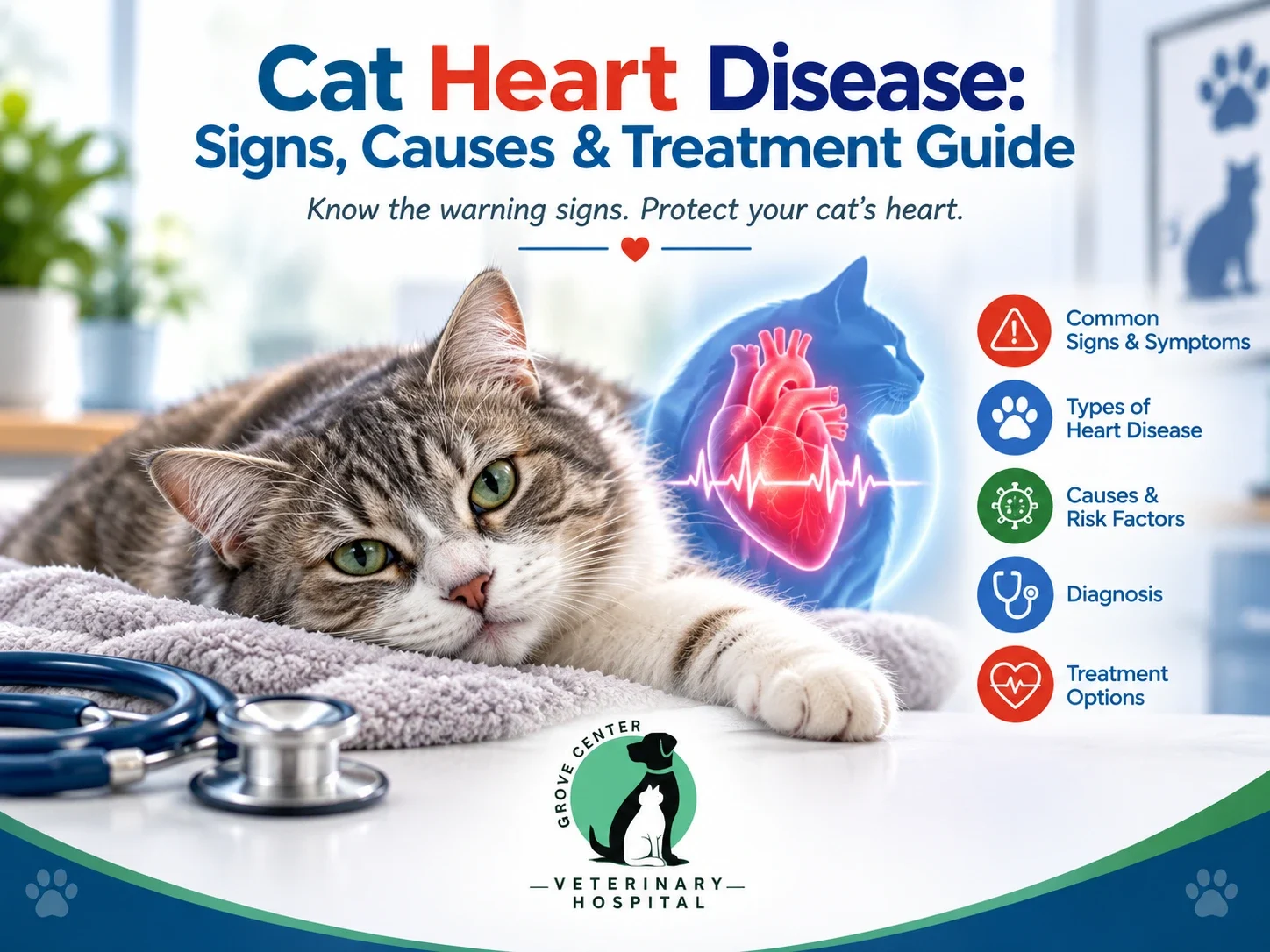
Cat Heart Disease: Signs, Causes & Treatment Guide | Grove Center Veterinary Hospital

Cat Heart Disease: What Every Owner Needs to Know

Cat heart disease is one of the most overlooked health dangers that affect cats in the modern world, and most likely you’ve never thought of it because cat’s are masters at hiding symptoms of their disease until a condition is serious. Cats do not usually have a heart murmur that their owners notice and a cat veterinarian will not catch as part of a routine physical exam, so cat heart disease symptoms often go undetected for months or years. We see cat heart disease at Grove Center Veterinary Hospital pretty frequently, before the owners even realize anything is amiss at home.

In this guide, you’ll find all the information you need to know about cat heart disease: the various types, common signs and symptoms, risk factors, and the diagnosis and treatment you can expect from your vet. Being able to recognize cat heart disease early will help with the quality of your cat’s life and her prognosis.

What is Cat Heart Disease?

Cat heart is an umbrella term for any disease of the cat’s heart that involves any abnormality of its structure or function. The most frequent type of heart disease in cats is hypertrophic cardiomyopathy (HCM) in which the walls of the left ventricle of the heart thicken too much, making it more difficult for the heart to pump blood properly. There are also other heart diseases in cats, such as dilated cardiomyopathy, restrictive cardiomyopathy and congenital heart defects, which are present at birth.

No matter what type of heart disease is present, if not diagnosed and treated, a cat can develop more serious issues such as congestive heart failure, blood clots and sudden cardiac episodes.

Cat heart comes in a variety of forms. There are several types of cat heart disease.

1. Hypertrophic Cardiomyopathy (HCM)

HCM is the most common type of heart in cats, and makes up the bulk of feline heart disease cases. In this form of cat heart disease, the heart muscle becomes thick, thus less space for blood to fill into the heart between beats.

2. Dilated Cardiomyopathy (DCM)

This is a less common type of cat heart which results in stretching and weakening of the heart chambers and decreases the heart’s pumping power. DCM has been associated with cat diets lacking in taurine, but is less common now because high quality commercial cat foods are more likely to have adequate levels of taurine.

3. Restrictive Cardiomyopathy (RCM)

In this type of cat heart , scarring occurs in the heart muscle, which causes the muscle to become hard and fail to relax and expand between beats.

4. Congenital Heart Defects

Congenital heart defects, including faulty heart valves and septal defects (holes in the heart chambers), are cat heart diseases present at birth.

What Causes Cat Heart Disease?

Although the cause of cat heart is not always known, certain risk factors have been identified:

  • Breed: Some cat breeds, such as Maine Coons, Ragdolls and Sphynx cats, are more prone to cat heart disease, especially HCM.
  • Age: Cat heart is more prevalent as cats get older, but may occur at any age.
  • Hyperthyroidism: Secondary heart changes common in cat heart disease may be caused by an overactive thyroid.
  • Chronic (high) blood pressure: Extra work on the heart from chronic hypertension is a known cause of cat heart disease.
  • Taurine deficiency: Rare today, but in the past, taurine deficiency has been associated with some types of heart disease in cats.

The signs of cat heart disease are many

The symptoms of cat heart disease (CHD) can be very subtle and difficult to notice until the disease is well developed. Watch for:

  • Short or rapid breathing, particularly while sleeping
  • Abnormal breathing through the mouth in cats (open-mouth breathing).
  • A state of sluggishness or inactivity, as in the muscles or the mind.
  • Loss of appetite
  • Sudden hind-limb weakness or paralysis, which may be a sign of blood clot
  • Fainting or collapse
  • Physical finding of a heart murmur or abnormal heart rhythm

In fact, there is no definite sign that a cat has cat heart disease until it’s quite advanced, which is why regular veterinary examinations are important.

How they can go undetected

A major challenge in the management of heart in cats is that they compensate well for the disease. Heart disease dogs may show signs of fatigue on walks, while cat heart disease may manifest as a little more sleep or a slight decrease in activity, which can be mistaken for the old age. That is why cat heart disease often is only found by chance; usually when a cat is having a routine exam and a veterinarian hears a heart murmur or irregular heartbeat over the stethoscope.

Diagnosis of cat heart disease

Your Grove Center Veterinary Hospital veterinarian will likely recommend a mixture of the following if your cat is suspected of having heart disease:

  1. Physical exam: listening for heart murmurs, gallop rhythms, or irregular heartbeats.
  2. Radiography (X-rays): to see if there is an enlarged heart or fluid in the lungs.
  3. Echocardiogram (heart ultrasound): the best test to diagnose cat heart disease, shows the thickness of the heart wall and the function of the chambers.
  4. Blood pressure measurement: a high blood pressure may contribute to and exacerbate cat heart disease.
  5. Bloodwork: such as an NT-proBNP test which can detect cat heart disease even in the absence of symptoms.
  6. Thyroid testing: eliminating hyperthyroidism as a cause.

If cat heart is diagnosed early, your veterinarian has a lot more choices to control the condition before it progresses to problems.

The 4 Treatment Options for Cat Heart Disease

Cat heart disease can’t always be cured, but it can often be well controlled through a proper treatment program developed by the veterinarian that may involve:

  • Other medications to lower fluid accumulation, control heart rate or lower blood pressure
  • Blood thinners to prevent the formation of harmful blood clots, especially in cats with HCM
  • Adjustments to diet to support heart health and sodium control
  • Follow-up echocardiograms and bloodwork is performed regularly.
  • Management of any underlying disease that may be responsible for cat heart disease, such as hyperthyroidism or hypertension

Diagnosis is critical to determining the correct treatment plan for cat heart disease, as the type and stage of the disease play an important role in the treatment.

Managing a cat with heart disease at home

A cat with diagnosed heart disease may not be kept. A diagnosis of cat heart disease doesn’t necessarily mean a short remaining lifespan. With management, many cats will live happily for many years. At home, the following tips are helpful for a cat with cat heart disease:

  • Taking medications as prescribed
  • Keeping an eye on the changes in your cat’s breathing, particularly if they are resting or sleeping
  • Ensuring follow-up appointments to track disease progression
  • Lowering stress, as it can aggravate cardiac strain (stress hormones can play a role in this)
  • Providing your cat with an appropriate diet recommended by your veterinarian, according to the type of heart disease your cat has.

Emergency Medical Attention

There are symptoms of cat heart disease that don’t call for a routine appointment and need immediate medical attention. If you notice your cat exhibits any of the following symptoms, please be sure to seek emergency care immediately:

  • Sudden trouble breathing or open mouth breathing
  • Collapse or fainting
  • Sudden collapse of the rear legs or dragging the back legs
  • Very sleepiness or un-responsiveness
  • Pale or bluish gums

These symptoms may be a sign that cat heart disease has advanced to congestive heart failure or blood clot event, both of which are medical emergencies.

How Grove Center Veterinary Hospital Can Help

Cat heart disease is a tricky affair to diagnose and treat, and it depends on experience, the proper equipment, and a team of veterinarians who pay attention to subtle symptoms. We always routinely listen to your cat’s heart during a wellness exam at Grove Center Veterinary Hospital, as sometimes a cat will never display signs at home that they are suffering from heart disease until it is detected by their veterinarian. When your cat is diagnosed with cat heart disease, or you suspect you might be noticing signs, we are here to create a treatment plan that works for your cat.

Conclusion

Heart conditions in cats are widespread, frequently asymptomatic and are best treated when diagnosed promptly. While there are different types of cat heart disease, from hypertrophic to less common, dilated and restrictive, all these types are much easier to manage if caught early rather than when they start to show symptoms. Cats are extremely good at hiding their discomfort, and routine wellness exams are one of the most effective ways to detect heart disease, stop it from advancing, and gain insight into it. If you have any concerns your cat may be experiencing cat heart disease issues, please make a time for your cat to receive a comprehensive cardiac examination at Grove Center Veterinary Hospital.

Frequently Asked Questions

How can you tell if your cat has heart disease?

Often, no symptoms of early heart disease will be seen in the cat, and this is why it is often diagnosed at a routine health check-up. If signs are present, they can be lethargy, a loss of appetite, or a heart murmur.

Is there any way to cure cat heart disease?

Most types of heart disease in cats are not curable but can be treated successfully with medication, diet, and frequent checkups to help slow the disease and preserve quality of life.

Which breeds are the most susceptible to cat heart disease?

Maine Coon, Ragdolls and Sphynx cats are more prone to some types of cat heart disease, particularly HCM.

What is the diagnosis of cat heart disease?

Cat heart disease diagnosis is performed using physical examinations, chest X-rays, echocardiograms, blood tests and blood pressure measurements.

Can cat heart disease be fatal?

Yes, untreated or undiagnosed cat heart disease may lead to congestive heart failure, life-threatening blood clots or cardiac events.

At what age should cats be screened for heart disease?

The heart should be examined during all feline wellness exams, but an echocardiogram should be performed if a feline has a murmur or other predispositions.

Cat Wellness Exam : infographic

Cat Wellness Exam Guide: Why, When & What to Expect | Grove Center Veterinary Hospital

The Complete Guide to a Cat Wellness Exam: Why Every Cat Owner Needs One

Cats hide their illness with style, and that’s why one of the best ways to care for your cat is to have a cat wellness examination. Cats are often not outwardly showing signs of pain or disease until it is really quite advanced, so the best way to detect an issue early is to schedule a cat wellness exam. A cat wellness exam is a great time for your veterinarian to examine all of your cat’s systems before problems begin to arise; whether your cat is a playful kitten, an independent adult or a slowpoke senior cat, it’s a perfect time to check all of your cat’s systems.

Here at Grove Center Veterinary Hospital, we know how having a regularly scheduled cat wellness check-up can directly contribute to the length and quality of a cat’s life, and the peace of mind of its owner. This step-by-step guide will cover everything you need to know about a cat wellness exam including why it’s important, what to expect during the exam, when to schedule a wellness exam, when to avoid waiting for one, and how to prepare for the exam so your cat can make the most of it.

Why a Cat Wellness Exam is Even More Important Than You Think!

A cat that is weak is preyed upon by other animals in the wild, and that is still true in your home, even if your cat naps on a heated windowsill. That’s why it’s so important to have a wellness checkup—your veterinarian will get an opportunity to pick up on the subtle changes that even the most attentive cat owner may not notice.

During a comprehensive cat wellness exam, your veterinarian may discover the following early signs of:

  • Most cats will develop dental disease and gum inflammation by 6 years of age.
  • Chronic kidney disease (CKD) is a very common disease in older cats.
  • Hyperthyroidism and other hormonal disorders.
  • Obesity and joint or metabolic stress associated with obesity.
  • Heart murmurs or abnormal rhythms (arrhythmia).
  • Fleas, ear mites and other external parasites.
  • Older cats that are unable to see or hear properly.

Many of these conditions can silently develop for months or years, without ever presenting a problem at home, unless there is a regular cat wellness exam. Preventive care (via cat wellness exam) is almost always less taxing on your budget, and less stressful for your cat, than trying to treat an illness at an advanced and emergency stage.

During a Cat Wellness Exam

A cat wellness exam may be stressful for you and your cat if she’s never had one before, so it’s important to know what to expect to help calm her down. During a routine cat wellness checkup at Grove Center Veterinary Hospital, your veterinarian will examine your cat for:

  1. A thorough physical exam.

Your vet will examine your cat’s eyes, ears, teeth and gums, skin and coat, joints and abdomen from nose to tail. From a small lump to a tender spot on the belly, this hands-on component of the cat wellness exam is the place where first indications of a possible problem may emerge.

  1. Weight and Body Condition Score.

Tracking weight is vital to any cat wellness exam. Cats can gain or lose weight over time, and owners may not notice the changes, which is why you should have regular weight checks with your vet to check for any changes in your cat’s body condition score.

  1. Auscultation of the heart and lungs.

Your veterinarian carefully examines your cat’s heart and lungs with a stethoscope. This component of a cat health checkup is short but vital, as cats often do not show signs of cardiac problems until they are in a serious state.

  1. Dental Assessment.

Cats are almost always examined for their teeth and gums during a cat wellness exam as it is very common. If you are able to treat tartar buildup and gingivitis as soon as they are discovered, then you won’t experience the pain of having to pull teeth out later.

  1. Vaccinations and Parasite Prevention.

A cat wellness exam is a good time to consider core vaccines and discuss flea, tick and parasite prevention depending on your cat’s age, lifestyle and indoor/outdoor activities.

  1. Bloodwork and Diagnostic Testing.

Blood work may also be performed during a cat wellness exam to evaluate kidney and liver function, blood cell counts, and thyroid levels, as many problems in cats don’t present as external symptoms until they are more advanced, particularly for older cats and adults.

  1. A discussion of behavior and lifestyle.

A complete cat wellness exam isn’t only about the physical body. Your veterinarian will inquire about changes in litter box patterns, appetite, water consumption and changes in behaviors, as these little things can point directly to a health problem.

How do I know when to schedule a Cat Wellness Exam?

Determining the correct exam frequency for a wellness examination will depend on your cat’s age and health:

  • Kittens (less than 1 year): Cat wellbeing check every 3-4 weeks, until vaccinated series is complete, and then annual check-ups.
  • Adult cats (1-7 years old): One wellness exam per year is usually sufficient for healthy cats.
  • Cats over 6 years old (seniors): For senior cats, it is advisable to have a wellness exam every 6 months as age related diseases such as kidney disease and hyperthyroidism can develop rapidly.

If your cat has a chronic condition, your vet may suggest a more regular schedule of cat wellness exams to help monitor the necessity of continuing treatment and the effects of medications.

Sticking to this beat ensures that your cat’s health is never put in question. Regular visits to the veterinarian also help your vet notice small changes from one year to the next in your cat’s weight, bloodwork, mobility, and the like.

Signs that your cat needs a checkup sooner than scheduled

A normal cat health check-up will have a set schedule, but some signs indicate that you should not postpone the next scheduled check-up. If you see any of these signs, call Grove Center Veterinary Hospital immediately:

  • Sudden weight loss or gain
  • Notice of unusual or excessive drowsiness or sleepiness
  • Appetite or thirst changes
  • If they vomit, have diarrhea or strain in the litter box
  • Stiffness or reluctance to jump
  • Too much grooming, scratching or loss of fur
  • Pawing at the mouth, drooling or bad breath
  • Difficulty breathing, coughing or sneezing

If any of these signs are present, a cat should be seen sooner than later, because a cat is likely to be in a more advanced stage of illness if it shows these symptoms.

How to Prepare for Your Cat’s Wellness Exam

With a little preparation, a cat wellness exam will be smoother and more productive for everyone involved:

  1. Record any changes that you have observed: appetite, energy, litter box behavior, or new behaviors.
  2. If a stool or urine sample is required to be collected by your veterinarian for screening, bring a stool or urine sample.
  3. List current medications/supplements and dosages.
  4. Record the food your cat eats, treats and changes in food.
  5. A secure and familiar carrier is used and a calming spray to reduce car and clinic anxiety is considered.

You can help your vet’s team get the most out of your appointment by arriving with a few questions in mind that will make the most of the time dedicated to the cat wellness exam.

What Does a Cat Wellness Exam Cost?

Wellness exams for cats are dependent on your cat’s age, what tests are performed, and where you are. A basic wellness exam is the least expensive, and bloodwork and vaccinations or dental cleaning will increase these prices. Grove Center Veterinary Hospital and other veterinary clinics provide wellness packages, which include regular check-ups, vaccinations, and screenings, all in one place for a predictable cost, to help you better plan for your cat’s future health care.

So why should you choose Grove Center Veterinary Hospital for your cat’s wellness exam?

All cats do not have the same type of wellness exam. We employ a gentle, comprehensive and cat-friendly method of examining your cat’s health at Grove Center Veterinary Hospital that combines hands-on inspection with the latest diagnostic technology that is designed to minimize stress for your feline patients. We feel that a cat wellness exam should answer your questions and give you a plan, and not more questions! We want to establish a relationship with you and your cat so that each visit, we can benefit from more information about your cat’s history and trends in health.

If you haven’t taken your cat to a wellness exam in a while, now’s the time to do so and provide your cat with preventive care that it deserves.

Conclusion

One of the most important things you can do for your cat’s long-term health is to get your cat a wellness exam, particularly when cats have the ability to finesse their way out of trouble. Vet check-ups can make a big difference in the life of your cat, from early detection of kidney disease to early recognition of a heart murmur before it becomes problematic. Regular cat wellness exam routine is good for kittens, adults, and seniors, and understanding when to seek a cat examination sooner than scheduled can make all the difference. Don’t let a minor problem get more serious, call Grove Center Veterinary Hospital to set up your cat’s next appointment and help your cat get the healthy life she deserves.

Frequently Asked Questions

How many times a year should I take my cat in for a wellness check-up?

Most healthy adult cats should have one exam a year, kittens should have more regular check-ups in their first year, and senior cats should have a check-up every six months.

What does a routine examination of cats include?

A routine feline health checkup will consist of a physical exam, weight check, check of the heart and lungs, dental exam, vaccine history review, and sometimes blood tests and/or parasite screen.

What is the price of a cat physical?

The price of a wellness exam for a cat can vary based on what is included in the exam, such as a routine check-up or an exam that includes bloodwork, vaccines, and/or dental care. Grove Center Veterinary Hospital will be able to give you a custom price.

What diseases can be detected early with a cat wellness examination?

Yes. A cat wellness checkup can detect problems such as kidney disease, hyperthyroidism, dental disease and heart disease before they get worse; it may be done through physical exams and blood tests.

What can I expect to have to bring to my cat’s wellness exam?

If your vet asks to bring a stool sample, urine sample, and/or a list of symptoms or behavior changes, you should do so to help your vet maximize the cat wellness exam.

Does my cat need a wellness checkup if he or she appears healthy?

Yes. A cat wellness exam may find problems that are not apparent to the cat’s owner, even if the cat looks like it is healthy.

cat asthma Symptoms

Cat Asthma: Symptoms, Causes, and Treatment Every Owner Should Know | Grove Center Vet

Cat Asthma Symptoms : What Every Owner Needs to Know Cats with cat asthma may have had one or more sudden bouts of coughing that seemed more like hairball, and yielded no hairballs; or notice wheezing after playing. It is more prevalent than many pet owners imagine and if not managed can become a serious, life threatening emergency.

At Grove Center Veterinary Hospital, we frequently assist cat owners in discovering and treating cat asthma to improve their cat’s quality of life and ability to live full active lives. This guide explains the symptoms to look for, what causes asthma flares and how it is usually diagnosed and treated.

What Is Cat Asthma?

Cat asthma is a chronic inflammatory lower airway disease that is very similar to human asthma. Cats with asthma can overreact to irritants or allergens, causing the airways to become inflamed, the muscles around the airways to tighten, and excess mucous secretions to accumulate. This combination causes narrowing of the airways and makes breathing more difficult.

Cat asthma tends to develop in cats in their early to middle age, but can occur at any point. Though any cat can suffer from cat asthma, it seems to be more common in Siamese cats and other cats with a slender body type.

Typical signs of cat asthma Symptoms.

The signs of cat asthma may be confused with other health issues such as hairballs or upper respiratory infections, so it’s frequently misdiagnosed or overlooked. The following are some of the main symptoms.

  • 1. Coughing Recurring or chronic coughing is a characteristic symptom of cat asthma. Is commonly called a hacking cough or a crouching cough by owners and sometimes confused with attempting to vomit a hairball. If your cat coughs a lot, but doesn’t cough up anything, cat asthma could be a suspect.
  • 2. Wheezing One of the most common symptoms of cat asthma is a whistling noise when breathing, particularly when your cat is exhaling. The narrowing of the airways is what causes wheezing to happen, giving the air the distinctive sound.
  • 3. Rapid or laboured breathing. Asthma-afflicted felines tend to breathe faster than usual, or seem to be working harder to breathe, even during rest. It’s possible that you will see their chest and abdomen rise and fall more significantly with their breathing. This is one of the symptoms associated with cat asthma and if it worsens during an attack, it is imperative that it be addressed ASAP.
  • 4. Open-Mouth Breathing Cats will not breath through their mouths unless they are very stressed, over heated or having trouble breathing. A cat’s asthma is a serious condition in which the cat’s mouth is open and requires immediate veterinary attention.
  • 5. Dullness and decreased activity A cat with cat asthma might become easily fatigued while playing or appear to be less active than normal. There is increased difficulty in breathing, and daily living becomes more challenging.
  • 6. Hunched Posture During Breathing Episodes Cats will crouch down, lower their neck and hunch their shoulders during an asthma attack to allow as much air to pass through their airways as possible. When this posture is coupled with noticeable breathing effort, it is a good sign of cat asthma.
  • 7. Small amounts of blue-tinged gums or tongue. Small amount of blue gingiva or tongue. A severe lack of oxygen may lead to a bluish color of a cat’s gums or tongue, called cyanosis. This is a life-threatening sign of cat asthma and should be treated medically.

Triggers for Cat Asthma Flare-Ups?

Environmental allergens and irritants are linked to cat asthma. Common triggers include:

  • The smoke and dust from cigarettes or cigars
  • These items are potential sources of dust and dusty cat litter.
  • Household cleaning sprays and aerosols
  • There are also air fresheners, candles and incense.
  • Pollen and mold spores
  • Perfumes and colognes
  • The risk is high when there is any smoke or dust from the fireplace or from building renovations.

Long-term treatment for cat asthma involves identifying and avoiding these triggers, which is done in addition to cat asthma medication.

What are the ways of diagnosing cat asthma?

Unfortunately, there is no single test that will confirm the diagnosis of cat asthma. Luckily, there are several methods used to diagnose it. Your vet may prescribe:

  • Chest X-rays to rule out a pattern of the lungs typical of cat asthma
  • Parasite, infection or other underlying condition ruled out with bloodwork.
  • Fecal testing to eliminate lungworm as a cause of similar symptoms

In more complicated cases:

  • Bronchoscopy or airway wash – to look inside the airways directly and take samples

As cat asthma can have symptoms similar to heartworm disease, bronchitis and even heart disease, it is important to do a proper workup to rule these lookalikes out prior to beginning treatment.

Treating Cat Asthma

Cat Asthma doesn’t have to ruin your life, with the right treatment plan it’s very manageable not to mention completely curable. Common approaches include:

  • Corticosteroids Anti-inflammatory medicines, either taken by mouth, injected into a vein or taken by the cat’s breath, are the foundation of cat asthma treatment. They help to lower irritation of the air passages and prevent flare-ups.
  • Bronchodilators These drugs relax muscles around the airways allowing cats to breathe more easily during an asthma attack. In cases of more severe cat asthma, they are commonly used in combination with the corticosteroids.
  • Inhaler Therapy Inhalers with a feline specific spacer device are now recommended by many veterinarians because they can administer medication directly into the lungs with less systemic side effects to cats. This has been a growing trend in long-term asthma treatment of cats.
  • Environmental Management One of the easiest steps to take in minimizing exposure to known triggers is an integral part of cat asthma management. Using low dust litter, avoiding aerosol sprays in the house around your cat and improving the air quality in the house will all make a difference.

Cat Asthma v Other Respiratory Conditions

Another problem with cat asthma is that symptoms can be confused with a number of other disorders, which is why it is quite important to make an accurate diagnosis. For instance, Heartworm associated respiratory disease may cause coughing and difficulty breathing which is very similar to cat asthma, but requires a completely different treatment strategy. However, coughing and congestion are also common with upper respiratory infections (and may be part of the same infection), but typically there is nasal discharge, sneezing or eye discharge that are not seen with cat asthma. Another one that has a similar appearance to cat asthma is chronic bronchitis, and in some instances, the same drugs are used to treat it although the cause is somewhat different. Veterinarians use imaging and laboratory tests, not just symptoms, to make a cat asthma diagnosis, hence this.

50% of cats that develop asthma will experience long-term symptoms.

If you have been told that your cat has asthma, you and everyone else may be worried that your cat’s life will be shorter or harder, but this isn’t the case. Most cats with asthma will live a normal life and experience a good quality of life with a consistent treatment plan. The important thing is to be proactive, not reactive. Between flare-ups, cats with good asthma control may not exhibit any signs or symptoms, and many owners report that over time managing asthma in cats gets easier as they become more aware of their cat’s patterns and triggers. One of the most frequent causes of worsening cat asthma is the failure to take medication or to take it consistently, so it’s important to get to know your veterinarian to create a plan that you can follow.

Asthma is a chronic condition that can be managed at home by cat owners, with the help of these tips.

Apart from medication, there are some small habits that can be beneficial to the control of your cat’s asthma:

  • Use low-dust unscented litter, which will minimize airborne irritants.
  • Clean frequently to reduce household allergens: vacuum and dust frequently.
  • Do not allow pets to smoke in your house or near you.
  • Avoid using scented candles, incense and aerosol air fresheners.
  • Maintain a symptom log to record the time of coughing/wheezing episodes and triggers if possible
  • Keep your cat at a healthy weight as overweight felines may have more trouble breathing.
  • Have regular veterinary check-ins to review treatment plan as necessary

These will not cure cat asthma, but they will help to make life more comfortable for your cat as the frequency and severity of flare-ups is significantly reduced.

When Cat Asthma Escalates into an Emergency

Asthma can get worse very rapidly. Open-mouth breathing, blue-tinged gums, great distress and inability to breathe are medical emergencies. Do not delay treatment for cats that are having an asthma attack as it can be life threatening. Get in touch with Grove Center Veterinary Hospital or your local emergency animal hospital as soon as possible!

Living With a Cat With Asthma

Cat asthma should not be treated as a Panic. With proper care, the majority of cats who have asthma will lead productive and pleasant lives. Having a record of when flare-ups occur and avoiding any known triggers, and following the doctor’s orders for medication, are all important factors in maintaining control of cat asthma. Regular check ups also enable your veterinarian to make necessary adjustments to the treatment as time goes on.

Conclusion

Feline asthma is a treatable, but potentially serious illness that every cat owner should be familiar with. When cats start to exhibit symptoms such as coughing and wheezing, or more severe symptoms, such as open-mouthed breathing and bluish gums, early detection allows treatment to be much more successful and potentially in time prevent serious attacks. When your cat is displaying any of these warning signs, don’t delay in seeking answers. At Grove Center Veterinary Hospital, we are here to diagnose, treat and manage cat asthma to help your cat breathe more comfortably and thrive.

Frequently Asked Questions

  • How does a cat have an asthma attack? When a cat has an asthma attack, it usually starts with a sudden onset of coughing, wheezing, rapid and/or labored breathing, and hunched body posture with the neck extended. Cats can breathe with their mouths open in extreme cases and may have bluish gums.
  • Are cats considered to have asthma? Cat asthma is like human asthma, with inflammation of the airways, muscle contraction and excessive mucus production, leading to a narrowing of the airways and making breathing difficult.
  • Can cat asthma be cured? Although there is no cure for cat asthma, it can be well controlled with medication and by limiting exposure to environmental triggers, so most cats can enjoy a normal, active life.
  • What causes cat asthma attacks? Typical offenders are smoke, dust, aerosol sprays, air fresheners, scented candles and dusty cat litter. Knowing and avoiding your cat’s triggers is essential to decreasing flare-ups.
  • What are the signs that a vet will look for to diagnose cat asthma? Chest X-rays, blood tests, and fecal exams are used to diagnose cat asthma, while eliminating other conditions (such as heartworm disease or lungworm infection).
  • If my cat has asthma symptoms, when should I take her to the emergency veterinarian? If your cat has an open mouth, gums that are blue colored, or seems to be in severe distress, please call the veterinarian right away for an emergency visit, instead of waiting for symptoms to go away.
Veterinary Services : infographic

Veterinary Services: Science, Care & Innovation

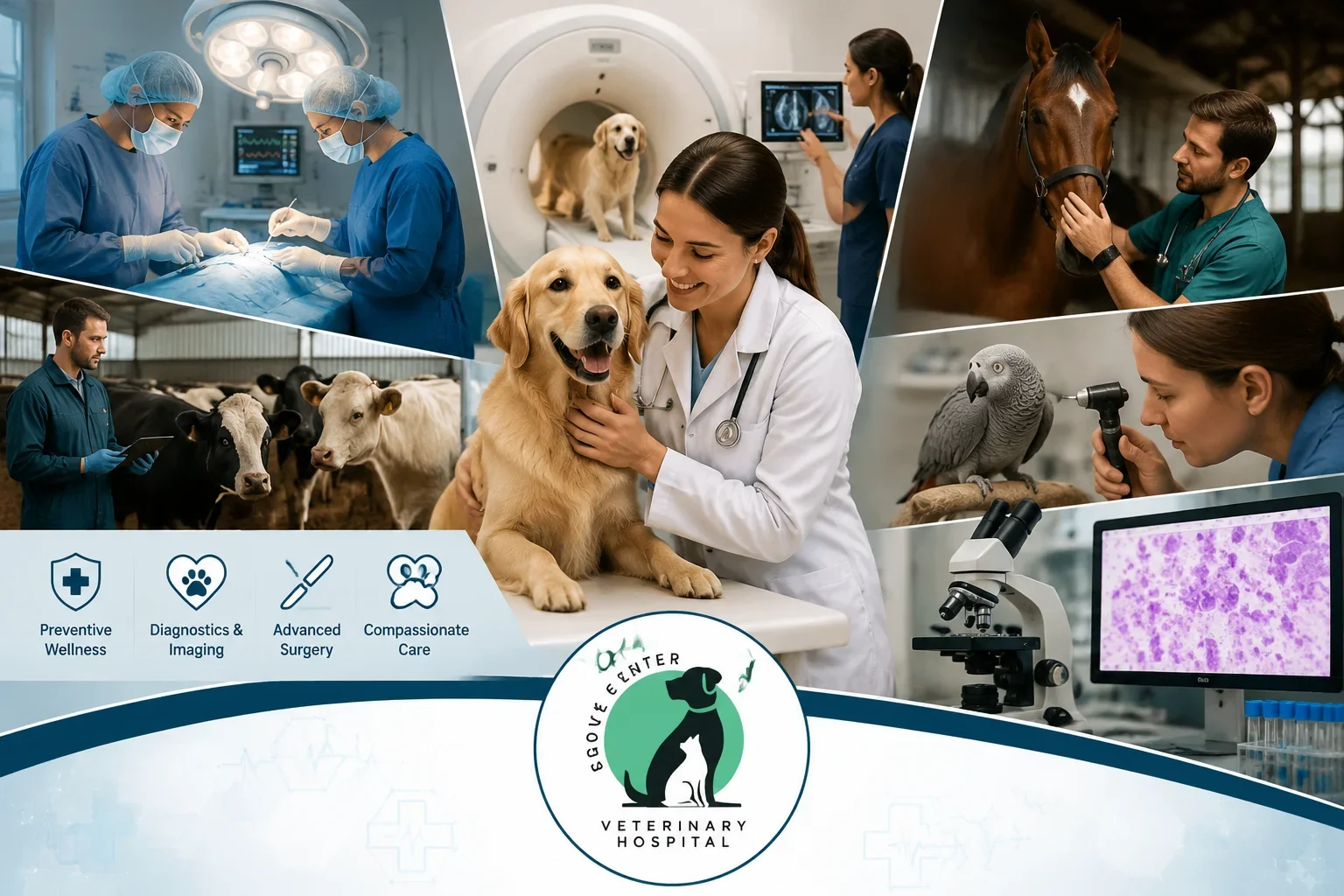
Veterinary services play a fundamental role in the world of animal health, public safety, agricultural security, and the human-animal bond. Today’s veterinary medicine is more than a matter of routine check-ups and basic health care; it’s a vast landscape of preventive clinical treatment, sophisticated diagnostic testing, leading-edge surgical specialties and far-reaching public health programs. From protecting pets in the home to implementing biosecurity measures in agriculture to conserving endangered species, veterinary services are critical in today’s society.

1. Defining Veterinary Services

Veterinary services include any medical, surgical, diagnostic or preventative care that a trained medical professional provides for animals. These care teams can include licensed doctors of veterinary medicine (DVMs or VMDs), credentialed veterinary technicians, veterinary assistants and practice managers who provide quality veterinary medical care to patients.

The concept of “One Health” and Core Objectives.

The main purpose of veterinary medicine is to prevent, detect, and treat injuries, diseases and systemic disorders in all animals. In addition to clinical treatment, veterinary medicine is also strongly related to human health, particularly through the One Health approach, which is a collaborative approach that transcends the boundaries of veterinary and human medicine, and takes into account the health of the environment.

of the environment.

Veterinarians are first-line protectors when it comes to zoonoses—diseases that jump from animals to humans like rabies, Lyme, avian influenza, brucellosis and leptospirosis. Disease surveillance in domestic animals, livestock and wildlife is a way to prevent the spread of disease in human communities before it can reach epidemic levels.

  1. The two main categories of veterinary services.

There are several areas of veterinary practice that are specialized for specific types of animals in different settings and for different physiological needs.

 Care of a companion animal

Companion animal medicine concentrates primarily on the domestic pets of the home, such as dogs and cats, rabbits, ferrets and small rodents. As pets become a part of the family, companion animal clinics make up the largest portion of private practice in the world.

 Preventative Wellness Programs: Annual or biannual physical exams, tailored vaccination plans, weight checks, and age-specific blood tests.

 Heartworm, Flea, Tick, Intestinal Parasite, and Mite Control: Sustaining the protection from heartworm, flea, tick, intestinal parasites and mites.

 Routine elective surgeries: Spaying and neutering, soft-tissue surgery, benign mass removals.

 Full dental services: Professional ultrasonic cleaning and polishing, 2D dental imaging and treatment for periodontal disease.

 Medical and Research aspects of Food Animal and Livestock Medicine.

Large animal and production veterinarians specialize in the treatment and care of agricultural animals, such as cattle, swine, sheep and goats, and poultry. This branch ensures the well-being of individual animals while also taking into account the herd’s dynamics to guarantee a secure and sustainable food supply.

 Herd and Flock Health Management: Development of herd-wide vaccination protocols, optimized feeding plans and strict biosecurity guidelines.

 Reproduction and Genetics: Artificial insemination, embryo transfer, pregnancy diagnosis by ultrasound and dealing with difficult births (dystocia).

 Supply Chain and Food Safety: Supervised antibiotic usage, milk quality and slaughter facility compliance to ensure consumer safety.

Equine Services

Equine medicine is tailored to horses, ponies, donkeys and mules. Their care is a mix between companion care and livestock care, as they are used for a variety of purposes, including athletics, as work animals and as pets.

 Lameness and Sports Medicine: Advanced motion analysis, joint injections, diagnostic nerve blocking and special shoeing plans.

 Equine Dentistry: Floating teeth, sharp enamel points and treatment of complicated dental or sinus infections.

 Colic & Gastrointestinal Management: Emergency abdominal surgery for intestinal blockages, medical stabilization and rapid diagnostic assessment.

 Exotic, Zoo and Wildlife Medicine

The care of non-traditional pets (reptiles, birds, amphibians and exotic mammals), captive zoo animals and free-ranging wildlife will differ because of their unique anatomy, metabolism and environment.

 Avian and Exotic Pet Medicine: Specialized blood panels for diagnosis, environmental/habitat evaluations and beak or wing trims.

Conservation and Field Biology: To assist reintroduction initiatives, monitor diseases in wild animals and to maintain genetic diversity.

  1. Specialized Clinical Disciplines

As veterinary medicine has progressed, so have clinical practices become specialised, like in human medicine.

 Advanced Diagnostics and Pathology

Effective treatment is based on a good clinical assessment. In modern veterinary hospitals, there is advanced diagnostic equipment:

 In-House Laboratory Facilities: Automated blood chemistry, hematology analyzers, urinalysis, and point-of-care infectious disease tests.

 Diagnostic imaging: digital radiography, high-resolution ultrasound, computed tomography (CT) and magnetic resonance imaging (MRI).

 Pathology and Cytology: Fine-needle aspirate analysis, biopsy and histopathology for the diagnosis of tumors, infections and autoimmune diseases.

 Specialty Surgery and Oncology

Specialists with board certification treat high-complication cases referred by general practitioners:

 Orthopedic Surgery: Total joint replacement, fracture fixation, ligament repair (TPLO or TTA surgery for canine CCL tears).

 Soft-Tissue and Reconstructive Surgery: Thoracic surgery, oncologic tumor resections, skin grafts, and vascular abnormality repairs.

 Veterinary Oncology: Diagnosing cancer at an early stage, treating cancer with focused chemotherapy, managing radiation therapy and arranging palliative hospice care.

 Emergency and Critical Care (ECC):Emergency veterinary clinics are open 24 hours a day, 7 days a week, to provide constant services for acute injuries and sudden severe diseases: Triage and Stabilization of Motor Vehicle Accidents, Severe Fall, and Bite Wounds.

 Acute Illness Management: Management of Gastric Dilatation-Volvulus (bloat), toxic substance ingestions, severe foreign body blockages and feline urethral obstructions.

 Intensive Care Unit (ICU): Monitoring of blood gases, automatic intravenous fluid delivery, mechanical ventilation and oxygen therapy.

  1. The Value of a Wellness Exam. 6. The Advantages of Proactive Health Care.

Regular, preventive veterinary visits are always more effective – and a lot cheaper – than treating late-stage disease and illnesses.

Care Support Intervention Support Primary Long-term Benefits
Preventative Vaccinations, parasite control, wellness exams Prevents zoonotic risks to owners and fatal infectious diseases.
Dental Care Annual scalings, polishings, home brushing programmes Prevents serious periodontal disease and minimises secondary damage to organs such as the heart and kidneys.
Nutritional Calorie planning, body condition scoring, therapeutic diets Helps reduce the risk of obesity, diabetes, and overloading of joints.
Geriatric Bi-annual screening, mobility assessments, pain management Increases lifespan, detects early signs of organ failure, and improves the quality of life for older pets.
  1. Innovations, which change the face of veterinary medicine.

Advancements in technology continue to raise the bar on the standards of animal care and increase the access, speed and accuracy of care throughout the field.

 The use of Telehealth and Remote Monitoring.

Virtual veterinary consultations can be used for initial triaging, review of routine recovery progress, behaviour assessments and answering basic questions regarding care without the stress of unnecessary travel.

 Wearable Health Technologies

Sensors embedded in collars, harnesses or halters track heart rate, breathing patterns, activity levels, sleep balance and body temperature on a continuous basis. This information not only notifies vets that something may be wrong with the animal, but also tells them before the physical symptoms are apparent that it is experiencing pain, stress, or illness.

Regenerative and Precision Medicine.

Currently, stem cell therapy, platelet-rich plasma (PRP) therapy, and cold laser therapy are increasingly applied to the treatment of chronic osteoarthritis, tendon injuries and non-healing wounds in horses and companion animals, helping them to recover faster with minimal dependence on heavy chemicals.

  1. How to select the best veterinary services provider

When looking for a vet clinic for your animal, the most vital thing to consider is the medical needs that you are looking for, and then finding a clinic that will meet them.

Facility Standards and Accreditation: Be sure the facility is accredited by a recognized regulatory body or a voluntary accreditation organization like the American Animal Hospital Association (AAHA). These standards are applied to sanitary procedures, diagnostic equipment and rules of surgical safety.

Communication and Staff Culture: Select a veterinary team that is good at communicating information about treatments, respects owners’ choices, openly discusses cost estimates, and is sensitive to animals’ emotions.

Emergency Care Pathways: Inquire if the facility has overnight hours, or has direct referrals with local emergency care centers that are open 24 hours a day.

  1. Financial Consideration of Veterinary Services

Financial responsibilities of animal medical care management are crucial to providing regular and continuous medical treatment throughout the animal’s life.

 Pet Health Insurance: Protects against unforeseen accidents, sudden illnesses and significant surgery, and avoids a financial burden in case of a medical emergency.

 Preventative Wellness Plans: Many clinics have an annual wellness plan that covers routine check-ups, vaccinations and dental cleaning that are spread out over time into easier monthly payments.

 Veterinary Emergency Funds: It is important to keep a separate personal savings account for emergency veterinary situations to make sure that financial limitations do not affect decisions that need to be made immediately.

 Conclusion

Veterinary services play a crucial role in safeguarding animal health, promoting human welfare, and maintaining the bond between humans and animals. Whether it’s routine preventative care, diagnostic testing or complex emergency care and special treatments, veterinary services are provided for the entire animal’s life cycle. Partnering with a trusted veterinarian team is the greatest investment that an animal owner could make for the long-term health, vitality and well-being of their animal.

Frequently Asked Questions (FAQ)

 Q1. What’s covered in a regular vet checkup?

The routine checkup involves a thorough physical examination of eyes, ears, skin, mouth, heart, lungs, abdomen and joint mobility. It also includes necessary vaccines, parasite testing (including fecal and heartworm exams), body condition score, and dietary or behavioral advice.

 Q2. How much should my animal be examined by a veterinarian?

Pets and production animals should have a professional health check-up at least once a year. Puppies, kittens, older pets and pets with chronic medical conditions usually need more routine care, usually every 3–6 months, to keep a close eye on their condition and fine-tune their treatment.

 Q3. If my pet has an emergency, what should I do?

In case of an emergency, remain calm and immediately call the closest open veterinary services or emergency animal hospital. Make a call to the clinic before arriving to ensure the necessary equipment is ready when you arrive and follow any special instructions for handling and transporting an injured or distressed animal.

Dog Emergency Symptoms. infographic

Dog Emergency Symptoms: When to Visit a Gaithersburg Emergency Vet

Dog Emergency Symptoms: A Guide from Your Gaithersburg Emergency Vet

Few things are more terrifying to a pet parent than when their dog suddenly falls sick. Since dogs hide their pain and discomfort well, it can be very difficult to determine if it is a mild stomach ache or a medical emergency. It’s important to be able to identify these serious dog emergency symptoms, as knowing what they are can save your pet’s life.
In the event of a medical emergency, you can’t spare a second. We hope to give you, as a pet owner in Gaithersburg, Montgomery Village and the rest of Montgomery County, the knowledge to take action quickly at Grove Center Veterinary Hospital.
This comprehensive guide provides information on the red flag dog emergency symptoms that need medical attention right away, what to do during an emergency, and how to locate an emergency veterinarian in your area.

Difficulty Breathing (Respiratory Distress)

The difficulty in breathing is a time-sensitive symptom that a pet owner may face in a dog emergency. In minutes, enough oxygen may not reach your dog’s brain and vital organs, resulting in permanent damage.

  • Labored breathing: Your dog is breathing heavily, deeply or rapidly.
  • Leading with the neck: Straining the neck forward to try and inhale more air.
  • Unusual noises: wheezing, high-pitched whistling (stridor), choking or heavy rasping noise.
  • Abnormal gum color: Pale, blue, gray, or white gums indicate dangerously low oxygen levels.

Common causes: blockage of the airways (choking), severe allergic reactions (anaphylaxis), pneumonia, heart failure or asthma. If you notice any of these signs of emergencies in dogs, take your pet to an emergency veterinarian right away.

Unproductive Retching and Bloat (GDV)

Gastric Dilatation-Volvulus (GDV), or “bloat” as it’s more commonly known, is a catastrophic, rapid onset emergency which primarily affects large deep chested breeds (Great Dane, German Shepherd and Labradors are examples) but can affect any dog. GDV is caused by the stomach becoming full of gas and twisting around on its axis, which prevents blood from reaching the heart and stomach tissue.

What to Watch For:

  • Unproductive retching: Your dog attempts to vomit multiple times, but only spits up a little foam or saliva.
  • Hard, tight abdomen: A hard, tight abdomen, and/or a “bloated” appearance.
  • Excessive motor activity such as pacing, whining and being unable to rest comfortably or being panicked.
  • Drooling: If saliva collects in large drools that fall from the mouth.

ALERT: GDV may be deadly within two hours. Tight abdomen and unproductive retching are a deadly serious emergency. Don’t wait to see if it improves. Go to an emergency veterinary hospital immediately.

Sudden Collapse or Severe Weakness

If you see your dog walking normally one day then collapsing or becoming suddenly unable to stand the next, you know it’s a big problem.

What to Watch For:

  • Loss of consciousness: Your dog collapses or is totally unconscious.
  • Sudden hind-limb paralysis: The hind legs suddenly stop working or limp.
  • Loss of coordination: Drunk-like walking, staggering, imbalance and walking in circles.
  • Abnormal posture: Trembling, struggling to stand, or being unable to bear weight.

Internal bleeding (usually due to a ruptured splenic tumor), significant toxicity, heart failure, stroke, advanced heat stroke, or acute neurological problems. One of the most clear-cut indications of a dog emergency is weakness.

4 Seizures and Neurological Episodes

One seizure can be a very upsetting experience to watch. A seizure may not always be immediately fatal, but it is always a symptom of a serious underlying disease and one that must be quickly evaluated by a veterinarian for the underlying cause.

Things to look out for:

  • Grand mal seizures: Shaking, paddling of the legs, foaming at the mouth, and an inability to control bladder or bowel movements.
  • Cluster seizures: Several seizures in a 24 hour period that are going on top of each other without a full recovery between them.
  • Status Epilepticus: An uninterrupted seizure of more than five minutes.

A dog can become dangerously hot during a prolonged (3-5 minutes) seizure or if it has multiple cluster seizures, putting its brain at risk for permanent damage. Do not let your dog come into contact with sharp objects or become too hot, and call your Gaithersburg emergency vet on the way.

Severe Vomiting and Diarrhea

An episode or two of diarrhea or a single episode of vomiting due to grass ingestion could be nothing to panic about. But if your dog cannot keep food or water down, your dog can quickly become dehydrated and upset his electrolytes very rapidly.

What to Watch For:

  • Frequency: Vomiting or diarrhea that happens more than 3-4 times in a couple of hours.
  • Blood: bright red blood, dark coffee ground vomit or dark, black and tarry stools (digested blood).
  • Symptoms: a dog is extremely lethargic, will not drink, or will vocalize when someone touches the abdomen.

Canine parvovirus is a highly contagious and fatal disease that mainly affects young puppies and is characterized by vomiting and diarrhea, which must be noted immediately and treated with intense fluid therapy.

Poisoning and Toxic Ingestion

Dogs are inquisitive and like to munch on inappropriate items. Most household products are extremely toxic for dogs.

What to Watch For:

  • Human foods: Chocolate (especially dark or baker’s chocolate), grapes, raisins, onions, garlic and foods containing Xylitol (sugar substitute in sugar-free gum and peanut butter).
  • Household hazards include antifreeze, rat poison, human prescription drugs, some house plants (such as sago palms) and household cleaners.
  • Symptoms of poisoning include sudden muscle tremors, hyperventilation, pinpoint or widely dilated pupils, bleeding from the gums or sudden foaming at the mouth.

If you know or strongly suspect your pet has eaten poison, record the type of poison and how much. Call Grove Center Veterinary Hospital  (301) 963-0400 or directly to your local veterinary clinic.

7. Major Physical Trauma and Severe Bleeding

Even if your dog appears fine on the outside, if a dog is hit by a vehicle, falls from a high place or fights with another animal badly, they need medical help from a veterinarian.

What to Watch For:

  • Arterial bleeding: Wounds that actively spurt blood or blood that does not stop after putting firm pressure on the wound for 5 minutes.
  • Internal injuries, internal bleeding, or ruptured organs, not showing cuts on the outside.
  • Shock: An impact with pale gums, cold paws, rapid heart rate and shallow breathing.

Have your dog checked after a traumatic experience. Over the next few hours, the shock and internal bleeding gradually worsens until the external dog emergency symptoms show up.

Inability to Urinate

The inability to urinate or strain to urinate is no minor urinary tract infection, but may be a medical emergency if your dog is straining to urinate and is producing very little or none of the urine.

Signs of trouble:

  • Urine output of 0, straining continuously.
  • Making a whining, crying or showing of extreme discomfort when trying to go.
  • Licking the genital area and a sudden decrease in activity or vomiting.

With a urinary tract blockage, the body will not be able to flush out toxic waste products. Without treatment, a complete urinary blockage will lead to bladder rupture or acute kidney failure in 24-48 hours.

Summary Checklist: When to Call the Vet Immediately

bladder rupture or acute kidney failure in 24-48 hours.

Summary Checklist: When to Call the Vet Immediately

Urgently Drive to the Vet Monitor Closely (Call for Advice)

Difficulty breathing or blue/pale gums A single bout of vomiting with normal energy

Unproductive retching or bloated abdomen Minor limp with some crying and swelling

Seizure lasting more than 3 minutes, or cluster seizures Mild skin itching or localized redness

Known ingestion of chocolate, antifreeze or medications Skipping a single meal but drinking water normally

Unable to urinate or pass stool Small, shallow scratch that does not bleed heavily


Summary Checklist: When to Call the Vet Immediately

Urgently Drive to the Vet

Monitor Closely (Call for Advice)

Difficulty breathing or blue/pale gums

A single bout of vomiting with normal energy

Unproductive retching or bloated abdomen

Minor limp with some crying and swelling

Seizure lasting more than 3 minutes, or cluster seizures

Mild skin itching or localized redness

Known ingestion of chocolate, antifreeze or medications

Skipping a single meal but drinking water normally

Unable to urinate or pass stool

Small, shallow scratch that does not bleed heavily

What to Do During a Veterinary Emergency

When a medical crisis strikes, panic is your enemy. If you stick to a plan, you are safe and able to get your pet treatment more quickly.

  • Keep Yourself Safe: Pain can cause even the gentlest dog to bite instinctively. Handle your pet gently, move slowly, and use a blanket to lift your pet safely.
  • Call your veterinary hospital or emergency clinic on the way: Don’t forget to call your veterinary hospital or emergency clinic while en route. This will give your doctors time to set up a triage station, prepare the oxygen lines and get ready for your arrival.
  • Collect Information: Take the packaging of the poison they ate, if available or, if not, the exact time the seizure began.

Pets are a part of the family and emergencies can be stressful at Grove Center Veterinary Hospital, located at 9033 Gaither Road in Gaithersburg, MD. The fully-equipped facility is equipped with state-of-the-art diagnostic technology, such as digital X-rays, on-site laboratory testing and advanced Ultrasound equipment to help us determine underlying medical causes quickly.
In case your dog is exhibiting life-threatening and/or distressing symptoms during normal business hours call us at (301) 963-0400 immediately. Our very well trained medical personnel will guide you by phone, determine your dog’s symptoms and also be ready for your arrival.
For emergencies requiring immediate medical attention, outside our hospital hours, please dial our main office line (301) 963-0400 and get instructions on how to route and refer to our trusted regional emergency partners who have 24-hour access. These facilities provide round the clock intensive care services, so that your loved one can get top notch care throughout the night, weekend or holiday.

Pet Wellness Exam, onfographic

The Essential Guide to a Pet Wellness Exam: What to Expect and Costs

The Complete Guide to a Pet Wellness Exam: Investing in Your Animal’s Long-Term Health

We take a pet into our lives, and we promise to look after them throughout their life. We provide them with cozy beds, good food, lots of love. However, one of the most beneficial things that can be done to help them enjoy a long and healthy life is something that is easily forgotten until they begin to show symptoms of illness: routine pet wellness exams.
Animals are not like humans, who can simply complain if they have a headache, a stiff joint or an odd stomach ache. In the wild, exposing weakness or sickness can lead to targets being set on the animal by predators. Your pet dog or cat still has this primitive instinct. Often a pet’s disease has been advanced by the time it becomes apparent to the owner.
A preventative wellness exam is a proactive approach to identifying and catching any underlying issues in your pet’s health before they become serious, costly medical problems.

So what is a Pet Wellness Exam?

When a vet gives a pet a comprehensive checkup that takes place on a routine basis and the pet is healthy, it is called a pet wellness exam. The veterinary equivalent to a human annual physical exam.
A wellness visit is based on the concept of prevention. A wellness checkup is not about treating a disease once it is established, but about staying as healthy as possible, monitoring physical changes over time, and preventing disease from occurring.
On these visits your veterinarian checks your companion from nose to tail, collects baseline medical information, provides up-to-date vaccinations and keeps current on critical shots, as well as a discussion of behavioral and weight management issues and nutrition. This is a special time to concentrate on wellness, in the absence of an emergency medical situation.

What is a Pet Wellness Exam?

When you take your animal to an extensive wellness exam, there is much more to it than a mere coat check. Your vet will employ a very methodical assessment of all the major systems of your pet’s body. This is what’s involved in a typical nose-to-tail physical exam.

3. The Results and Reporting period.

  • Typically the appointment starts with a veterinary technician taking your pet’s core measurements. They will also evaluate your pet’s weight over time to note any rapid changes, which may be a sign of other metabolic problems such as diabetes or thyroid problems. They will also perform a physical exam and check your pet’s temperature, as well as note the resting heart and respiratory rates.

2. Comprehensive Physical Evaluation

After taking vital signs, the veterinarian will conduct a physical exam. They will examine:

  • Inspect eyes for cataracts, discharge or redness; examine ears for deep canal inflammation, yeast infection and ear mites; and inspect nasal passages.
  • Oral Cavity: Checking gums, tongue and teeth for periodontal disease, heavy tartar deposits and oral masses.
  • Skin and Coat: Examine for external parasites (such as fleas or ticks) as well as skin infections, dryness or abnormal lumps and bumps under the skin.
  • Palpating the joints of the spine, hips and legs, to look for swelling, underlying pain, or limited range of movement which may indicate arthritis.
  • Abdominal Palpation: Lightly pressing on the abdomen to check the size and shape of internal organs, such as kidneys, liver and bladder, without any painful spots or unusual masses being felt.

3. Listening to internal organs

With a special stethoscope, your vet will listen closely to your pet’s thoracic cavity. They listen to the heart to identify abnormal rhythms or murmurs which may be predictive of the progression of cardiovascular disease. They will also hear the sound of the lungs to make sure there are no sounds of fluid, wheezing, or congestion.

Diagnostic/Preventative Testing

A thorough exam goes beyond the outside of the body and requires the full scope of a veterinarian’s examination skills. Internal diagnostic screening is just as important as looking at the outside as it helps to give you a fuller picture of your pet’s health. Your veterinarian will probably suggest a number of routine laboratory tests depending on your pet’s age and activities, such as:

Fecal Parasite Screening

A new stool sample will be needed at your pet’s appointment often. This sample is examined in the laboratory using a microscope to look for microscopic eggs of intestinal parasites such as roundworms, hookworms, whipworms and giardia. Regular screening is important family safety since many of these parasites are zoonotic (can be transmitted from animals to humans).

Blood Chemistry and Complete Blood Count (CBC)

Wellness bloodwork is like a window into your pet’s biochemistry. RBC, WBC and platelets are examined during a CBC to rule out hidden anemia, active infection or clotting problems. The blood chemistry panel measures organ function and measures levels of certain enzymes to assess the liver and kidney clearance of body waste.

Testing for heartworm and vector-borne diseases.

A quick blood test can help determine if your pet has been exposed to heartworms, a serious disease that is spread by mosquitoes. In many areas, the same test is used to check for the presence of common tick-borne diseases including Lyme disease, Anaplasmosis and Ehrlichiosis.

Wellness Schedules by Life Stage are recommended.

Animals’ medical requirements change significantly throughout their lifespan. A pet’s age is much different than a human’s, and one year in a pet’s life is a long time in human years. Your pet wellness exam plan should be consistent with your pet’s life stage for optimal care:
The following information is provided as a guideline.
The following is a wellness schedule that is recommended by life stage.
Animals’ medical requirements change significantly throughout their lives. Pets age at a much accelerated pace as compared to humans, meaning that one calendar year is a big portion of their lifetime. For optimal care, you should schedule the wellness exam for your pet to coincide with his or her life stage:

Life Stage

Age Range

Exam Frequency

Primary Focus Areas

Puppy & Kitten

0 to 1 Year

Every 3 to 4 weeks until ~16 weeks old

Vaccine series, parasite deworming, spay/neuter counseling, behavior and growth tracking.

Adult Pet

1-7 Years

Annually (Once per year)

Core vaccine boosters, weight management, early dental disease tracking, baseline blood work.

Senior Pet

7+ Years

Bi-annually (Twice per year)

Managing arthritis, comprehensive blood panels, blood pressure monitoring and checking for vision or cognitive changes.

Small dog breeds and cats are seniors at about 8-10 years of age, giant breeds like Great Danes and Mastiffs are seniors at about 5-6 years.

What is the cost of a Pet Wellness Exam?

Depending on your location, your pet’s size and the tests that are needed for their age, the cost for a wellness exam may differ.
The average cost of the physical examination alone is $50 to $100. A comprehensive pet wellness exam package that includes recommended preventative care components will cost $150 to $450.
Let’s dissect the average expenses of a full wellness checkup:

•     Base Physical Exam Fee: $50 – $100

  • Routine Annual Vaccines: $40 – $90 (depending on which boosters are needed)
  • A Heartworm Screening Blood Test is $45-$75.
  •  Fecal Parasite Testing: $35 – $60
  • This blood panel provides a comprehensive evaluation of wellness levels.
  • This blood panel looks at the full picture of wellness levels, $100-$250.

It is easy to spend a few hundred dollars on a healthy looking animal, but much cheaper than spending a lot of money on treating a late-stage illness. For instance, if you know you are starting to experience kidney decline in your pet at an early stage, and you have a general check-up, you can manage it easily and at a reasonable cost with a therapeutic diet. Failure to do so can result in acute renal failure which may necessitate emergency hospitalization and intensive fluid therapy; the cost of these procedures could exceed thousands of dollars.

Preparing Your Pet for their Exam.

Going to a veterinary clinic can be a stressful experience for both cats and dogs. Strangeness of the unfamiliar smells, barking dogs, and handling by strangers can result in anxiety. Fortunately, there are a number of steps you can take to ensure the furry exam is as smooth as butter for your furry friend:

  • Acclimatize the Carrier: If you’re travelling with cats and small dogs, let the travel carrier out in your home several days before the appointment. Do not use the carrier as the only vehicle for transporting high value items or familiar bedding to avoid negative associations.
  • Handle at Home: Regularly touch your pet’s paws, look into your pet’s ears and lift their lips to check their teeth. They will be less apt to show signs of being defensive when the veterinarian will be doing the same moves during his/her pet wellness exam if they are accustomed to it at home.
  • Bring Favorite Treats: If your veterinarian has not specifically asked you to withhold food from your pet for certain blood tests, pack a bag of their favorite, irresistible treats to give them throughout the physical exam.
  • Take some notes ahead of time: Record any minor behavioral changes that you’ve observed at home, like variations in water use, sleep or energy. If your veterinarian ordered a stool sample for parasites, take a new specimen.

Conclusion

The foundation of being a good pet owner is to have a pet well visit at regular intervals. It’s a step from a healthy “guess” to a healthy “inside” animal. These regular checkups enable your veterinarian to establish a medical history of your pet for the rest of his life, plan a safe vaccine program and detect serious medical problems well before they start to cause pain.
A few moments and dollars spent on routine examinations now can help you give your pet the most important gift—the one it will always cherish: a pain-free life, a dog life, a cat life, active and long by your side. If your pet has not been checked out by your veterinarian in the past year, give your local veterinarian a call today to schedule a thorough pet wellness checkup.

FAQs:

Why do healthy animals need a pet wellness exam if they don't look sick?

Pets are hard-wired to mask their pain and disease to keep from getting hurt. A wellness exam is when a veterinarian can detect early kidney disease, heart murmurs or even the onset of arthritis or other problems that are invisible or barely noticeable to you and your dog.

What's the primary distinction between a pet health visit and an emergency visit to the veterinarian?

A wellness exam is only for prevention, screening, vaccines and ongoing health monitoring of an outward appearance healthy pet. Emergency/Sick Visit is a reaction appointment to diagnose and treat a specific acute illness, injury or urgent medical problem.

3. When is it a good time for older pets to get a pet wellness exam?

For senior pets (animals 7 to 10 years of age or more, depending on breed size), the visit will be twice a year (bi-monthly), and is strongly recommended by veterinarians. Changing to a senior dog’s body happens more quickly than in younger dogs, and while arthritis, cancer and organ failure may not be a problem, it can still be serious and become more active during your dog’s golden years.

4. Do routine vaccines always come with the pet wellness exam?

No, vaccines are usually charged by the shot in addition to the fee for a physical. Many veterinary clinics, though, combine core lifestyle vaccines with routine diagnostic lab tests into the one discounted annual wellness package, which should help reduce the overall cost to the pet owner.

5. Is it ok to not test for fecal parasites when getting a pet wellness exam if my pet stays completely indoors?

It is not recommended to skip this test. Indoor pets can still easily contract internal parasites. For instance, shoes can track parasite microscopic eggs indoors, mosquitoes can bring heartworms inside, and indoor cats can ingest fleas carrying tapeworm larvae. Regular diagnostic screenings ensure your entire household stays safe from parasitic transmission.

Distemper Panleukopenia in Cats

Distemper Panleukopenia in Cats: Symptoms, Causes, and Care

Distemper Panleukopenia in Cats: The Ultimate Guide to Feline Parvovirus

Being a cat owner I am keen on keeping my cat safe, active and happy. There is however a silent, extremely hardy and sometimes fatal health hazard every cat owner should be aware of, distemper panleukopenia in cats. This is a highly contagious, life threatening viral disease which attacks rapidly dividing cells in a cat’s body and is commonly known as feline distemper or Feline Panleukopenia Virus (FPV).
In the past, this infection has completely eradicated entire feline colonies and shelters. Even though it sounds like distemper, it has nothing to do with distemper itself—however, it has many of the same frightening structural and symptomatic characteristics as the canine distemper virus, canine parvovirus. With its aggressiveness, it’s essential to know how to identify the signs, be able to provide proper care, and how it can be stopped from being passed on, which can mean the difference in life and death.
In this all-encompassing guide, you’ll learn all about distemper panleukopenia in cats, how to prevent it, and how to act to navigate it.

What is DPV (Distemper Panleukopenia) in Cats?

The first step in protecting your pet is to get to know the enemy’s biology. The term “panleukopenia” literally means a multi-systemic deficit of all types of white blood cells. Your cat’s immune defense system is built from white blood cells. Once the virus attacks the body, it basically robs it of its resistance to any type of micro-organism or infection.
The cause of distemper panleukopenia in cats is a small, single-stranded DNA virus of the Parvoviridae family. The virus is active inside a host and actively targets cells that are rapidly dividing. These include the lining of the gastrointestinal (GI) tract, bone marrow and developing fetus in pregnant queens. The virus damages the bone marrow and stops it from making white blood cells, making the feline totally vulnerable to secondary bacterial infections.

How Does the Virus Spread?

Distemper panleukopenia in cats is still a problem in the cat community because cats are very susceptible to this virus. The virus is a “non-enveloped” virus because it doesn’t have a tender outer coating of lipids. It, of course, lacks such an outer layer and thus can withstand up to a year or more in an environment of freezing cold, intense heat, and the common household detergents.

  • Direct Contact: It’s transmitted mainly through the interaction of healthy cats with infected cats nasal discharge, saliva, urine or feces.
  • Fomites (Inanimate Objects): The virus is very tough and can easily transfer from food bowls, litter boxes, bedding, grooming brushes, hands or shoes of humans. These things can infect unvaccinated cats if they come into contact with them at a later time.
  • Utero Transmission: If a mother cat does contract the virus it is able to pass it directly on to her unborn kittens. This frequently leads to miscarriage, stillbirth or a major neurological birth defect.

However, this ease of infection means that an indoor pet is not 100% protected from distemper panleukopenia in cats. The microscopic virus can be transferred by a human who has been in contact with an infected animal to un-vaccinated indoor pets, by simply walking through the infected animal’s environment on clothes or shoes.

Symptoms & Clinical Signs

Cats may begin to show signs of distemper panleukopenia within 3 to 14 days after exposure, although symptoms may be very aggressive and begin to appear in a week. The clinical signs are variable and frequently involve the digestive tract and energy levels to a great degree, depending upon the cat’s age and immune status.

  • Abnormally Lethargy and Depression: The normally playful cat suddenly becomes unresponsive, hiding in dark corners and not moving.
  • Fever: The affected cats will have a very high fever, up to 107°F – 104°F but later in shock, their body temperature may drop significantly lower.
  • Severe Vomiting: Virus will actively attack the lining of the stomach and intestines. Cats will vomit clear liquid, bile or blood repeatedly and without any association with eating food.
  • Bloody Diarrhea: When the lower portion of the intestine becomes damaged, it causes diarrhea that is profuse, foul, and liquid, with blood sometimes visible.
  • Dehydration and Hunching: Due to extreme fluid loss, cats will become severely dehydrated. They may be seen sitting hunched over their water bowl, but they are unable to swallow because of the uncomfortable nausea.
  • Sudden death: In severe cases, such as in young kittens under 6 months old, the virus can be fatal within hours, before any digestive symptoms are seen.

If a pregnant queen survives a distemper panleukopenia infection in cats, or if very young newborn kittens become infected, the virus will attack rapidly multiplying cells in the cerebellum. The part of the brain that controls fine motor control, coordination and spatial awareness is the cerebellum.
This special attack results in a congenital disease called Cerebellar Hypoplasia (CH). In Utero FPV Infection leads to Destruction of Cerebellar Cells which results in Cerebellar Hypoplasia (“Wobbly Cat”).
Although this damage to the nervous system may seem frightening, it is non-progressive and non-painful. As these kittens mature, adapt to their own coordination challenges and can enjoy a long happy indoor life with a few house modifications.

Diagnostic Procedures

If you notice any symptoms from the above list, it is imperative that you seek veterinary treatment right away. A quick multi-step clinical assessment is needed to diagnose distemper panleukopenia in cats.
Your vet will use a few different tests to make a diagnosis, usually including the following:

⦁ Complete Blood Count (CBC): This is the most important diagnostic. Significant decrease in the number of white blood cells (leukopenia) strongly suggests this particular viral infection.

⦁ Fecal ELISA Snap Test: same as the rapid test for canine parvovirus. The two viruses are very structurally similar, so it is possible to detect the FPV antigen in a fresh feline stool sample in minutes.

⦁ PCR Testing: In cases of uncertainty, a veterinary lab may be able to perform a Polymerase Chain Reaction (PCR) on a fecal swab to confirm the correct genetic makeup of the virus.

Veterinary Treatment Protocols

At the present time there is no specific antiviral drug to clear distemper panleukopenia in cats. New veterinary treatment, however, is limited to intensive support measures to keep the cat alive until their immune system can recover and restore their white blood cell count.
It is usually necessary to hospitalize kittens in a special isolation room as the risk of death can be as high as 90% if no treatment is done.

                                                                ⦁ Fluid Therapy: An Urgent Treatment.

Immediate treatment of severe dehydration from repeated vomiting and diarrhea is with intravenous (IV) fluids if the dehydration is life-threatening. This helps keep the blood pressure in check and prevents vital organs from shutting down.

⦁ Broad-Spectrum Antibiotics: Combating Sepsis.

Antibiotics are helpful here although they do not fight viruses. Since the virus kills off white blood cells and weakens the barrier of the gut, normal bacteria from the gut can easily enter the bloodstream. This secondary bacterial sepsis is prevented by antibiotics.

3. Anti-Emetics and GI Support: Controlling Nausea.

Strong anti-nausea drugs are injected to prevent vomiting. This gives the damaged gastrointestinal lining a chance to rest, heal and rebuild.

4. Nutritional Restoration: Once Stabilized.

As soon as vomiting is well controlled, the feeding is started with a highly digestible recovery diet or temporary feeding tube. Nutrition supplies the energy that the cells require for repair.

Prevention: The Ultimate Shield

Prevention: The Ultimate Shield is easy and very effective versus distemper panleukopenia in cats, while treating an active infection is stressful and cost the pet owner lots of money.
The Feline Viral Rhinotracheitis, Calicivirus, Panleukopenia (FVRCP) vaccine is considered one of the core vaccines by the veterinary profession. This refers to all cats, whether indoor or outdoor, who should be given this vaccine series.
If a cat hasn’t had any vaccinations or has an incomplete vaccination history, a two shot series a couple weeks apart is usually the way to go to establish adequate immunity.

Household Disinfection Protocols

If you have unquestionably had a cat with distemper panleukopenia inside your house, just about any household cleaners or sprays that contain alcohol or bleach will not disinfected safely.
A diluted bleach solution (household bleach diluted 1:32 in water) is used to completely neutralize the viral particles on non-porous surfaces. Or, special veterinary disinfectants that are labeled to control non-enveloped viruses may be used. Items that are porous, like soft plush toys, cat trees with scratches, or soiled bedding should be tightly bagged and discarded if they can’t be thoroughly bleached.

Conclusion

When a cat is diagnosed with distemper panleukopenia, it can be a devastating shock and emotional experience for any pet owner. It’s very hard, fast and attacks the weakest feline members at incredible speed.
But armed with a knowledge of its transmission and an awareness of its early warning signs, you can act quickly and save your pet a chance. The most important is to keep your cat’s regular routine FVRCP vaccines on track which will offer a virtually impenetrable barrier against this disease. Talk with your veterinarian today and ensure your pet is properly protected.

Frequently Asked Questions (FAQ)

Q1. Can dogs catch distemper panleukopenia from infected cats?

⦁ No. Feline panleukopenia is caused by a feline parvovirus that is similar in nature to canine parvovirus, but distemper panleukopenia can be contracted by cats, but not dogs. Note that cats can sometimes be infected with certain strains of canine parvovirus, but do not contract canine distemper.

Q2. Is panleukopenia contagious to humans from their pets?

⦁ No. Distemper panleukopenia is highly species specific and caused by the parvovirus. It has absolutely no health risk to humans, children or domestic animals such as rabbits or rodents.

Q3. A cat that has been infected can infect others for how long after recovery?

⦁ If the cat survives the distemper panleukopenia outbreak, it will shed the virus in its bodily fluids and feces for up to 6 weeks after recovery. An un-vaccinated cat should be completely isolated from other cats during this period.

Q4. Should an indoor cat be given panleukenia?

⦁ Yes, absolutely. The virus is very stable in the environment and can be spread to your home in micro-particles on your clothes, shopping bags, or shoes. The only surefire way to keep an indoor cat safe is to vaccinate it.

Q5. Does a cat ever suffer from panleukopenia more than once?

⦁ Fortunately, those cats who do survive clinical infection with distemper panleukopenia become well protected against the virus for the remainder of their life.