
Tag: cats

Dog Ear Infection Treatment

Dog Ear Infection Treatment: Veterinary Guide to Fast Relief

The Complete Veterinary Guide to Dog Ear Infection Treatment

There are few things more upsetting to a pet parent than to see a joyful dog turn into a grumpy dog with ear infection. You may find your furry friend shaking its head, rubbing its face on the carpet of the living room or whining when you scratch behind its ears, the favorite spot. If this is the case, your pet has a condition called “otitis externa,” which is the inflammation or infection of the outer ear canal.
One of the most frequent problems that dog owners have is their dog’s ears. But it’s not always easy to come up with a solution that’s effective and permanent, simply by heading to the pet store to grab an over-the-counter drop. To be able to have the right dog ear infection treatment requires an understanding of what causes ear infections, how veterinarians diagnose them under a microscope, and how to get rid of them without risking your dog’s hearing.
This article is designed to delve into all the information you’ll need to know about how to get your dog healthy and comfortable again when it comes to treating ear infections.

The Anatomy Behind the Issue: Why Canines are Prone

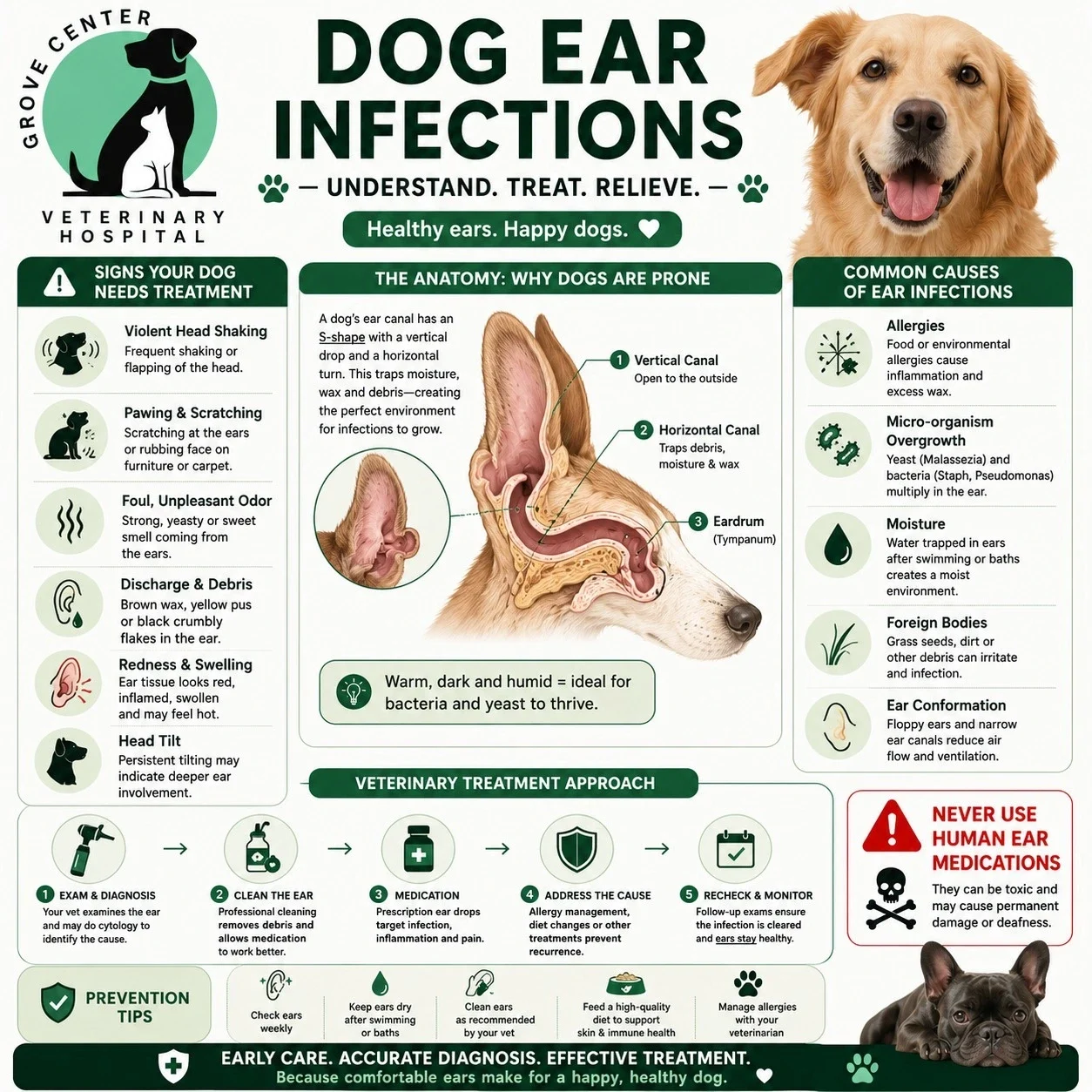
To understand how important professional dog ear infection treatment is, one must consider the peculiar ear shape of a dog. The ear canals of humans are straight and horizontal. When a human has water or debris in their ear, it will usually flow right out, relatively easily.
But, dogs are not so anatomically equipped in this area. The external ear canal of a dog is very deep with an S-shaped curve.
The outer ear canal extends vertically down from the outside world, with a right turn almost perpendicular, into an inner ear canal, as shown on the above normal view diagram. This horizontal pathway ends up in the thin wall of the ear drum (tympanum).
This unique configuration not only allows dogs to have their great tracking sense of hearing, but is also extremely effective (and one way) as a trap. If moisture from a bath, thick wax or outside substances falls into the vertical canal, they are then pushed down by the force of gravity into the horizontal section. The sharp bend is not conducive to the circulation of air, which results in a dark hot and very humid pocket—the best breeding ground for micro-organisms. If left untreated, they multiply quickly and can cause a lot of pain.

Signs Your Pet Needs Treatment
Dog Ear Infection Treatment

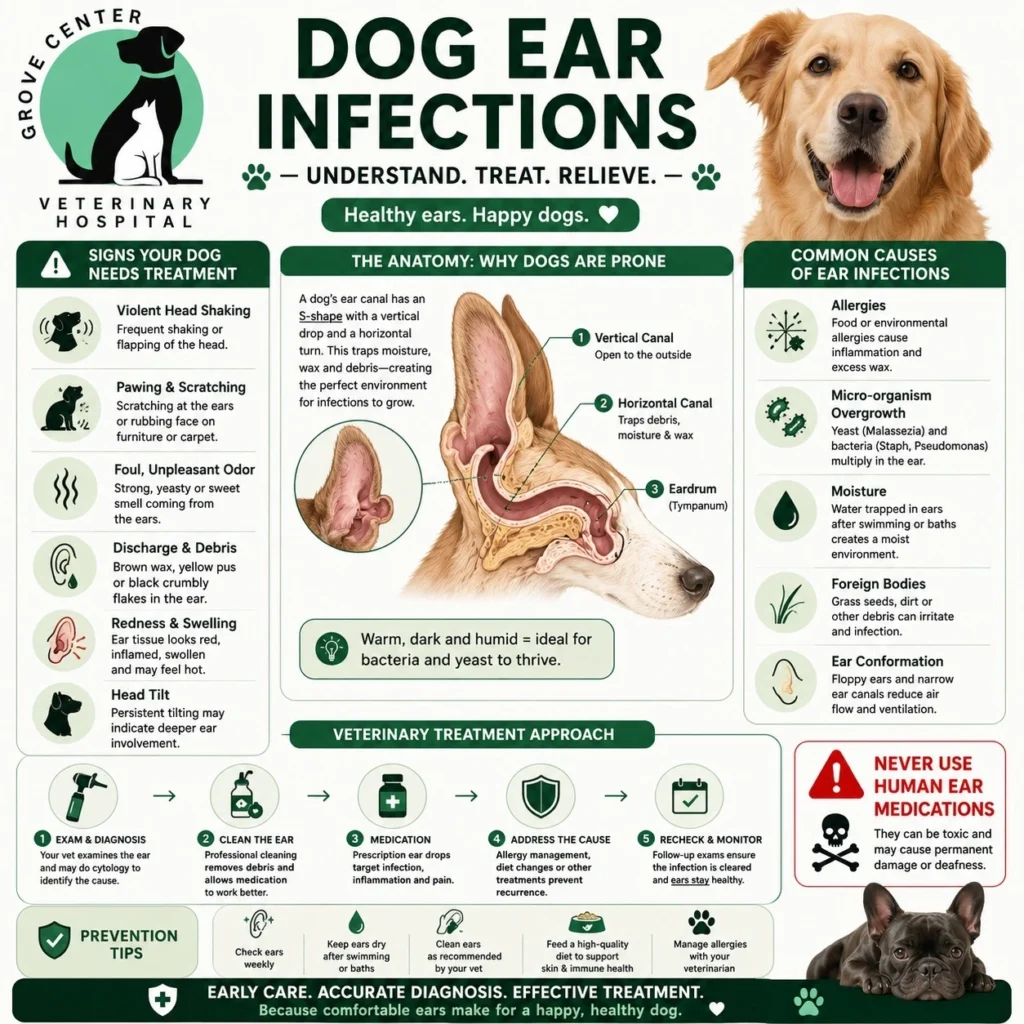
Many dogs will show signs by exhibiting physical changes and behaviors that indicate they need treatment for a dog ear infection. Does your pet exhibit any of these classic warning signs?

  • Violent Shaking of the head: Violent Shaking of the head or frequent head shaking is an initial warning sign indicating that your dog is actively struggling to get over an ear infection, and needs to get professional dog ear infection treatment. Your dog will flap or shake head back and forth repeatedly as if trying to dislodge something from the canal.
  • Pawing and Intensely Scratching: Scratching vigorously at the base of the ear with the hind legs or rubbing the face on the furniture. This can be a very aggressive scratching that can cause hair loss, bleeding and scabs in no time at all.
  • Foul Unpleasant Odor: The healthy ear of a dog doesn’t smell. If you notice that when you sit near your dog you smell a strong pungent, yeasty or sweet odor, a microbial population has taken over.
  • Color and Discharge: Healthy ears have a light pink color and are free of discharge. Check for hardened brown waxy substance, yellowish pus or black crumbly flakes in the crease of the ear flap.
  • Redness and Swelling: The ear tissue will be bright red, raw, angry and obviously swollen and hot to touch.
  • Persistent Head Tilt: Head tilted sideways, painful ear facing towards the ground. This behavior may indicate that the irritation has reached the middle and/or inner ear structures.

What's Going On? Common Triggers

There is no single “one size fits all” treatment for ear infections in dogs. This is because an ear infection is almost invariably a secondary symptom of some other underlying health issue that has damaged the defence barrier of the ear.
The most common ones can be grouped into the following categories:

Environmental and Food Allergies

Allergies are the number-one cause of chronic, recurring ear problems in dogs. It is important to note that the inflammation is in the skin of your dog, whether it is a food allergy (a chicken protein allergy or beef protein allergy) or environmental allergies (atopy to pollens, dust mites, or molds). The entire L-shaped canal is lined with skin tissue, which causes it to flare up, and compromises the natural barrier the oils in the dog’s ear put up. The result is excessive wax production, and the need for a recurring dog ear infection treatment by the owner.

Micro-organism Overgrowth

The ears have tiny, harmless amounts of yeast and bacteria that are part of a healthy ear. But when the canal’s climate changes, due to moisture or allergies, these populations go out of control.

  • Yeast Infections: Discharge is greasy, dark brown, and has a sweet corn chip smell from the fungus Malassezia pachydermatis.
  • Bacterial Infections: Moist yellow-green pus is formed by species such as Staphylococcus or Pseudomonas, and can lead to painful ulceration of the tissue walls.

Moisture and Foreign Bodies

Swimmers are often dogs that trap water in their horizontal ears, resulting in a moist environment which will allow infection to occur. In the same way, if a foreign body such as a grass seed head (foxtail) becomes stuck deep within the canal, it can cause sudden, localized swelling and severe pain which must be promptly medically cleared.

The Veterinary Diagnostic Approach

Proper dog ear infection treatment requires a professional diagnostic work-up to be performed. Randomly putting something into the ear or using old leftover ear drops from last year without knowing what they are may cause severe medical problems.
A routine examination will involve:

Otoscopic Examination

The veterinarian will use a special light instrument called an otoscope to examine the vertical and horizontal passages of the ear canal. With this step they can check for structural changes, foreign bodies or unnoticed tumors. The vet should also make sure that the ear drum is completely intact, which is a critical element for the test. If the drum of the ear is already broken, the topical liquid drugs can easily flow into the delicate inner ear cavity and result in permanent deafness or injury to the nerves.

Microscopic Ear Cytology

A sample of the discharge will be gently removed with a long cotton tip applicator by veterinary staff and smeared on a glass slide (microscopic ear cytology). The slide is stained and then looked at under the microscope.

Effective Treatment Protocols

After the type of pathogen is determined (based on the microscope findings), your veterinarian will develop a targeted dog ear infection treatment plan. The three critical phases are:

Phase 1: Clinical Cleaning and Flushing

The prescription topical medications cannot get through the thick wax and crust which will line the canal if this is fully plugged. Your veterinarian will use a safe and special earwax dissolving solution (ceruminolytic solution) to wash earwax out. If your dog is extremely itchy, painful, or aggressive because of the discomfort, a short acting sedative can be given to let the dog have a proper, deep flush without causing the painful areas to become too tense and painful.

Phase 2: Targeted Medication Delivery

Treatment of ear infections in dogs in Phase 2 involves targeted medication delivery, which is the main treatment method. They are usually very potent combination drugs with an antifungal component to clear up yeast, an antibiotic to combat bacteria, and a mild corticosteroid to rapidly decrease burning, swelling and itchiness.
If your dog is squirmy, head-shy or aggressive, consult your veterinarian about long acting extended release gels. These new drugs can be administered at the vet’s office once and the tablet disintegrates over 10-30 days and completely removes the daily hassle of home administration.

Phase 3: Treatment of the Underlying Cause

If the microscopic cytology shows that ear mites are present, a skin parasiticidal spot-on treatment will be given. If underlying food allergies are suspected to be playing a role in your pet’s symptoms, your veterinarian can help you arrange for a strict hypoallergenic elimination diet trial for 8-12 weeks to help avoid future flare-ups.

Complications: The Danger of Aural Hematomas

If you wait too long before getting your dog the correct therapy for a dog ear infection, your dog may seek relief from the intense itching and pain by licking his ears, which can result in a secondary physical injury.
From the moment it starts, a dog shaking its head violently and constantly is putting a tremendous amount of mechanical stress on the ear flap (pinna). The ear flap is made of a thin layer of cartilage enclosed between thin layers of skin and is covered with small blood vessels. If these small blood vessels get ruptured in the ear flap from aggressive head shaking, blood can leak into the ear.
When the small blood vessels get ruptured inside the ear flap due to head shaking, the blood can ooze into the ear.
Intense Ear Pain ──> Violent Head Shaking ──> Broken Blood Vessels ──> Aural Hematoma
These vessels once ruptured, fill rapidly with blood between the skin and cartilage, which results in heavy formation of a fluid-filled ‘pouch’ on the ear flap like a balloon or a pillow. This is a painful condition known as ‘aural hematoma’.
The fluid in an aural hematoma must be drained and the earflap stitched with special sutures, often a costly procedure, in order to prevent the ear from scarring closed and the ear flap from becoming permanently crinkled and distorted into a “cauliflower ear” shape. The best way to prevent this painful problem is to treat the internal ear problem early.

Conclusion

The key to a successful treatment of an ear infection in dogs is to get past the home remedies and get an accurate diagnosis from a veterinarian. The L-shaped design of the canine ear canal can easily turn a nuisance such as swimming water, too much earwax and allergens into a painful, long-lasting emergency. You can safely get rid of the infection by keeping an eye out for symptoms, such as head shaking, working with your veterinarian to get complete microscopic cytology, and completing all of the prescribed treatment. This helps to maintain your companion’s hearing and helps put him back on his feet.

Frequently Asked Questions

Are ear drops for dogs with ear infections not made from human ear drops or rubbing alcohol?

Absolutely, don’t put ear drops, rubbing alcohol or hydrogen peroxide in your dog’s ears. The inside of a dog’s ear is very sensitive and can be easily irritated. Harsh liquids will burn, cause raw ulcerations and cause extreme tissue swelling. Also, if your dog’s ear drum is hidden and has already ruptured, these liquids can enter the inner ear causing permanent neurological balance damage and irreversible deafness.

What is the usual time period for a dog ear infection to clear up?

By far the easiest, least complicated ear infections resolve in about 7-14 days with a prescription topical antibiotic. Acute or superficial bacterial infections, however, can be treated much more quickly, and may be cured entirely within a few weeks or months. After only a few days, your dog may seem to be doing fine; however, it is crucial to follow your veterinarian’s directions and finish the entire antibiotic treatment. Ceasing early gives the best bacteria the time and chance to remain alive for a subsequent antibiotic-resistant infection.

Why do my dog have recurring ear infections?

If your dog has to be given a dog ear infection treatment several times during the year then the ear infection is only a secondary symptom of the primary problem. Most common causes of chronic recurring ear inflamations are food and/or environmental allergies that lead to chronic skin inflammation. Other possible causes are deep-seated polyps, constricted ear canals and an undetectable rupture in the ear drum.

Can a dog ear infection be spread to other dogs or people?

The spread of an infection is entirely dependent on the cause of the infection. When the itching is due to an ordinary infection from bacteria or yeast, it’s 100% harmless to humans and other family pets. If ear mites are the cause, however, the mites are very contagious and will be passed between dogs and cats within the same household. Luckily, dog ear mites are unable to survive or reproduce on humans.

Can a dog get better from ear infection?

No, a dog ear infection will rarely go away on its own without a proper dog ear infection treatment. The ear canal has an L-shaped cavity and is very deep, making it hard for the body’s immune system to flush the trapped organisms away from the dark, moist environment in which yeast/bacteria populations can multiply. If left untreated, the infection will continue to spread through the head and will result in a ruptured ear drum, permanent hearing loss and extensive damage to the inner ear nerves.
if Dog is in Pain

How to Tell if Dog is in Pain: The Ultimate Guide for Pet Parents

Our dogs know how to hide that they are in pain. This instinct is hardwired in us, and in the wild, it’s the first thing that goes through our minds when we see an animal that is vulnerable or injured that we are looking at. They aren’t able to communicate with words where it is hurting them, so it’s up to us to pay attention to the signs.
It’s important to be aware of any changes in your pet’s daily habits. Learn more than ever before how to recognize if dog is in pain, through this all-inclusive guide, which explains the physical, behavioral, and emotional cues that your dog reveals when they are hurt. In order to determine if dog is in pain, the first step is to analyze what he does on a daily basis. A hurting dog will tend to disrupt their routine and typically be unpredictable.

Behavioral and Routine Shifts

Familiar changes in sleep patterns

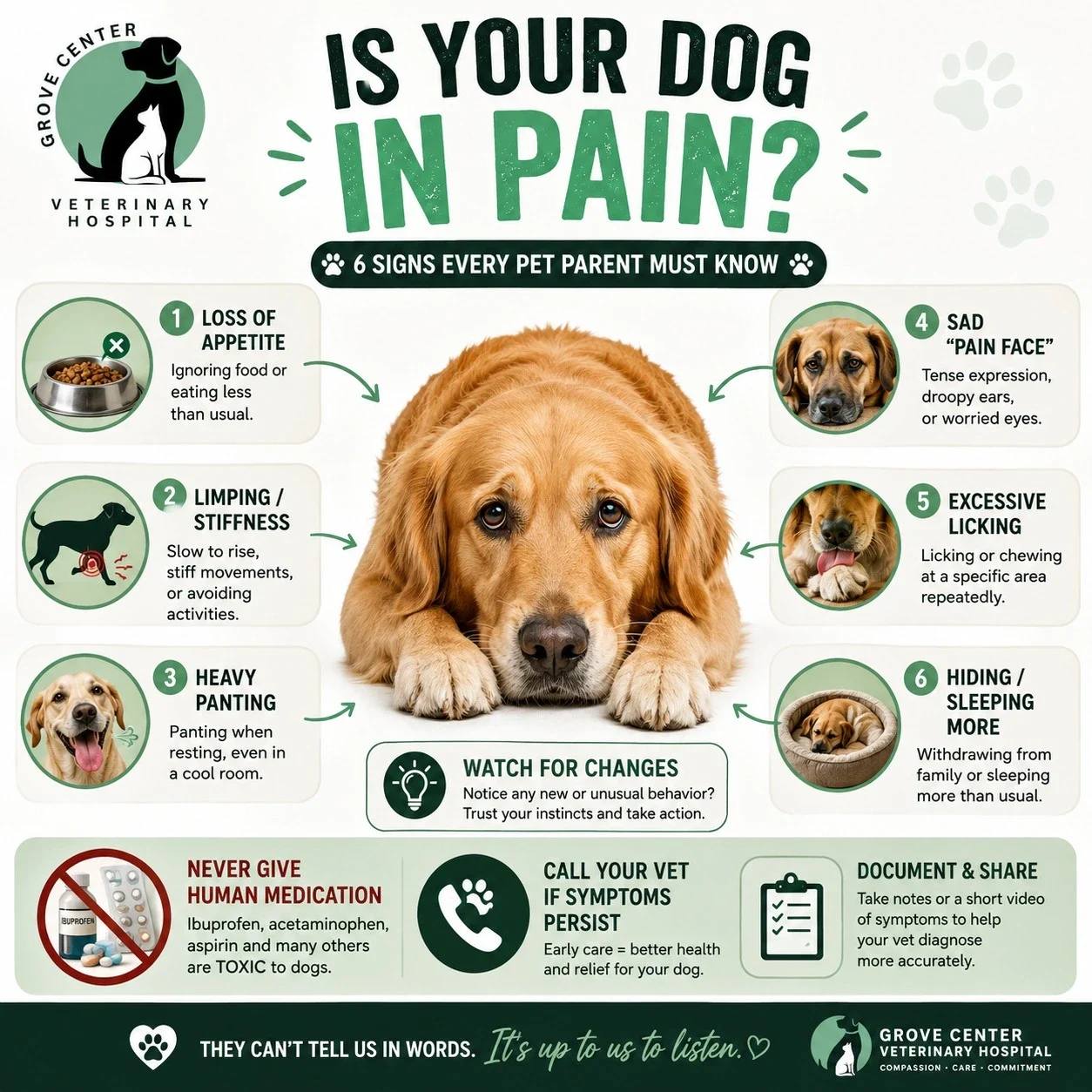
Have trouble sleeping at night and going to bed or waking up at a normal time? Or is your puppy so energetic that he doesn’t sleep at all and won’t get out of bed? Pain disrupts rest. If a dog is feeling pain in the joints or from an internal issue, it will have a really tough time laying down. These may lie down, get up right away, circle around their bed or move through it repeatedly searching for an area that will not cause pain.

Sudden decline in appetite is huge red flag and changes in eating habits

When your dog typically eats its food from the bowl and now walks away, it may be a problem of discomfort. When the pain in the mouth is caused by a broken tooth or dental conditions, eating becomes such a chore. Otherwise, food will become totally unappetizing because of nausea or internal pain throughout the body.

Physical and Postural Indicators

Physical and Postural Indicators tell a great deal about a dog’s physical health. One of the best ways to learn to look for signs of dog pain is to train your eyes to see structural and postural abnormalities.

  • The, Prayer Position: One of the classic signs of severe abdominal distress is the “prayer position. When a dog stretches out its front legs on the ground with its hindquarters off the ground. It may be as if it is a regular play bow but the dog may be unhappy, tense and not wag their tail. They’re doing this to help expand their tummy and to ease any extreme pressure that could come from situations such as pancreatitis or bloat
  • Trembling and Stiffness: Obviously limping, stiffness can be more subtle termed Trembling. If your puppy takes a long time to get up in the morning or is apprehensive about the stairs, then they might have arthritis or joint degeneration. If your dog shakes or trembles without a good reason even with warm temperatures in the room, it’s another big sign that he’s suffering from acute or chronic physical pain or discomfort.

Vocalizations and Audio Cues

Many dog owners believe that a dog in pain will whine, cry or howl. But, this is one of the biggest misconceptions in regards to dog health.
Many dogs suffer silently and stoically. Vocalization is generally only heard when the dog has an abrupt, sharp, acute pain – maybe, for instance, it has been stepped on or suffered from a sudden muscle spasm. Ongoing problems such as arthritis or progressive, long-term diseases do not usually cause ongoing whining. You may only know how your dog is feeling based on its crying, and not pick up on the signs.
Some dogs become louder, though, and whine, groan and grit their teeth more. You may observe your dog softly grunting when seated or hear some soft whining when attempting to get onto the couch. Be alert to these sounds in particular, particularly when they happen in the transition from one movement to another – they could be important indicators when learning to recognize when a dog is in pain.

Facial Expressions and Respiration

With just an attentive look at your dog’s face and an ear to the ground, you can gather a lot of information.

Heavy Panting and Shallow Breathing

It’s perfectly normal for dogs to pant after a vigorous game of fetch, or on a hot summer afternoon. If your dog is lying in a cool, air-conditioned room, and panting heavily, it is a physiological response to stress and distress. Are fast breathing, shallow breathing or panting without an environmental cause, when they are hurt.

Both “Pain Face” and Grimacing

Dogs faces are very expressive. Physical distress often causes a dog to be tight and tense. Watch for:

  • Furrowed brow, or flattened ears.
  • The “grimace,” where the lips are pulled back slightly at the corners
  • Wide eyed expression (sometimes called “whale eye” – the white parts of their eyes are more visible than normal).

Changes in Grooming Habits

Grooming shifts can be in either direction based on what the underlying problem is, so this is an interesting area of observation when deciding if dog is in pain.

Localized Grooming

When a dog is hurt in a certain localized area, they will instinctively lick and clean that spot even in the absence of an external wound that needs to be licked and cleaned. If a dog has localized joint inflammation, they will lick, bite and chew at that one area constantly, or if they have a hidden bug bite or bruise in a deep muscle, they will constantly lick, bite and chew at that one area. Lots of licking can rapidly irritate the skin and result in hot spots.

Neglecting the Coat

On the other hand, if a dog is suffering from chronic disease on a large scale, then they might even cease grooming themselves altogether! If your dog’s joints hurt a lot, then it won’t be very comfortable for your dog to turn around and brush his coat. If your usually well-groomed pup develops some matted, undressed or soiled spots, it’s time to take a closer look.

Changes in Emotion: From Aggression to Withdrawal

Pain changes the emotional threshold of a dog, and directly affects the way that a dog relates to the human family and other dogs. When a dog has a change of emotional state, it is called a behavioral shift, aggression versus withdrawal, and it will directly affect a dog’s interactions with her family and other pets.

Sudden Aggression or Guarding Behaviors

When your very sweet, very gentle dog suddenly growls, snaps or bares their teeth when you try to approach and put your hands on them, don’t conclude that they have a behavioral problem just yet. It is a reaction to the threat. They understand that touching hurts and they are learning to create a barrier around themselves through verb and dental communication.

Hiding and Isolation

Otherwise, when some dogs are not feeling well, they will withdraw from social interaction and hide. They may hide under the bed or curl up in the back of a closet or may not answer the door when you return home. This self-isolation is a protective survival mode that helps to keep them away from danger when they are feeling vulnerable.

Quick Reference Summary Matrix

To review this information in a quick manner, refer to this reference table of the typical differences between a normal dog and a dog in distress.

Observation Area

Healthy Baseline

Potential Pain Indicator

Mobility

Fluid, eager movements; easy transitions

Stiffness, limping, slow to rise, trembling

Rest

Settles quickly, sleeps peacefully

Continuous pacing, shifting positions, restlessness

Respiration

Slow, steady breathing when resting

Heavy panting or rapid, shallow breaths in a cool room

What to Do When You Suspect Discomfort

If you have carefully reviewed these signs and are now confident that your dog is hurting, your very next step must be to call your veterinarian.

Critical Safety Warning: : DO NOT EVER give your dog any human medicines such as ibuprofen, acetaminophen or aspirin. These are nonprescription medications that humans take and can be very toxic to dogs, resulting in acute kidney failure, severe gastric ulceration or fatal internal bleeding.

If you are going to the vet clinic try to safely document what you are seeing prior to arrival. Make a brief video of your dog limping, pacing or breathing abnormally. Dogs frequently come running into a veterinary clinic when they are excited or frightened, and may initially be symptom free. It’s a tremendous diagnostic tool to show your vet a video recorded at home.

Conclusion

When it comes to dog pain, knowing how to recognize it is one of the most crucial duties of being a pet owner. Our dogs can’t communicate their pain directly to us, we must learn to read the minute changes in their body language and behavior. Some subtle hints are all your dog needs to seek assistance, such as a change in sleep pattern, panting in a cool room, uncharacteristic hiding behaviour, or licking in a small area.
Seeing to your beloved companion’s every need, understanding their defensive boundaries, and working quickly with your veterinarian, you can make sure your cat receives the relief, care and comfort it deserves.

Frequently Asked Questions

Q1: If at home, how can I tell if my dog is in pain?

A: The best method of checking is by watching their posture, breathing and movement carefully, but not by touching them. If you do need to take a close look, gently run your hands over their body. Be particularly alert for flinch, blink or pant on their face. If your dog becomes stiff, growls and/or moves away, stop now and don’t get bitten.

Q2: What’s causing my dog to pant all the time when he is sleeping?

A: Panting that persists in the room, if the room is cool and your dog hasn’t just been active, is a classic indicator of stress, anxiety or physical discomfort. Their heart and breathing rate increases on pain, leading to heavy panting.

Q3: Does a dog have to whine and cry to be in pain?

A: Yes, absolutely. The majority of dogs are uncomfortable when the interaction is silent. Vocalization (whining or yelping) is generally used for sudden, sharp, acute injuries. If the dog has arthritis, or an underlying disease, it will always be covered up by him as a survival mechanism.

Q4: What do dogs do when they have joint pain?

A: If a dog has an arthritis, they will be stiff, particularly when getting out of a nap. They will walk much slower, may not want to run up and down stairs, may be reluctant to jump onto furniture, and may often lick or chew on the particular joint that hurts.

Q5: What does a doggy ‘prayer position’ refer to?

A: The prayer position is when a dog lowers its front legs and body to the ground, but leaves the back end elevated high in the air. The dog will not look as it does with a “bow,” but rather look rigid and uneasy. This position is employed to stretch out the abdomen in an attempt to alleviate high internal pressure or pain caused by such ailments as bloat or pancreatitis.

cat sneezing causes

Is Your Cat Sneezing Constantly? 10 Hidden Cat Sneezing Causes Explained

10 Hidden Cat Sneezing Causes Explained

No one can deny that a little, sudden “achoo!” from your feline friend can be very cute. Just like humans, it’s not uncommon for animals to sneeze occasionally. But when an occasional tickle escalates into frequent explosive twitches, or your pet’s itchy nose and eyes are accompanied by watery eyes or nasal discharge, your concerns and concerns are aroused. Of course, you end up looking for professional advice related to cat sneezing causes in order to know what is wrong with your cat.
Cats have a very sensitive nose with a lot of specialized receptors in it, so a very strong reflex. It is important to find out what is causing your cat to sneeze so that you can help keep them healthy and comfortable. Often, chronic sneezing is just part of a larger problem and should be considered as a marker of a deeper problem in the body or environment.
This detailed and comprehensive article will dissect the biological and environmental factors that contribute to cat sneezing, as well as medical conditions that could explain why cats are sneezing, and help you determine whether it’s something that will pass or if there’s a medical condition that you should consult your vet about.

Let's first look at the Biology of the Feline Sneeze, a protective mechanism, before reviewing the list of chronic conditions.

The sneeze is an involuntary convulsion, coordinated action of the nose to expel irritants. If the thin lining of the nose passages (mucosa) senses a foreign particle, virus or allergen, the thin lining sends an electrical signal via the trigeminal nerve directly to the brainstem.
This causes a deep, quick breath to happen suddenly, and the chest muscles to tighten up. The soft palate rises, which causes the high-velocity air to rush through the nose and mouth.
If you research cat sneezing causes, you’re dealing with anything that activates this biological alarm system.

Causes for Cat Sneezing:

There are 10 common cat sneezing causes to explore when your pet begins to sneeze again and again; the cat sneezing causes generally fall into three groups, namely: infectious diseases, airborne environmental irritants, structural abnormalities within the pet’s skull.

1. Feline Herpesvirus (FHV-1)

Viral infections are certainly the most common cause of cat sneezing – feline Herpesvirus (FHV-1). Feline Herpesvirus is a very contagious disease of the respiratory system which infects a large portion of the world’s cat population. A cat that is infected will carry the virus in the nerve cells for the rest of its life. Once the virus is active again, your cat will have a sudden outbreak of thick eye discharge, squint and sneezing due to stress, illness or immune deficiency.

2. Feline Calicivirus (FCV)

Feline Calicivirus is another big time cause of viral cat sneezing. A very aggressive virus that can seriously damage oral health that affects the upper respiratory tract. When your pet sneezes because of Calicivirus, they may also develop mouth ulcers that are painful in the lining of the mouth, gums and tongue. This combination causes them to salivate quite a bit and not eat their wet food because of the discomfort.
Lorem ipsum dolor sit amet, consectetur adipiscing elit. Ut elit tellus, luctus nec ullamcorper mattis, pulvinar dapibus leo.

3. Seasonal Environmental Triggers and Pollens

Cats can also have allergies that are caused by seasonal environmental triggers and pollens. Very common spring and autumn causes of sneezing in cats are inhaling airborne particles such as pollen from trees, weed spores, grass and outdoor molds. If the windows are open or when your kitty is in an outdoor enclosure, your kitty is likely to sneeze, then an environmental allergy is likely to be the cause.

4. Household Chemical Irritants

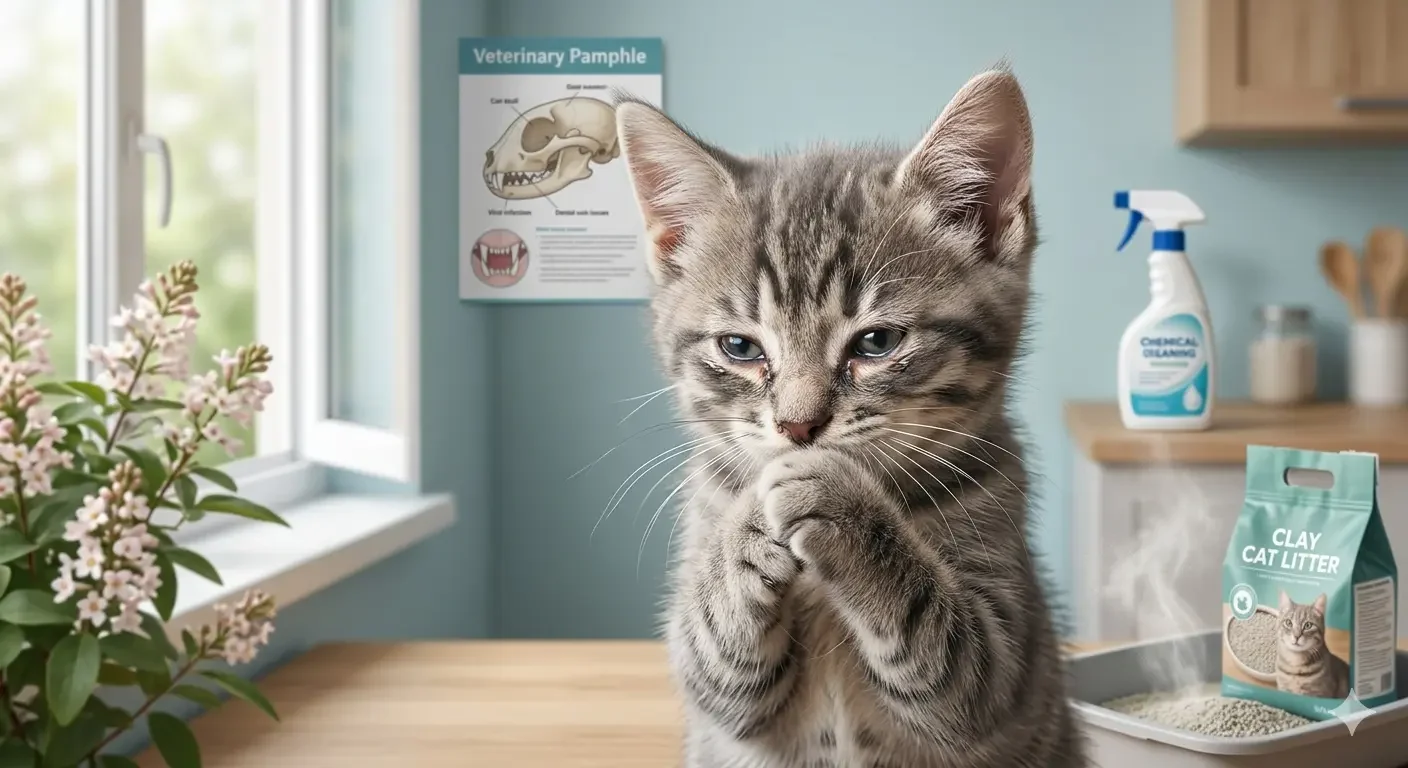
A cat’s sense of smell is about fourteen times as powerful as a human’s. Household cleaning chemicals, synthetic perfumes, scented candles and aerosol air fresheners can be strong cat sneezing causes. The chemical odors poison the nasal lining and cause immediate coughing or a sneezing fit the first time you clean your house or use perfume close by.

5. Dusty Cat Litter

If your pet sneezes right after using the bathroom, this could be the litter box as this is happening on a regular basis. Clumping litters made of clay can generate fine dust particles of crystalline silica from the dust when stirred or when scooped. When your cat digs in the litter pan, it picks up the fine dust and inhaling it is one of the easier to correct causes of a cat sneezing.

6. Secondary Bacterial Infections

Viruses are the usual cause of the respiratory upsets, but secondary infections are likely to follow and are often caused by opportunist bacteria such as Chlamydia felis or Bordetella bronchiseptica. These secondary invaders are important factors that change watery nasal mucus to thick, yellow or green and are important causes of cat sneezing. Bacterial infections require antibiotic treatment specific to the bacteria and must be administered by a veterinarian..

7. Foreign Objects Inhaled (Blades of Grass)

Cats are inquisitive and ground-level explorers. A small piece of foreign material (like a bit of carpet fibre, a small seed or a blade of grass) may get sucked up the nares instead. This causes a great amount of localized irritation. Inhaling an object is the only one of all cat sneezing causes that causes the cat to sneeze violently and suddenly, continuously, as it attempts to remove the object.

8. Very Poor Dental Health and Tooth Root Abscesses

A cat’s upper premolars and molars have roots that lie right under the nasal cavity with only a thin layer of bone between. When a tooth is very decayed or has a deep bacterial infection, the tooth infection can penetrate that thin bone barrier into the nasal passages. Tooth root abscesses are one of the most understated causes of cat sneezing in senior cats, as it is a dental inflammation.

9. Polyps or Tumors in the Nose

If older cats have chronic, unresponsive respiratory symptoms, they could indicate the presence of structural growths. There may be slow growth of the nasal passages, either as benign nasal polyps or malignant (lymphoma or adenocarcinoma). They physically block the airflow from the nose and tire the tissue constantly; they are some of the more serious medical causes of cat sneezing.

10. Feline Immunodeficiency Virus (FIV) or FeLV

Feline Leukemia Virus (FeLV) or Feline Immunodeficiency Virus (FIV) are systemic retroviruses which weaken a cat’s immune system. These viruses do not directly cause a sneeze, but your pet is totally vulnerable to minor environmental pathogens. One of the indirect causes of cat sneezing is a weakened immune system, which can turn harmless, common germs into never-ending lung infections.

Some practical advice on how to help your cat when he is sneezing.

There are a number of easy home care techniques you can implement while you are working with your vet to determine the exact cause of the cat sneezing, to keep your cat more comfortable while waiting for your veterinarian’s advice:
Make a steamy bathroom: Take your cat in the bathroom while you take a hot, steamy shower for 10 to 15 minutes. The hot, moist breath releases the thick, irritating nasal mucus, which is a natural decongestant.
Use a low dust litter: Avoid using dusty clay litter and use a low dust paper pellet, pine wood shavings or crushed walnut shell litter instead to prevent mechanical tracking irritation.
Avoid using artificial fragrances: Avoid using plug-in air fresheners, heavy perfumes, floor cleaners, incense, or strong scented candles, in the rooms where your pet sleeps or spends most of his or her time.
Keep their face clean: Gently clean around their nostrils and eyes with a warm, moist and unmedicated washcloth to remove dried crust and secretions without causing secondary skin irritation.

Conclusion

Careful consideration of your cat’s lifestyle, home environment, and physical symptoms is necessary to pinpoint the exact cat sneezing causes. If it is just a sneezing fit every now and then from a corner of the room that needs dusting, it is not alarming but if it sneezes repeatedly, it should not be taken lightly. If you pay attention to those signs that your cat is showing, your vet will have the key information he needs to help your cat get back to a life of comfortable, clear breathing and get to the bottom of your cat’s sneezing.

Frequently Asked Questions (FAQs)

A1: If a cat is sneezing constantly but showing no other signs of illness, there is probably nothing wrong with them.

A: If your cat is active, playful and eating well, but sneezing often, he is probably reacting to some environmental irritant. Household dust bunnies, strong perfumes or a change to a dusty brand of clay cat litter are all common causes of non-medical cat sneezing.

Add Your Heading Text AVHere

A: Yes, respiratory viruses can be transmitted to indoor cats. Viruses are possible for all indoor pets, as they can be transferred to your home via your shoes, clothes or hands after encountering an infected cat in the outdoors.

Q3: What are the signs of medical emergencies to observe when a cat sneezes?

A: A sneezing should be treated as a medical priority when you see fresh blood in their nasal discharge, if they refuse feedings for more than 24 hours, or if they are very lethargic and breathing with an open mouth.

Q4: Is the dirty litter box one of the usual causes for a cat sneezing?

A: Yes. Ammonia fumes from un-scooped urine will accumulate in the litter box when it is not scooped regularly. These intense ammonia fumes affect the delicate lining of the nose and cause intense coughing and sneezing attacks.

Q5: Is dental disease a possible cause of my cat's sneezing?

A: Absolutely, dental issues are well known cat sneezing causes. Since the roots of a cat’s upper teeth are directly under the nose, if the root of a tooth becomes extremely infected, it may be able to pierce the floor of the nose and lead to chronic single-sided nasal discharge and sneezing.