 grovercentervet
Why Is My Dog Losing Hair? Causes, Symptoms & Treatment | Grove Center Veterinary Hospital
Why Is My Dog Losing Hair? A Complete Guide for Worried Owners
If you see a lot of fur on the couch, or if your dog has bald patches on its skin, it’s easy to come to the conclusion that the reason is that your dog is losing hair. It’s one of the most frequent issues presented at Grove Center Veterinary Hospital and there’s a reason for that: hair loss in dogs can indicate a wide variety of issues, ranging from seasonal shedding to the presence of a medical condition that requires treatment. Because there are many different reasons why dogs lose their hair, when owners ask, “Why is my dog losing hair?,” the answer will depend on the pattern of hair loss, if there are any symptoms, and the overall health history of the dog.
This guide explains the most frequent causes of a dog’s hair loss, when the hair loss might indicate a more serious underlying issue, when to contact your veterinarian, and what might be the treatment plan. Knowing the reason for your dog’s early baldness could be the key to a simple and rapid solution versus a more chronic and uncomfortable experience for the dog.
Why Is My Dog Losing Hair? The Short Answer
There are a number of common general reasons why certain dogs lose their fur, including allergies, parasites, hormonal imbalances, infections and stress. While it is normal to lose hair from time to time, particularly during the spring and autumn shedding season of double-coated animals, if you are wondering: why is my dog losing hair in patches, unevenly, or with itching and redness, then it’s time to investigate further. The distribution, extent and rate of hair loss all provide useful information on the cause of the loss.
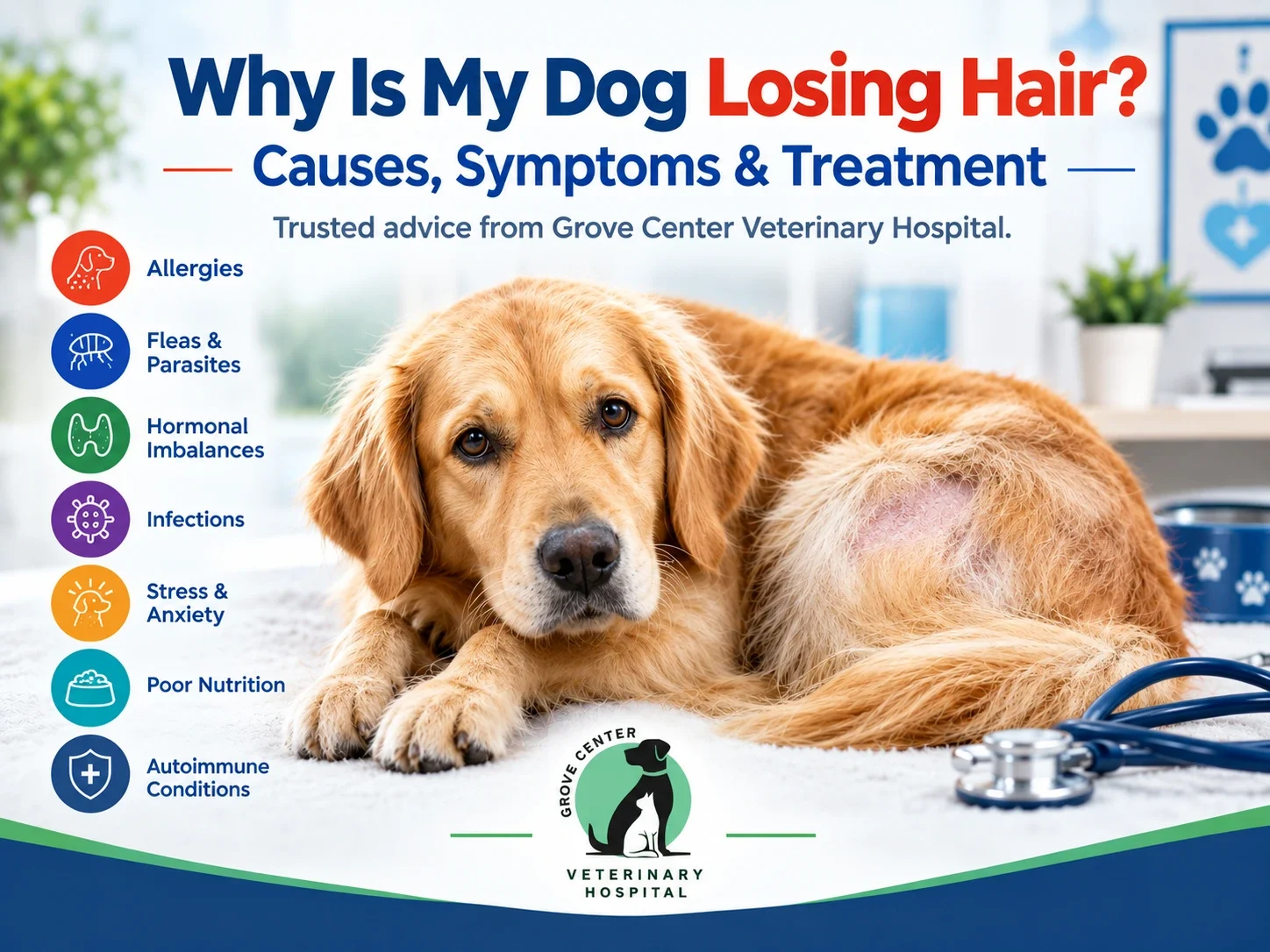
There are certain medical causes of hair loss that are common in dogs. Certain medical causes of hair loss are widespread, for dogs.
The most common conditions veterinarians see when clients ask, “Why is my dog losing hair?” are:
- Allergies
One of the most frequent responses to the question of why is a dog losing hair is that they are allergic to something, such as the food they are eating or a flea or environmental allergens such as pollen and dust mites. Itching is a very common symptom of an allergy that will cause a dog to scratch and lick in excessive amounts, resulting in hair loss on the affected area.
- Fleas and other parasites
One of the common reasons given when owners ask why is my dog losing hair is the fleas, particularly around the tail, groin and back legs. There are dogs that get a reaction from a flea bite, leading to flea allergy dermatitis: so severe that they become itchy and start losing hair from just a single bite. Other causes to consider are parasites such as mange caused by mites.
- Hormonal Imbalances
For middle age and senior dogs, there are answers for why is my dog losing hair, such as hypothyroidism and Cushing’s disease. Usually, this is a symmetrical process of hair loss and does not cause itching (unlike allergic causes of hair loss).
- Fungal or Bacterial Infections
Although the name suggests otherwise, ringworm is a fungal infection and one of the most common causes of dog hair loss and is the cause that many owners ask why is my dog losing hair in circular crusty patches. Patches of hair loss may also result from bacterial skin infections, which may be accompanied by an odor, redness or pus-filled bumps.
- Stress or Anxiety
One of the reasons why is my dog losing hair is a chronic stress and anxiety. Stress can cause some dogs to lick or chew in certain areas to the extent of causing bald spots, especially on legs or paws.
- Poor Nutrition
Sometimes, an unbalanced or poor diet is responsible for the loss of hair in dogs. A lack of needed fatty acids, protein or some vitamins can cause this, as the coat strength will be compromised resulting in shedding or thinning fur.
- Autoimmune Conditions
Rarerly, autoimmune diseases also can contribute to the reasons why is my dog losing hair, especially if the hair loss is accompanied with skin lesions, crusting or changes to pigmentation.
Non-Medical Causes of Hair Loss
Sometimes, the loss of hair is not related to a health issue. Let’s try considering these more benign explanations first:
- Shedding: Some breeds shed a lot in the spring and fall due to the changing weather.
- Normal ageing: As dogs get older their coats may naturally become thinner, which is not a disease.
- Rubbing or friction: Rubbing or friction can cause the loss of hair on the elbows or hips.
- Recent grooming or clipping: This is a very short cut, and can sometimes appear to be hair loss until it grows back in.
Even when all these simpler causes have been eliminated, it may still seem logical to seek veterinary advice if you’re still wondering why is my dog losing hair?
Symptoms That Can Accompany Hair Loss
Do not solely concentrate on the loss of the fur when asking the question why is my dog losing hair. Look for the following symptoms to help your vet determine the cause:
- Rusting, scabbing or crusting of the skin
- Excessive scratching, licking or chewing
- Smelly skin or coat
- Any changes in skin color or thickening
- Lethargy or weight gain, that may indicate hormonal issues
- Fleas or flea dirt are visible, or mites can be seen
- Pupils will show signs of stress or discomfort through behaviour
When you notice the symptoms of losing hair along with several of these, it is crucial that you have your dog checked by a vetenarian as soon as possible as to why is my dog losing hair?
When to Take Your Dog to the Vet?
If you are wondering why my dog is losing hair and the shedding is more than usual, patchy, or accompanied by itching, skin changes, then it’s time to make an appointment at Grove Center Veterinary Hospital. If you experience any of these there is a reason to seek treatment early:
- Grasps that any skin that is open, scabbed or bleeding ought to be avoided.
- A definite smell from the skin.
- Sudden and extensive hairfalls
- Changes in body weight or drowsiness
- Difficulty getting comfortable in the horse’s mouth
Waiting too long to find out the cause of a dog losing hair may mean that a condition such as infection or allergy will get worse and cause your dog more discomfort and longer treatment time.
How Your Vet Determines the Cause of Hair Loss
Your veterinarian will normally use a combination of the following to determine the reason for your dog’s hair loss:
- Examination of the hair loss pattern, location and physical examination of the skin.
- Skin scraping: looking for mites, mange, or parasites under a microscope.
- Culture of fungus: examination for ringworm or other fungal diseases.
- Bloodwork: testing thyroid function and screening for other hormone imbalances, such as Cushing’s disease.
- Allergy testing or elimination diet: determining what food and/or environmental allergies are leading to hair loss.
These diagnostics help your veterinarian go from a general question (“Why is my dog losing hair?”) to a specific, treatable diagnosis and treatment plan.
Caring for Your Dog’s Coat at Home
In addition to working with your veterinarian to find out why is my dog losing hair, there are a couple of things you can do at home that can help keep your dog’s skin and coat healthy:
- Provide good high-quality, balanced diet including protein and omega fatty acids.
- Continue year round flea and parasite control.
- Brush your dog often to spread the natural oils of the coat and catch potential problems right away.
- Try not to use harsh shampoos that will dry out sensitive skin.
- Record when hair loss began and if there is any behavioral change and share with the vet.
Grove Center Veterinary Hospital’s Benefits
Now, if you’ve been scouring the Internet for why is my dog losing hair, bringing your dog to an experienced veterinary team will be the best method to get real answers. In Grove Center Veterinary Hospital, we perform a complete examination of your dog’s skin and coat along with cutting-edge diagnostic testing to uncover the root cause of your dog’s hair loss and not leave you to guess. Changes in your dog’s coat can be alarming and we are here to help you from diagnosis to treatment.
Conclusion
So what is causing my dog to shed? It may be as simple as seasonal shedding or as complicated as an allergy, parasites, hormonal imbalance or infection. The pattern and the symptoms are hugely important so you’d better listen up carefully than to guess. If you have been wondering, what is causing my dog to lose hair for more than a couple of days, plus any changes in it, itching, redness, etc., please come visit Grove Center Veterinary Hospital to get a good diagnosis and have your dog feel better.
Frequently Asked Questions (FAQ)
What is causing my dog to experience balding and hair loss in patches?
Fungal infections such as ringworm or mite or local allergy can cause patchy hair loss. A veterinary examination and testing will be able to determine the exact cause.
Do dogs shed excessively in the fall?
Yes, all breeds shed on a regular basis in spring and fall as they change their coats to accommodate the seasons. This shedding does not tend to be irritating and is generally even.
What are the reasons for a dog to shed?
A lack of protein, essential fatty acids and some vitamins may lead to poor coat condition, and thinning coat or shedding.
If my dog is losing hair, but not scratching, is there a problem?
Yes, balding without scratching may be a hormonal problem, which may be due to hypothyroidism or Cushing’s disease, and should be checked out by a vet.
Is stress a cause of balding in dogs?
Yes. Compulsive licking and chewing may occur with chronic stress or anxiety and can cause bald spots, especially on the legs and paws.
What is the treatment for hair loss in dogs?
Treatment depends on the underlying cause and can involve flea and parasite control, dietary adjustments, allergy management, antifungal or antibacterial drugs, and/or hormonal therapy.
