 grovercentervet
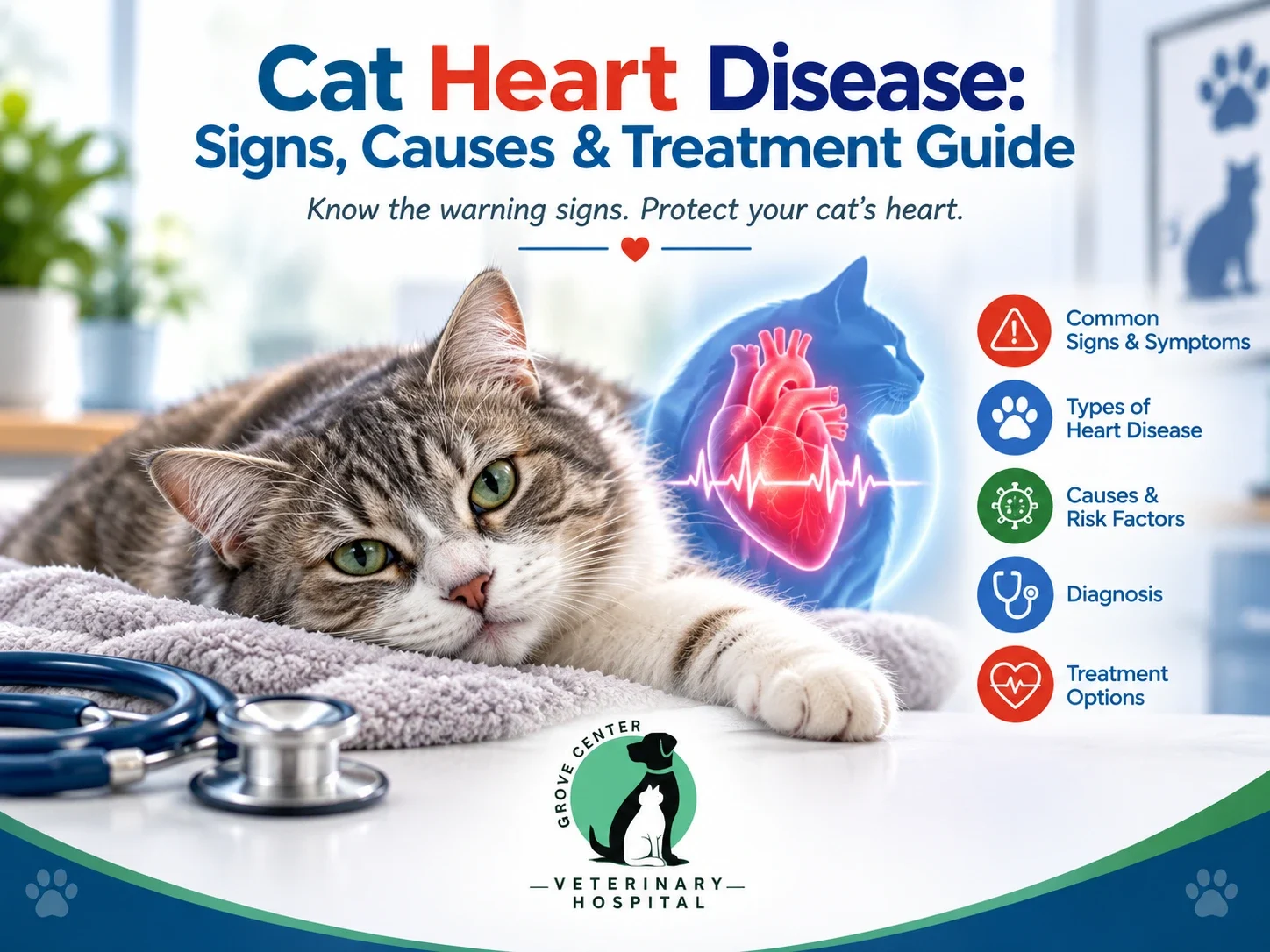
Cat Heart Disease: Signs, Causes & Treatment Guide | Grove Center Veterinary Hospital
Cat Heart Disease: What Every Owner Needs to Know
Cat heart disease is one of the most overlooked health dangers that affect cats in the modern world, and most likely you’ve never thought of it because cat’s are masters at hiding symptoms of their disease until a condition is serious. Cats do not usually have a heart murmur that their owners notice and a cat veterinarian will not catch as part of a routine physical exam, so cat heart disease symptoms often go undetected for months or years. We see cat heart disease at Grove Center Veterinary Hospital pretty frequently, before the owners even realize anything is amiss at home.
In this guide, you’ll find all the information you need to know about cat heart disease: the various types, common signs and symptoms, risk factors, and the diagnosis and treatment you can expect from your vet. Being able to recognize cat heart disease early will help with the quality of your cat’s life and her prognosis.
What is Cat Heart Disease?
Cat heart is an umbrella term for any disease of the cat’s heart that involves any abnormality of its structure or function. The most frequent type of heart disease in cats is hypertrophic cardiomyopathy (HCM) in which the walls of the left ventricle of the heart thicken too much, making it more difficult for the heart to pump blood properly. There are also other heart diseases in cats, such as dilated cardiomyopathy, restrictive cardiomyopathy and congenital heart defects, which are present at birth.
No matter what type of heart disease is present, if not diagnosed and treated, a cat can develop more serious issues such as congestive heart failure, blood clots and sudden cardiac episodes.
Cat heart comes in a variety of forms. There are several types of cat heart disease.
1. Hypertrophic Cardiomyopathy (HCM)
HCM is the most common type of heart in cats, and makes up the bulk of feline heart disease cases. In this form of cat heart disease, the heart muscle becomes thick, thus less space for blood to fill into the heart between beats.
2. Dilated Cardiomyopathy (DCM)
This is a less common type of cat heart which results in stretching and weakening of the heart chambers and decreases the heart’s pumping power. DCM has been associated with cat diets lacking in taurine, but is less common now because high quality commercial cat foods are more likely to have adequate levels of taurine.
3. Restrictive Cardiomyopathy (RCM)
In this type of cat heart , scarring occurs in the heart muscle, which causes the muscle to become hard and fail to relax and expand between beats.
4. Congenital Heart Defects
Congenital heart defects, including faulty heart valves and septal defects (holes in the heart chambers), are cat heart diseases present at birth.
What Causes Cat Heart Disease?
Although the cause of cat heart is not always known, certain risk factors have been identified:
- Breed: Some cat breeds, such as Maine Coons, Ragdolls and Sphynx cats, are more prone to cat heart disease, especially HCM.
- Age: Cat heart is more prevalent as cats get older, but may occur at any age.
- Hyperthyroidism: Secondary heart changes common in cat heart disease may be caused by an overactive thyroid.
- Chronic (high) blood pressure: Extra work on the heart from chronic hypertension is a known cause of cat heart disease.
- Taurine deficiency: Rare today, but in the past, taurine deficiency has been associated with some types of heart disease in cats.
The signs of cat heart disease are many
The symptoms of cat heart disease (CHD) can be very subtle and difficult to notice until the disease is well developed. Watch for:
- Short or rapid breathing, particularly while sleeping
- Abnormal breathing through the mouth in cats (open-mouth breathing).
- A state of sluggishness or inactivity, as in the muscles or the mind.
- Loss of appetite
- Sudden hind-limb weakness or paralysis, which may be a sign of blood clot
- Fainting or collapse
- Physical finding of a heart murmur or abnormal heart rhythm
In fact, there is no definite sign that a cat has cat heart disease until it’s quite advanced, which is why regular veterinary examinations are important.
How they can go undetected
A major challenge in the management of heart in cats is that they compensate well for the disease. Heart disease dogs may show signs of fatigue on walks, while cat heart disease may manifest as a little more sleep or a slight decrease in activity, which can be mistaken for the old age. That is why cat heart disease often is only found by chance; usually when a cat is having a routine exam and a veterinarian hears a heart murmur or irregular heartbeat over the stethoscope.
Diagnosis of cat heart disease
Your Grove Center Veterinary Hospital veterinarian will likely recommend a mixture of the following if your cat is suspected of having heart disease:
- Physical exam: listening for heart murmurs, gallop rhythms, or irregular heartbeats.
- Radiography (X-rays): to see if there is an enlarged heart or fluid in the lungs.
- Echocardiogram (heart ultrasound): the best test to diagnose cat heart disease, shows the thickness of the heart wall and the function of the chambers.
- Blood pressure measurement: a high blood pressure may contribute to and exacerbate cat heart disease.
- Bloodwork: such as an NT-proBNP test which can detect cat heart disease even in the absence of symptoms.
- Thyroid testing: eliminating hyperthyroidism as a cause.
If cat heart is diagnosed early, your veterinarian has a lot more choices to control the condition before it progresses to problems.
The 4 Treatment Options for Cat Heart Disease
Cat heart disease can’t always be cured, but it can often be well controlled through a proper treatment program developed by the veterinarian that may involve:
- Other medications to lower fluid accumulation, control heart rate or lower blood pressure
- Blood thinners to prevent the formation of harmful blood clots, especially in cats with HCM
- Adjustments to diet to support heart health and sodium control
- Follow-up echocardiograms and bloodwork is performed regularly.
- Management of any underlying disease that may be responsible for cat heart disease, such as hyperthyroidism or hypertension
Diagnosis is critical to determining the correct treatment plan for cat heart disease, as the type and stage of the disease play an important role in the treatment.
Managing a cat with heart disease at home
A cat with diagnosed heart disease may not be kept. A diagnosis of cat heart disease doesn’t necessarily mean a short remaining lifespan. With management, many cats will live happily for many years. At home, the following tips are helpful for a cat with cat heart disease:
- Taking medications as prescribed
- Keeping an eye on the changes in your cat’s breathing, particularly if they are resting or sleeping
- Ensuring follow-up appointments to track disease progression
- Lowering stress, as it can aggravate cardiac strain (stress hormones can play a role in this)
- Providing your cat with an appropriate diet recommended by your veterinarian, according to the type of heart disease your cat has.
Emergency Medical Attention
There are symptoms of cat heart disease that don’t call for a routine appointment and need immediate medical attention. If you notice your cat exhibits any of the following symptoms, please be sure to seek emergency care immediately:
- Sudden trouble breathing or open mouth breathing
- Collapse or fainting
- Sudden collapse of the rear legs or dragging the back legs
- Very sleepiness or un-responsiveness
- Pale or bluish gums
These symptoms may be a sign that cat heart disease has advanced to congestive heart failure or blood clot event, both of which are medical emergencies.
How Grove Center Veterinary Hospital Can Help
Cat heart disease is a tricky affair to diagnose and treat, and it depends on experience, the proper equipment, and a team of veterinarians who pay attention to subtle symptoms. We always routinely listen to your cat’s heart during a wellness exam at Grove Center Veterinary Hospital, as sometimes a cat will never display signs at home that they are suffering from heart disease until it is detected by their veterinarian. When your cat is diagnosed with cat heart disease, or you suspect you might be noticing signs, we are here to create a treatment plan that works for your cat.
Conclusion
Heart conditions in cats are widespread, frequently asymptomatic and are best treated when diagnosed promptly. While there are different types of cat heart disease, from hypertrophic to less common, dilated and restrictive, all these types are much easier to manage if caught early rather than when they start to show symptoms. Cats are extremely good at hiding their discomfort, and routine wellness exams are one of the most effective ways to detect heart disease, stop it from advancing, and gain insight into it. If you have any concerns your cat may be experiencing cat heart disease issues, please make a time for your cat to receive a comprehensive cardiac examination at Grove Center Veterinary Hospital.
Frequently Asked Questions
How can you tell if your cat has heart disease?
Often, no symptoms of early heart disease will be seen in the cat, and this is why it is often diagnosed at a routine health check-up. If signs are present, they can be lethargy, a loss of appetite, or a heart murmur.
Is there any way to cure cat heart disease?
Most types of heart disease in cats are not curable but can be treated successfully with medication, diet, and frequent checkups to help slow the disease and preserve quality of life.
Which breeds are the most susceptible to cat heart disease?
Maine Coon, Ragdolls and Sphynx cats are more prone to some types of cat heart disease, particularly HCM.
What is the diagnosis of cat heart disease?
Cat heart disease diagnosis is performed using physical examinations, chest X-rays, echocardiograms, blood tests and blood pressure measurements.
Can cat heart disease be fatal?
Yes, untreated or undiagnosed cat heart disease may lead to congestive heart failure, life-threatening blood clots or cardiac events.
At what age should cats be screened for heart disease?
The heart should be examined during all feline wellness exams, but an echocardiogram should be performed if a feline has a murmur or other predispositions.
