
 grovercentervet
How to Tell if Dog is in Pain: The Ultimate Guide for Pet Parents
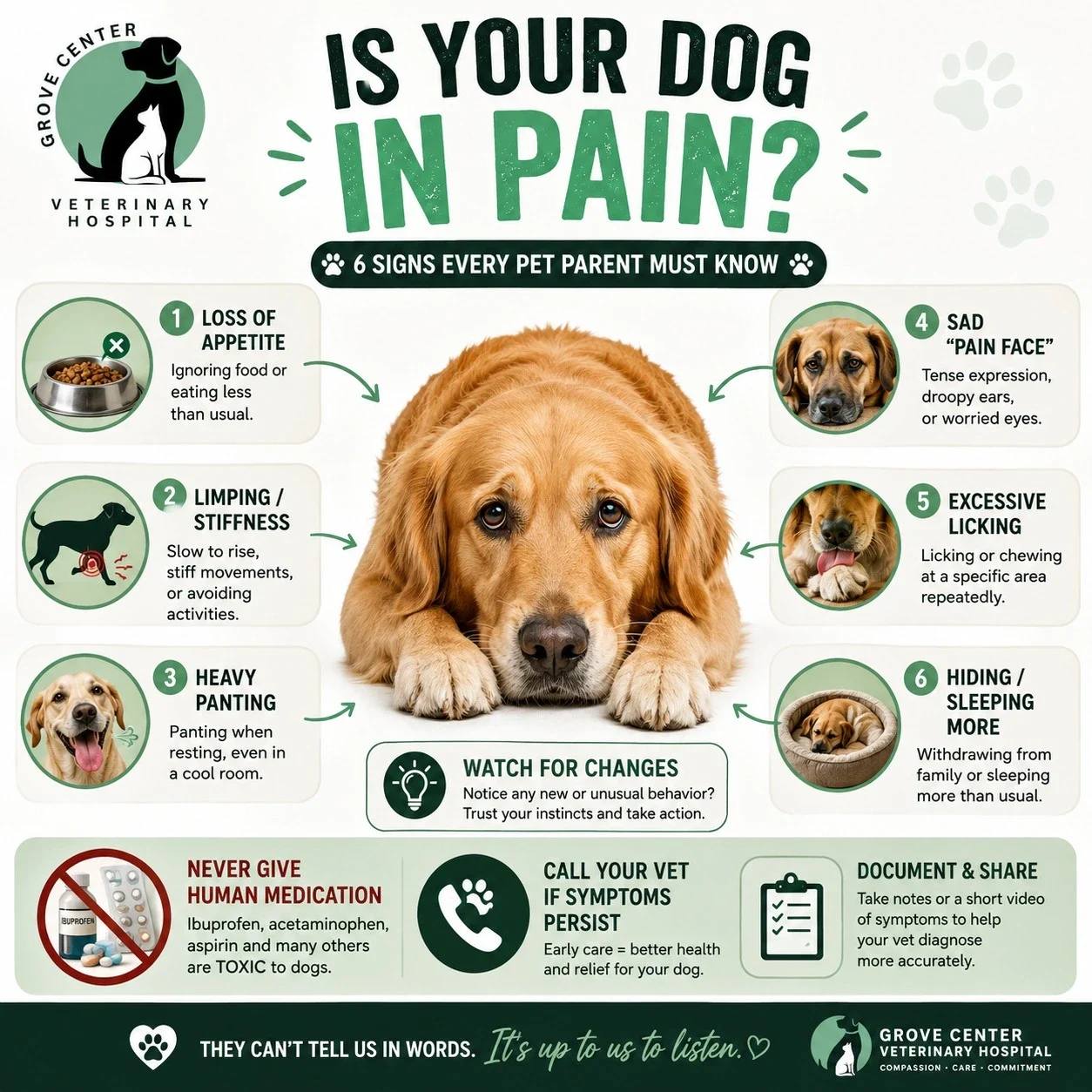
Our dogs know how to hide that they are in pain. This instinct is hardwired in us, and in the wild, it’s the first thing that goes through our minds when we see an animal that is vulnerable or injured that we are looking at. They aren’t able to communicate with words where it is hurting them, so it’s up to us to pay attention to the signs.
It’s important to be aware of any changes in your pet’s daily habits. Learn more than ever before how to recognize if dog is in pain, through this all-inclusive guide, which explains the physical, behavioral, and emotional cues that your dog reveals when they are hurt. In order to determine if dog is in pain, the first step is to analyze what he does on a daily basis. A hurting dog will tend to disrupt their routine and typically be unpredictable.
Behavioral and Routine Shifts
Familiar changes in sleep patterns
Have trouble sleeping at night and going to bed or waking up at a normal time? Or is your puppy so energetic that he doesn’t sleep at all and won’t get out of bed? Pain disrupts rest. If a dog is feeling pain in the joints or from an internal issue, it will have a really tough time laying down. These may lie down, get up right away, circle around their bed or move through it repeatedly searching for an area that will not cause pain.
Sudden decline in appetite is huge red flag and changes in eating habits
When your dog typically eats its food from the bowl and now walks away, it may be a problem of discomfort. When the pain in the mouth is caused by a broken tooth or dental conditions, eating becomes such a chore. Otherwise, food will become totally unappetizing because of nausea or internal pain throughout the body.
Physical and Postural Indicators
Physical and Postural Indicators tell a great deal about a dog’s physical health. One of the best ways to learn to look for signs of dog pain is to train your eyes to see structural and postural abnormalities.
- The, Prayer Position: One of the classic signs of severe abdominal distress is the “prayer position. When a dog stretches out its front legs on the ground with its hindquarters off the ground. It may be as if it is a regular play bow but the dog may be unhappy, tense and not wag their tail. They’re doing this to help expand their tummy and to ease any extreme pressure that could come from situations such as pancreatitis or bloat
- Trembling and Stiffness: Obviously limping, stiffness can be more subtle termed Trembling. If your puppy takes a long time to get up in the morning or is apprehensive about the stairs, then they might have arthritis or joint degeneration. If your dog shakes or trembles without a good reason even with warm temperatures in the room, it’s another big sign that he’s suffering from acute or chronic physical pain or discomfort.
Vocalizations and Audio Cues
Many dog owners believe that a dog in pain will whine, cry or howl. But, this is one of the biggest misconceptions in regards to dog health.
Many dogs suffer silently and stoically. Vocalization is generally only heard when the dog has an abrupt, sharp, acute pain – maybe, for instance, it has been stepped on or suffered from a sudden muscle spasm. Ongoing problems such as arthritis or progressive, long-term diseases do not usually cause ongoing whining. You may only know how your dog is feeling based on its crying, and not pick up on the signs.
Some dogs become louder, though, and whine, groan and grit their teeth more. You may observe your dog softly grunting when seated or hear some soft whining when attempting to get onto the couch. Be alert to these sounds in particular, particularly when they happen in the transition from one movement to another – they could be important indicators when learning to recognize when a dog is in pain.
Facial Expressions and Respiration
With just an attentive look at your dog’s face and an ear to the ground, you can gather a lot of information.
Heavy Panting and Shallow Breathing
It’s perfectly normal for dogs to pant after a vigorous game of fetch, or on a hot summer afternoon. If your dog is lying in a cool, air-conditioned room, and panting heavily, it is a physiological response to stress and distress. Are fast breathing, shallow breathing or panting without an environmental cause, when they are hurt.
Both “Pain Face” and Grimacing
Dogs faces are very expressive. Physical distress often causes a dog to be tight and tense. Watch for:
- Furrowed brow, or flattened ears.
- The “grimace,” where the lips are pulled back slightly at the corners
- Wide eyed expression (sometimes called “whale eye” – the white parts of their eyes are more visible than normal).
Changes in Grooming Habits
Grooming shifts can be in either direction based on what the underlying problem is, so this is an interesting area of observation when deciding if dog is in pain.
Localized Grooming
When a dog is hurt in a certain localized area, they will instinctively lick and clean that spot even in the absence of an external wound that needs to be licked and cleaned. If a dog has localized joint inflammation, they will lick, bite and chew at that one area constantly, or if they have a hidden bug bite or bruise in a deep muscle, they will constantly lick, bite and chew at that one area. Lots of licking can rapidly irritate the skin and result in hot spots.
Neglecting the Coat
On the other hand, if a dog is suffering from chronic disease on a large scale, then they might even cease grooming themselves altogether! If your dog’s joints hurt a lot, then it won’t be very comfortable for your dog to turn around and brush his coat. If your usually well-groomed pup develops some matted, undressed or soiled spots, it’s time to take a closer look.
Changes in Emotion: From Aggression to Withdrawal
Pain changes the emotional threshold of a dog, and directly affects the way that a dog relates to the human family and other dogs. When a dog has a change of emotional state, it is called a behavioral shift, aggression versus withdrawal, and it will directly affect a dog’s interactions with her family and other pets.
Sudden Aggression or Guarding Behaviors
When your very sweet, very gentle dog suddenly growls, snaps or bares their teeth when you try to approach and put your hands on them, don’t conclude that they have a behavioral problem just yet. It is a reaction to the threat. They understand that touching hurts and they are learning to create a barrier around themselves through verb and dental communication.
Hiding and Isolation
Otherwise, when some dogs are not feeling well, they will withdraw from social interaction and hide. They may hide under the bed or curl up in the back of a closet or may not answer the door when you return home. This self-isolation is a protective survival mode that helps to keep them away from danger when they are feeling vulnerable.
Quick Reference Summary Matrix
To review this information in a quick manner, refer to this reference table of the typical differences between a normal dog and a dog in distress.
Observation Area
Healthy Baseline
Potential Pain Indicator
Mobility
Fluid, eager movements; easy transitions
Stiffness, limping, slow to rise, trembling
Rest
Settles quickly, sleeps peacefully
Continuous pacing, shifting positions, restlessness
Respiration
Slow, steady breathing when resting
Heavy panting or rapid, shallow breaths in a cool room
What to Do When You Suspect Discomfort
If you have carefully reviewed these signs and are now confident that your dog is hurting, your very next step must be to call your veterinarian.
Critical Safety Warning: : DO NOT EVER give your dog any human medicines such as ibuprofen, acetaminophen or aspirin. These are nonprescription medications that humans take and can be very toxic to dogs, resulting in acute kidney failure, severe gastric ulceration or fatal internal bleeding.
If you are going to the vet clinic try to safely document what you are seeing prior to arrival. Make a brief video of your dog limping, pacing or breathing abnormally. Dogs frequently come running into a veterinary clinic when they are excited or frightened, and may initially be symptom free. It’s a tremendous diagnostic tool to show your vet a video recorded at home.
Conclusion
When it comes to dog pain, knowing how to recognize it is one of the most crucial duties of being a pet owner. Our dogs can’t communicate their pain directly to us, we must learn to read the minute changes in their body language and behavior. Some subtle hints are all your dog needs to seek assistance, such as a change in sleep pattern, panting in a cool room, uncharacteristic hiding behaviour, or licking in a small area.
Seeing to your beloved companion’s every need, understanding their defensive boundaries, and working quickly with your veterinarian, you can make sure your cat receives the relief, care and comfort it deserves.
Frequently Asked Questions
Q1: If at home, how can I tell if my dog is in pain?
A: The best method of checking is by watching their posture, breathing and movement carefully, but not by touching them. If you do need to take a close look, gently run your hands over their body. Be particularly alert for flinch, blink or pant on their face. If your dog becomes stiff, growls and/or moves away, stop now and don’t get bitten.
Q2: What’s causing my dog to pant all the time when he is sleeping?
A: Panting that persists in the room, if the room is cool and your dog hasn’t just been active, is a classic indicator of stress, anxiety or physical discomfort. Their heart and breathing rate increases on pain, leading to heavy panting.
Q3: Does a dog have to whine and cry to be in pain?
A: Yes, absolutely. The majority of dogs are uncomfortable when the interaction is silent. Vocalization (whining or yelping) is generally used for sudden, sharp, acute injuries. If the dog has arthritis, or an underlying disease, it will always be covered up by him as a survival mechanism.
Q4: What do dogs do when they have joint pain?
A: If a dog has an arthritis, they will be stiff, particularly when getting out of a nap. They will walk much slower, may not want to run up and down stairs, may be reluctant to jump onto furniture, and may often lick or chew on the particular joint that hurts.
Q5: What does a doggy ‘prayer position’ refer to?
A: The prayer position is when a dog lowers its front legs and body to the ground, but leaves the back end elevated high in the air. The dog will not look as it does with a “bow,” but rather look rigid and uneasy. This position is employed to stretch out the abdomen in an attempt to alleviate high internal pressure or pain caused by such ailments as bloat or pancreatitis.
