 grovercentervet
Laser Therapy for Dogs in Gaithersburg, MD | Grove Center Vet
Laser Therapy for Dogs in Gaithersburg, MD: A Gentle Path to Healing and Pain Relief
You’ve probably seen your dog having trouble getting up after a nap, limping after a walk and wanting to get up on the couch. Dogs don’t always show us where it hurts and as pet parents we wonder about it, if it’s “just getting older” or if it really needs medical attention.
Laser therapy is a treatment that is both effective and low-risk — one of the best options out there today — and one that’s transforming the way local vets are handling pain, inflammation and recovery for many dogs in Gaithersburg, Maryland.
Laser therapy is an integral part of Grove Center Veterinary Hospital’s philosophy of comfort and whole pet care, at 9033 Gaither Road in Gaithersburg, MD. From the first time your dog receives laser treatment, to the following time, and the next, and the next, you’ll see it’s a drug-free solution that can help your dog heal and be more comfortable, whether they’re convalescing from surgery, arthritis, or an ailing soft tissue injury.
This article explains what laser therapy is, how it works on a dog’s body, what conditions it is beneficial for, a typical session, and whether it is right for your dog. We’ll also answer the most frequently asked questions that Gaithersburg pet owners ask prior to their dog’s first visit.
Laser Therapy for Dogs: What is it?
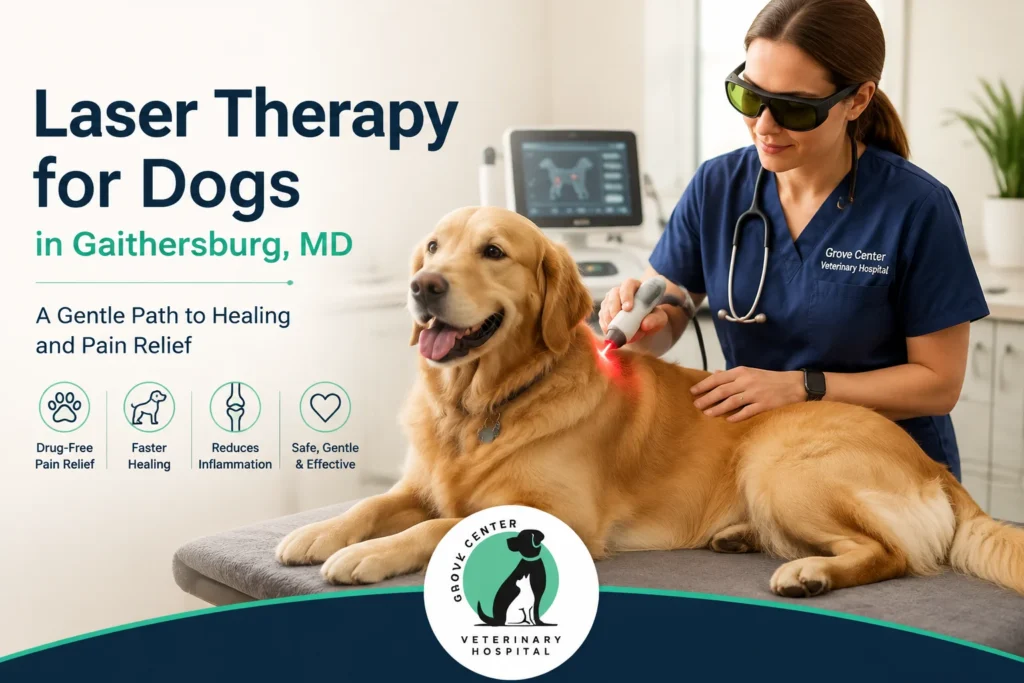
Also known as cold laser therapy, low-level laser therapy (LLLT), or light therapy, laser therapy works by stimulating the healing process at the cellular level with focused light energy. A therapeutic laser, used in veterinary medicine, does not cut, burn or injure the skin in any way as would a surgical laser. However, the light passes through the tissue and stimulates the cells’ mitochondria, the tiny “power plants” in each cell, to increase their energy (ATP) production.
The resulting increase in energy within the cells equates with tangible health improvements such as accelerated wound healing, decreased inflammation, better blood circulation and a quantifiable decrease in pain signals transmitted to the brain. The same science is applied to the veterinary patient, just as it is in human physical therapy clinics.
Laser therapy is an even more valuable tool for dogs as it is:
- Painless. The warmth and softness of the blanket will be comforting to most dogs, not stressful.
- Non-invasive. No needles, no incisions, no sedatives.
- Fast. The session usually lasts only 5 to 15 minutes depending on the part of the body that is being treated.
- Drug-free. Many times it can decrease or stop the need for chronic pain medicine.
- Cumulative. Repeated sessions are beneficial and those benefits are cumulative, particularly with chronic conditions.
The use of laser therapy at the cellular level.
It is best to imagine what happens in the affected or inflamed region of your dog’s body to understand how laser therapy works. Damaged tissue, such as that resulting from an injury, surgery, or arthritis, may have decreased blood supply and cells may not heal well. That is why healing can take a long time and inflammation can persist for a long time.
Therapeutic lasers have very specific wavelengths of light that are absorbed by the light-sensitive molecules in the cells (chromophores) which are in the mitochondria. This absorption elicits a chain reaction of biological reactions:
- Provide extra ATP to cells to repair more quickly.
- Increased blood flow (vasodilation) that increases oxygen and nutrient delivery to the injured area.Chances of reducing the production of inflammatory chemicals, reducing swelling and discomfort.
- Collagen stimulation that promotes tissue and wound repair.
- Release of endorphins, the body’s natural pain-relieving compounds.
It is this ability to work with the body in its natural healing process (and not just trying to cover up symptoms) that is why so many veterinarians in Gaithersburg, including Grove Center’s veterinarians, use it in their treatment programs, both for acute and chronic care.
Conditions Laser Therapy Can Help With
Laser therapy can’t be a blanket cure, but it can be applied by a surprisingly broad list of applications to dogs of all ages and breeds. It may be recommended by a veterinarian for a few of the most frequent reasons:
- Arthritis and joint pain. One of the most common applications of laser therapy is for older dogs or for large breeds that are susceptible to hip and elbow dysplasia. Over time, regular sessions can significantly enhance mobility and comfort.
- Post-surgical recovery. Laser therapy can also help dogs feel like themselves again after surgeries such as a spay/neuter, orthopedic surgery or dental extractions, by diminishing swelling and helping to heal incisions faster.
- Soft tissue injuries. Laser therapy is also highly effective for treatment of sprains, strains and muscle tears, which are common in active and working dogs, and is especially effective if combined with rest and, if necessary, physical rehab.
- Chronic skin conditions. Laser therapy is also beneficial for treating hot spots, lick granulomas and some skin problems because of its anti-inflammatory and tissue-repairing properties.
- Ear infections. Laser therapy may also be combined with traditional therapy to soothe over-inflamed ear canals and alleviate discomfort.
- Intervertebral disc disease (IVDD) and back pain. Laser therapy is a potentially useful component of a management program, especially in dogs such as Dachshunds and Corgis.
- Wound healing. Laser therapy can stimulate the body’s natural healing process, whether due to injury or a surgical site that takes longer than usual to heal.
If your dog has any of these ailments, or just in a slowing down phase that feels out of the ordinary for senior dogs, it’s a good idea to ask your veterinarian if laser therapy is a part of your dog’s treatment plan.
r adipiscing elit. Ut elit tellus, luctus nec ullamcorper mattis, pulvinar dapibus leo.
What is Laser Therapy?
Being a new pet owner, one of the most common queries you might have about your dog’s appointments is what exactly happens in the session? Fortunately, laser therapy is one of the least traumatic therapies in veterinary medicine.
When visiting a vet tech or veterinarian, your dog will be lying down or sitting comfortably. Both the pet and the staff member who administers the treatment are wearing protective eyewear because the laser light is much stronger than other light sources. The handheld laser is then systematically scanned over the treatment field in a slow sweeping motion so that the light can penetrate the skin and reach the undelying tissue.
Most dogs find it very comfortable like a heating pad and feel it as a mild warm feeling. When dogs are treated, it is not unusual for them to appear to get comfy in their treatment, close their eyes, and even fall asleep while receiving treatment.
Usually, a session can last from 5 to 15 minutes, depending on the size of the treatment area and the condition being treated. There’s no recovery time needed. No restrictions on eating, drinking or exercise following a session and your dog can resume normal activities immediately after. (Unless otherwise advised due to concurrent condition).
How Many Sessions Will My Dog Need?
This varies greatly from person to person and is dependent on the disease being treated. An acute injury or post surgical treatment may only need a few sessions in 1-2 weeks as the aim is to assist faster healing in the time sensitive recovery period.
Chronic conditions such as arthritis tend to be different; larger doses are prescribed in the beginning (sometimes two or three times a week) to help create a therapeutic effect, and then smaller doses are prescribed (every few weeks or once a month) to maintain the benefits for a long time. With the laser therapy on a maintenance schedule, many dogs with arthritis continue to receive treatment indefinitely along with other recommended treatments and supplements and weight management.
Your veterinarian will design a plan individualized to your dog’s diagnosis, age, size and response to initial treatment.
Is Laser Therapy Safe for All Dogs?
Laser therapy is very safe and complications rarely occur when used by trained veterinary personnel. However, it’s not suitable for every circumstance. Generally, veterinarians refrain from using laser therapy on:
Areas with active cancer or known tumors (since increased cellular activity isn’t desirable in these cases)
The belly of a dog while it is pregnant.
Active, uncontrolled bleeding areas of the body.
The eyes directly
That is why it’s important that laser therapy is always given by a licensed veterinary team so they can review your dog’s complete medical history and take a look at your dog’s health condition before starting the treatment, and not as a generic add-on.
People in Gaithersburg opt for Grove Center Veterinary Hospital for a variety of reasons.
There are several reasons why Gaithersburg Pet Owners choose Grove Center Veterinary Hospital.
Grove Center Veterinary Hospital has been providing complete medical, surgical and dental services to Gaithersburg pets and their families for decades, and has been using cutting edge treatments and laser therapy since day one. The hospital’s staff and dedicated support team are dedicated to offering a personalized approach to care, considering treatment options for each individual pet rather than a one-size-fits-all solution.
Laser therapy at Grove Center is often used in conjunction with other treatments such as nutritional advice, weight management and preventative treatment, so your dog isn’t treated for a single problem but for a whole range of issues. Clients have reported benefits of laser therapy for their dogs ranging from enhanced comfort and mobility to improved well-being, especially those who have suffered injuries or have experienced chronic joint pain.
If your dog has a condition that might benefit from laser therapy, or if you’ve noticed changes in your dog’s mobility, energy, comfort or have other observations, the Grove Center Veterinary Hospital team can assess your dog and talk about whether laser therapy is a good option for their care plan.
Laser Therapy for your Dog: Signs he or she may need it.
Dogs are good at masking pain, so sometimes it’s not easy to tell when your dog is in pain. Here are some slight indicators to keep an eye out for:
Slow to get up from lying position, particularly in the mornings.
Lack of co-operation in climbing on to furniture or into a car
Occasional limp/favouring one leg
Less interest in walking and playing
Excessive gnawing/chewing at a place
Rigid stiffness when resting, which gets better when they are walking
Changes in walking pattern (hunched back, head down when walking)
If you have ever experienced any of these, you may want to consider getting an exam. Early intervention may mean that treatment will be shorter and more effective than if symptoms are not treated until they are more severe.
The synergy of Laser Therapy and other treatments
Most vets don’t consider laser therapy a cure by itself, and it is rarely used alone. It’s usually used in combination with joint supplements, weight management and occasionally, if necessary, with anti-inflammatory medication at a reduced dosage compared to that required for dogs without arthritis. It’s also employed in the post-surgical period when patients are receiving conventional pain management, to help them heal faster and more comfortably. Laser therapy is often used together with rest, controlled activities and occasionally physical rehabilitation exercises when dealing with soft tissue injuries.
This multi-layered approach is one of the reasons laser therapy has become so trusted as an addition to the general veterinary arsenal, rather than a replacement, and has little to no side effects or risks.
Bring Your Dog to Grove Center Laser Therapy.
It is easy to get started. Laser therapy is best used in conjunction with an informed, personalized treatment plan, not simply a “one-size-fits-all” treatment, which is why the first step is a wellness or diagnostic visit. If laser therapy is recommended, treatment sessions can usually be arranged in a short time, and the majority of dogs start to feel comfortable after a few weeks of treatment.
Call Grove Center Veterinary Hospital at (301) 963-0400 and ask any questions you may have about laser therapy for your dog or schedule an appointment at 9033 Gaither Road in Gaithersburg, MD 20877.
Conclusion
As our favorite dog begins to slow down, whether through age, injury or medical issues, it can be one of the more difficult aspects of being a pet owner. Laser therapy is an active, evidence-based method to help your dog’s healing and comfort that is gentle and won’t have side effects or risks of long-term medications for dog owners at Gaithersburg. This treatment has helped so many dogs move more freely and comfortably, enabling them to regain some of the ease and joy they took for granted because of pain, whether they are managing arthritis or recovering from surgery.
If you’ve seen your dog becoming stiff or feeling pain after injury or just notice that your dog is not as mobile as in the past, it might be time to consult with a veterinarian to find out if laser therapy is something that will benefit them. Your Grove Center Veterinary Hospital in Gaithersburg, MD team is waiting to consider your dog’s unique situation and create a plan to help keep your dog comfortable and healthy for life.
Frequently Asked Questions
1. Laser Therapy for Dogs – What is it?
Laser therapy for dogs involves the use of low-energy laser light to promote healing on a cellular level. It decreases inflammation and promotes blood flow, and alleviates pain without surgery, sedation, or drugs.
2. Does laser therapy hurt dogs?
No. Laser therapy doesn’t cause any pain or harm. It is described by most dogs (by their behaviour) as calming like a heating pad and many dogs lie down or fall asleep during treatment.
3. A laser therapy session lasts approximately:
The duration of each session varies from 5 to 15 minutes depending on the size of the area being treated and what condition is being treated.
4. How many times will my dog need laser therapy?
Different depending on the conditions. There are fewer sessions required for acute injuries or post-surgical treatment (1-2 weeks), and more for chronic conditions such as arthritis, with more frequent sessions initially followed by maintenance sessions.
5. What type of conditions can be treated with laser therapy in dogs?
Common applications include arthritis and joint pain, post-surgical recovery, soft tissue injuries, chronic skin conditions, ear infections, intervertebral disc disease and slow healing wounds.
6. Is laser therapy safe for older dogs?
Yes, laser therapy is safe for older dogs.
