
 grovercentervet
Dog Can’t Walk Suddenly? Causes, Warning Signs & What to Do
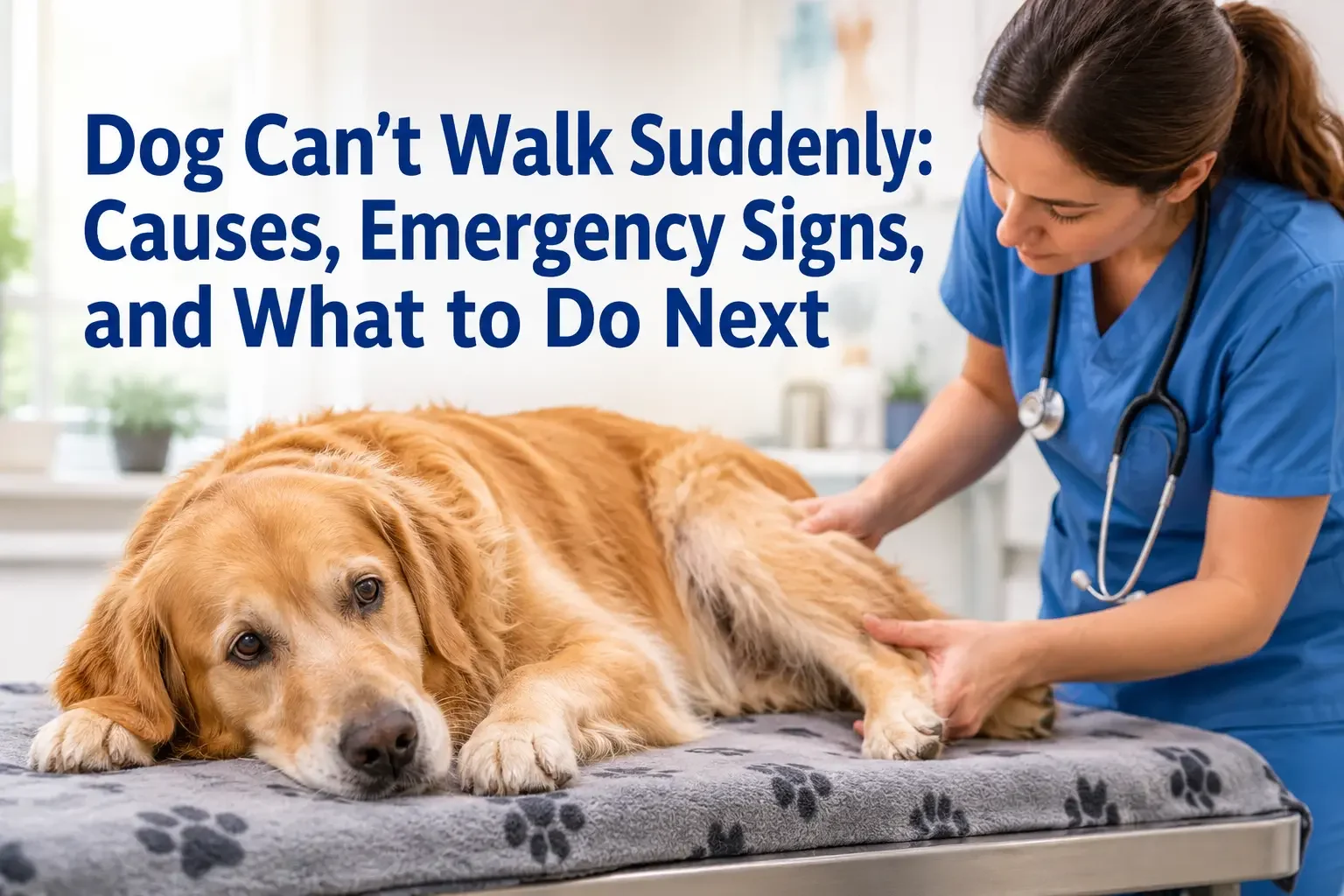
Dog Can’t Walk Suddenly: Causes, Emergency Signs, and What to Do Next
There is nothing more devastating to a pet parent than watching a healthy, happy dog stumble, collapse or fail to stand up. When your dog suddenly can’t walk, you’re likely panicking and wondering what happened? Fortunately, there are lots of causes that can be treated, particularly if your dog is seen promptly. Here are the most frequently occurring causes, warning signs that indicate an emergency and what to look for at the vet’s office.
A sudden onset of lameness in a dog is typically a problem in the spine, nervous system, orthopedic, metabolic or toxic range. Common causes include disc disease, spinal stroke, vestibular disease, torn ligaments, tick born diseases and toxic agents. Sudden lack of movement can be a veterinary emergency because some conditions can cause permanent damage in hours.
When a Dog Suddenly Can’t Walk.
Sudden lameness differs in each pet. Some dogs drag their back limbs, some knuckle over onto the top of their paws and some sway as if they were intoxicated. Others just lie there and won’t get up. These changes are better understood by the veterinary terms: ataxia – uncoordinated movement, paresis – partial weakness, and paralysis – no voluntary movement.
The cause of a sudden onset of inabilty to walk can be in the brain, spinal cord, nerves, muscles, joints, or heart, blood, or metabolism. That’s why it’s important to have a comprehensive exam, rather than taking a “shot in the dark” at home.
Sudden onset of any type of walking problem is very common and is often attributed to the following causes:
Intervertebral Disc Disease (IVDD)
Dogs’ vertebrae are separated by cushioning discs. If a disc bulges or breaks open, it compresses the spinal cord. They tend to occur more frequently in Dachshunds, Beagles, Corgis, French Bulldogs and Shih Tzus, but may occur in any breed. Symptoms include limited mobility, hunched back, back pain, weakness or paralysis of the hind legs. In severe cases, surgery must be performed within 24-48 hours.
Fibrocartilaginous Embolism (FCE)
FCE is sometimes referred to as a “spinal stroke,” as it is caused by an obstruction in a blood vessel to the spinal cord. It most commonly happens during exercise or activity and usually doesn’t cause pain and is only on one side. There is supportive care and rehabilitation for many dogs that enhance their improvement.
Vestibular Disease
The Vestibular system is responsible for balance. When it fails, a dog might hunch its head, start spinning, stagger or start to have a doggy blink. Idiopathic vestibular disease is a common condition in older dogs that can be a dramatic condition but usually responds within days to weeks. Signs can be caused by ear infections, tumors and other conditions, so it’s important for your veterinarian to check your pet out.
Torn cruciate ligament and Joint injuries
Dogs can suddenly not support the weight of their back leg due to a ruptured cranial cruciate ligament. Hip dislocations, fractures, and a bad sprain can do the same. These dogs can be moving around on three legs, but it’s painful because of the leg and it may appear to them that they can’t walk.
There are no books in this class for this class.
Joint pain, fever and weakness can result from Lyme disease, ehrlichiosis, and other infections. Diseases of the brain or spinal cord may also impact walking. These causes can be diagnosed rapidly with blood tests and laboratory investigations.
Toxins and Poisoning
Some poisonous substances act on the muscles or the nervous system. These include some mushrooms, moldy food, antifreeze, insecticides and some medications used in humans. Call the vet or a pet poison hotline immediately if you think that your dog has ingested something harmful and bring the packaging.
Metabolic, Heart, and Blood Problems
Collapse or extreme weakness can be caused by low blood sugar, electrolyte imbalances, Addison’s disease, severe anemia, and heart disease. In these instances the problem is not with the legs themselves. The body has a lack of energy or oxygen to move.
Trauma and Tumors
The spine or nerves can be damaged from a fall, car accidents, or rough play. A sudden drop-off occurs very rarely with tumors of the spine or brain, when they bleed or compress nearby tissue.
Learn when it’s time to take your pet to the veterinarian.
If your dog suddenly cannot walk and exhibits any of the following symptoms, give emergency veterinary care immediately:
- Completely floppy or dragging behind with the back legs
- Screaming or crying out when touched
- Pale or blue gums, or difficulty in breathing
- If vomiting, seizures or collapse occur on more than one occasion
- Important weakness: failure to urinate or loss of bladder control.
- Weakness of the head, eyes rapidly moving, and not standing up
- Exposed to a toxin before, or recently, or a trauma
If your dog suddenly cannot walk, there are a few steps you’ll need to take immediately.
The first few minutes following your dog’s inability to walk will make a difference. Follow these steps:
- Keep hands and feet off the ground. Separate from the rest of the house to avoid further injury.
- Don’t force your dog to stand or walk. Remember that pushing a dog with a spinal problem can aggravate the damage.
- Assist the body in movement. Use a sturdier board or blanket or large towel under the chest and hips to transport your dog safely.
- Avoid human pain relieving medications. Dogs should not take ibuprofen, naproxen and acetaminophen.
- Call your veterinarian. Explain what occurred, when it occurred and any possible exposure to toxins.
- Take notes. The vet helps with the time of onset, recent activity, diet changes and other symptoms.
The veterinarian’s diagnosis for sudden loss of walking.
Your veterinarian will start with a thorough physical and neurological examination, including assessing reflexes, pain response, posture and gait. The tests that may follow include blood tests, urinalysis, tick-borne disease tests and X-rays. Sometimes a CT scan or MRI is required to visualize the spinal cord and referral to a specialty hospital may be needed. When time is critical, diagnostics such as in-house blood work can help expedite answers. Dogs that suddenly can’t walk are a priority at Grove Center Vet.
Treatment options will vary depending on the cause.
There is no one cure, as it is determined by the cause of the problem:
- Rest, pain control and anti-inflammatories and/or surgery (if necessary)
- FCE: supportive care, physio therapy
- Vestibular disease: anti-nausea medicine, fluids and nursing care.
- Surgical stabilization, bracing and rehabilitation of ligament injuries
- Avoid physical, chemical, biological or infectious hazards: antibiotics or antiparasitic medicine.
- Toxins: decontamination, IV fluids and antidotes if available
Other dogs can also be treated with laser therapy, massage, and directed strengthening exercises.
Recovery and Prognosis
Recovery varies widely. When a dog can’t walk as a result of a sudden onset of vestibular disease or FCE, improvement is often observed within days to weeks, and severe disc injuries require months of rehabilitation. If a dog still shows deep pain in its limbs, he or she will likely have a better prognosis than a dog that does not show deep pain in its limbs, so early evaluation is important.
Home care is important, too. Utilize non-slip flooring, support sling/harness, short leash walks and crate rest (when directed). Make all recheck appointments available to your vet to fine-tune the plan.
Is there anything you can do to avoid an unexpected walking issue?
While all causes are not preventable, there are ways to reduce risks. Maintain a good dog body condition score to minimise stress on the spine and joints. For breeding cats that are at risk, use ramps; discourage furniture jumping. Keep up to date on tick prevention and vaccinations and securely store toxins. Have regular check-ups, including blood tests for older dogs.
Unfortunately sometimes it is not possible to prevent your dog from suddenly not being able to walk, but when your dog shows signs of stiffness, reluctance to jump or hunched back, it can detect the problem early enough before it gets worse.
Conclusion
If a dog can no longer walk it requires urgent veterinary care. The reason for this can be disc trouble, vestibular disease, injury, or poisoning, but often the timing of the onset of the illness determines the prognosis for your pet’s recovery. When your dog suddenly stops walking, do not wait to see if it will pass over the night. Do not let the dog become agitated, do not try to move the dog and seek immediate veterinary attention from Grove Center Vet or the closest emergency hospital. We are here to help pet families in Rockville, Gaithersburg and surrounding areas get their pet back on their feet.
Common Questions & Answers (Q&A)
What is causing my dog to not walk anymore? Disc disease, spinal stroke, vestibular disease, joint or ligament injuries, infections, toxin exposure and metabolic problems are the most common causes. It is only through a vet examination that you will be able to determine which of the two is causing your dog to suffer.
2) Sudden loss of the ability to walk is a veterinary emergency? Yes. These causes can result in permanent damage or even prove fatal in hours, and same day care is strongly recommended, in certain cases.
3. Is there ever a dog that can recover from sudden paralysis? Many dogs do, depending on the cause and severity. The chances are better with early treatment, and dogs which still feel “deep pain” have a good chance.
4. What’s causing my old dog to be wobbly and falling over? As a senior dog ages, they may experience a flare-up of arthritis, neurological issues or vestibular disease. Since there are other serious conditions that can mimic the symptoms, if your old boy or girl dog develops similar symptoms, have him checked right away.
5. Can I administer pain medicine to my dog at home? Don’t administer human pain medication that may be harmful to dogs. Only use medication prescribed by your veterinarian for your dog.
6. What info should I give the vet on the phone? Tell us when the weakness began, what your dog was doing, if anything, if they’ve seen anything that might have caused trauma, if it’s a toxin, what it is, any changes in eating or using the bathroom and any other symptoms you’ve noticed.
