Tag: cats

4128821

Fur Mowing in Cats  

What is fur-mowing? In short, the cat is licking off all his hair. Often the belly is nearly as bald as if it were shaved. Sometimes a Mohawk of normal fur makes a stripe down the back, surrounded by bald spots on either side. Sometimes it is the lower back itself that is bald. Often the owner thinks the hair is falling out. Often the veterinarian wonders if the problem is really psychological. The good news is that most cats that mow do not have mental illness.

The answer is almost always much simpler: cats lick off their hair because they itch and it is important not to launch into treatment with psychoactive drugs until causes of itching have been ruled out. For example, in a recent study of 21 cats referred to the University of Guelph Veterinary Teaching Hospital Behavior Service because of excessive hair licking, only two cats were ultimately believed to have a psychological reason for hair licking, and sixteen cats were found to have a true medical basis for itching, and three cats had both.

But let us go back to the beginning: the cat with a big bald spot.

Read Also: Mealtime Enrichment for Cats

How to Groom a Cat: 12 Steps (with Pictures)

How Do we Know the Cat’s Hair is not Simply Falling Out?

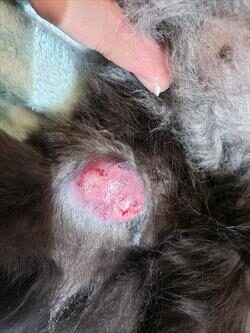
A truly observant owner will actually see the cat licking the area, but cats, being private creatures, often do their licking when no one is watching. One might wonder why it is that the itchy dog creates moist, red, oozy, unpleasant-looking hot spots while the itchy cat cleanly licks away only the hair while leaving the skin itself not in the least bit scabbed, red, or even raw.

This turns out again to be the feline nature: refined. Private and refined. In fact, sometimes the mowing cat will have some hot spots as well or a patch of scabs but often there is only a bald area with normal-looking skin exposed.

The truth is simple: there are only a few rare diseases that actually will lead a cat to lose hair in great patches but, if someone still remains skeptical, there is a test called a trichogram that will confirm the answer. A trichogram involves plucking a hair from the affected area. There are most likely at least a couple of hairs in the area but if there are not, hairs from the margin may do as well. Under the microscope, the end of the hair is flat from having been broken off. A hair shedding from the skin will have a tapered, natural end.

Obvious Reasons to Itch

Before embarking on an extensive battery of tests, it is important to rule out obvious causes of itching. The easiest such cause to rule out is a flea infestation. If live fleas or flea dirt are seen in the coat, then the answer is obvious. If fleas are not seen, you cannot assume there are no fleas to be found, particularly if the lower back is one of the balding areas. 

Cats are efficient groomers and can lick away all traces of fleas, so we may need to go by the pattern of hair loss, (lower back, possibly including scabbing around the neck). hair loss that changes with the seasons and response to flea control. The first step is virtually always going to be ensuring immaculate flea control. After fleas have been removed from the picture, the cat can be reassessed in a couple of months for hair regrowth and/or with a fresh trichogram. If fleas are not obvious right from the beginning, again, they should not be considered ruled out as a cause, but further investigation will be needed. 

The first step is virtually always going to be insuring immaculate flea control. After fleas have been removed from the picture, the cat can be reassessed in a couple of months for hair regrowth and/or with a fresh trichogram. If fleas are not obvious right from the beginning, again, they should not be considered ruled out as a cause but further investigation will be needed.

To properly determine if there are fleas in the household, a flea comb is especially helpful. Flea combs have narrow teeth that can trap live fleas and flea dirt. The cat who is mowing may not have evidence of fleas, but if there are fleas on one of the other pets in the house, you can bet the mowing cat has them too.

Figuring out the Not-So-Obvious Causes

A step-by-step process is important in ruling out hidden allergies, parasites, and even ringworm.

First, the non-invasive tests are performed:

  • Several skin scrapes (ideally, if the cat has Demodex mites, they will be found in skin scrapes, though sometimes this is not the case. Notoedres or Cheyletiella mites generally produce more obvious skin damage.)
  • A fecal flotation test for parasites (occasionally intestinal worms will create itching in the skin. Also, Demodex mites sometimes show up in the fecal test rather than the skin scrape because the cat has been so efficient at licking them up.)
  • Checking the ears with an otoscope (even if the itchy areas are distant from the ears, sometimes ear mites travel out of their normal homes in the ear canal).
  •  Inspection of the cat with a Wood’s light (a fluorescent light – hairs infected with ringworm fungus often glow in the dark) plus a test for ringworm. The culture will require approximately ten days to grow. 

If these non-invasive procedures have not yielded the answer, then there are some choices to make in the approach. Your veterinarian may have a preference as to the order, but the following are several possibilities that might be chosen, each answering different questions.

Skin Biopsy

This can likely be accomplished the same day as the initial visit and yield results as soon as 48 hours later. It is important that the samples be read by a pathologist who specializes in reading skin tissue so your veterinarian may want to request an expert or use a specific laboratory. In this procedure, a local anesthetic is injected into selected areas of skin and an instrument called a punch biopsy (which resembles a tiny cookie cutter) is used to remove small plugs of skin.

The cat will probably have a stitch in each area where a sample was taken.

  1. The absence of abnormalities in the tissue virtually confirms a psychological (the correct term is psychogenic) cause of the mowing. (In the Guelph study mentioned above, three cats had both psychogenic mowing AND medical disease.)
  2. Ringworm can be confirmed more quickly than with the culture (the culture sometimes picks up ringworm when the biopsy does not, though, so doing both tests is very reasonable).
  3. Allergies should be readily identified (though it will not be possible to tell what type of allergy: insect-related, food, or airborne).

Food Allergy Trial

The only way to determine if the cat has a food allergy is to put the cat on a trial diet that the cat could not possibly be allergic to (either a hydrolyzed protein diet or a novel protein diet) for a long period of time and see if the mowing stops. How long? Many cats respond in three to four weeks but some require a good 2 months, so to be sure, a two-month trial is typically recommended.
The advantage of this test is that it can make the correct diagnosis and provide treatment.

  • The advantage of this test is that it not only can make the correct diagnosis but also provides treatment.
  • There are two important disadvantages of this test. The first is that no results will be available for potentially two months. The second is that many cats are picky about the diet food and it may be hard to find one the patient likes. If the cat goes outside, it will not be possible to do a food trial as it will not be possible to control what the cat eats.

See our related page on food allergies for more details.

Flea Control Trial

As mentioned, immaculate flea control is very important in ruling out fleas as a cause of mowing, and it is crucial not to assume that if fleas are not seen, then they must not be involved. There are numerous sophisticated flea products available, and every veterinarian has a favorite. Your veterinarian will instruct you on a schedule for use in this situation it may be more frequent than the manufacturer’s recommendation). The trial should continue for at least 6-8 weeks, after which the cat can be reassessed for hair regrowth or reduction in licking.

  • This trial only answers the question of whether or not the problem is flea-related, and it takes approximately two months to do so.
  • To properly determine if there are fleas in the household, a flea comb should be used, ideally on a pet that is not itchy or mowing. Flea combs have narrow teeth that can trap live fleas and flea dirt.

In an effort to save time, the food trial and flea control trial can be done at the same time. If the cat has not responded after two months, another disease/condition can be pursued. If the cat responds after two months, the cat can be challenged with the original diet. If mowing recurs (which generally takes two weeks at the most on the original diet), then the food allergy is the answer. If the cat continues not mowing after the original food is introduced, then the problem is flea-related.

Demodectic Mange Dipping Trial

Demodectic mange mites can be difficult to find in cats, especially if the cat is over-grooming. It is important to realize that a negative skin scrape does not mean that the cat doesn’t have mites. Fortunately, there is another way to determine if the cat has Demodex mites; the cat can be treated for mites to see if the mowing stops. The cat is treated with lime dip weekly for three weeks. If there is improvement in hair regrowth or a reduction in self-licking, then three more weekly dips are done for a total of six dips, and any other cats in the house are also treated with a total of six dips. Lime sulfur dip is not pleasant. It stains fabric and jewelry and smells like rotten eggs. For these reasons, many cat owners opt for dipping to be done in the hospital rather than at home.

Demodex mange mites are more common in certain geographical areas (such as the Southern U.S.) than others. At which point a dipping trial should be done depends in part on the likelihood of demodicosis being the problem. If Demodex mites are not found on a skin scraping, and they frequently are not even if they are in the skin, then the response to dipping becomes the only way to determine if the cat has them.

Lime sulfur dips are very drying to the skin, and special conditioners may be needed after the third dip if dipping is to continue.

Steroid Trial

For this trial, the patient receives some kind of cortisone-type treatment for three to four weeks. At the end of that time one can tell if the mowing has improved (and the mowing is said to be steroid responsive) it hasn’t improved at all (and the mowing is said to be steroid non-responsive.) Knowing whether or not the mowing is steroid-responsive helps classify possible causes. For example, seasonal steroid-responsive mowing is most likely to be from fleas (technically, allergy to the flea bite) or an airborne allergy. Non-seasonal steroid-responsive mowing is most likely going to be from a food allergy or from demodicosis. Steroid non-responsive mowing is most likely to be from a parasitic or fungal problem or a food allergy.

Many experts like to do the steroid trial at the beginning of the workup while others wait until more results are in.

  1. The use of steroids can make ringworm worse so many experts prefer to hold off steroids until the ringworm culture is finished.
  2. The use of steroids will interfere with a skin biopsy. If a biopsy is being considered, it should be done prior to steroid use.
  3. The use of steroids will interfere with food trials or flea control trials.
  4. The steroid trial is inexpensive and one of the least labor-intensive tests that can be done.

What if the Cat Really has Mental Illness?

This is generally called psychogenic mowing. We don’t imply that we know if cats are licking out of obsession, anxiety, or even boredom. We simply say that there is nothing wrong with the skin. The approach is aimed at environmental enrichment. This means the cat gets more toys, more games (feeding in a different location daily to create a hide-and-seek sort of cat entertainment), and more attention. See more information on environmental enrichment for cats. 

As for anxiety, there are several approaches. Feliway® products employ a pheromone that is naturally made by cats to communicate that a territory is safe and secure. This pheromone is available in a room spray or a plug-in defuser. Alpha-casozepine is a cow’s milk protein with mood-stabilizing properties. It can be given as an oral supplement (Zylkene®) or in a commercial diet (talk to your veterinarian). There are also medications for anxiety: clomipramine, fluoxetine, and even amitriptyline. These can be used to relieve a cat’s need for compulsive over-grooming after more conventional causes of itchy skin have been ruled out.

Overall, fur mowing can be a frustrating condition for which no cause is obvious, and the only solution is to try different treatments and see what happens. Hopefully, this article has provided some meaningful suggestions for testing and treatment approaches.


5077733

Declawing and Alternatives for Cats

Declawing (also known as onychiectomy) has probably become the most controversial of all the elective surgical procedures commonly performed by veterinarians. While it is normal for cats to scratch things (to mark territory as well as to condition their claws) this behavior can destroy the bond between an owner and pet cat. Cats, especially adolescent cats, tend to play rough, scratching their owners or other pets sometimes violently in play. Claws serve to mark territory and assist in communicating territorial messages to other cats though this behavior can be undesirable when it is directed against furniture. 

The declaw surgery is an instant permanent solution to these problems; however, it is popularly held that a number of adverse conditions result from declawing, possibly including chronic pain for the cat. Pet owners need an understanding all of the alternative options involved as well as what the actual facts are regarding this procedure. 

The American Veterinary Medical Association policy regarding declawing is: The AVMA discourages the declawing (onychectomy) of cats as an elective procedure and supports non-surgical alternatives to the procedure. The AVMA respects the veterinarian’s right to use professional judgment when deciding how to best protect their individual patients’ health and welfare. Therefore, it is incumbent upon the veterinarian to counsel the owner about the natural scratching behavior of cats, the alternatives to surgery, as well as the details of the procedure itself and subsequent potential complications. Onychectomy is a surgical amputation and if performed, multi-modal perioperative pain management must be utilized.

Alternatives to Declaw Surgery to Try First

Scratching is a natural behavior of cats, which makes it difficult to modify. The usual goal is to transfer the cat’s scratching instinct to a scratching post or other scratching toy; it is virtually impossible to control the desire to scratch completely. Some cats take quickly to alternative scratching surfaces while other cats require time-consuming training. 

Training tips include:

  • Cats seem to prefer to scratch upholstery with a vertical drag to the fabric. Furniture can be upholstered in an unacceptable fabric and a scratching post can be swathed in an appropriate fabric (rather than the usual carpet).
  • Furniture can be made unacceptable by using plastic, double stick tape or aluminum foil to cover the target pieces.  Spray-on antiperspirants can be used on the furniture as a repellent.
  • Treats or catnip can be used to attract the cat to the scratching post.
  • The cat can be punished for furniture scratching attempts but it is important that the cat cannot connect the punishment with the person administering it (otherwise the cat will simply learn not to scratch while that person is watching). Yelling, spanking, or shaking a can with pennies in it is too directly associated with the person rather than the act of scratching. A water squirt bottle is better but only if the cat does not see where the squirt comes from. Booby traps can be set up using balloons. If mouse traps are used, it is vital that they be turned upside-down so that the cat cannot possibly catch a foot in the trap. Stacked traps can be set up so that they pop upward when tripped, making a surprising noise. In this way, punishment can still be carried out when the owner is not at home. The idea is to convince the cat that the furniture piece is not a good area for scratching and that the appropriate scratch toy can be used with no adverse experience.

Many owners are not excited about putting mousetraps up against their living room furniture, upholstering in aluminum foil, or decorating sofas and chairs with balloons. It is easy to see why a surgical solution would be attractive. Fortunately, there are more options.

Nail Trimming

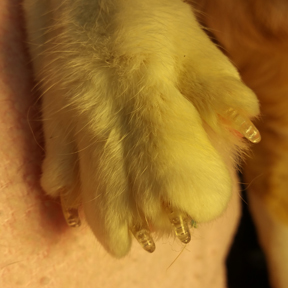
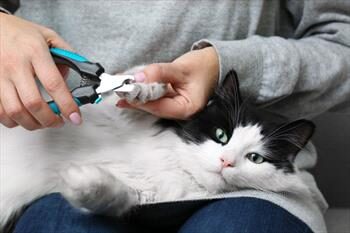
For some cats, simply keeping the nails short is adequate control but many people do not know how to trim their cat’s nails. In fact, the non-pigmented nail of a cat makes it easy to see where not to cut. This video on YouTube shows exactly what to do. 

Blunt Acrylic Nail Caps

This is another popular method of controlling a scratching problem. Blunt acrylic nail caps are glued onto the cat’s claws. The idea is that the blunt nail will not be sharp enough to cause damage. The veterinary staff will place the first set but typically after that the owner has the option of placing the caps at home.

What to Expect 

  • The nail caps will wear off but not at the same time. After a couple of weeks some of the nails will be capped and others will not be.
  • The nail caps must be replaced as the nail grows out.
  • Some cats are not in the least discouraged from scratching by these caps and are able to simply scratch larger holes in the upholstery.

Surgical Declaw (Onychiectomy)

Despite our best efforts to deflect scratching or decrease claw sharpness, sometimes nothing works and an immediate, permanent solution is needed. It is important to consider that the declaw surgery alters the cat permanently and should not be done if alternative methods are effective. The cat will need some special care during the post-operative healing period: special litter, pain medication, and some activity restriction as he/she will have tender feet for a week or two after surgery. The declawed cat should be forever indoors or outdoors only with supervision as they will no longer have the ability to defend themselves against dogs or other cats.

There is a great deal of controversy regarding this procedure and it has been legally restricted in many areas. Few veterinary surgeries encounter as much bias as the declaw, and a political has movement emerged. Some concerns are valid and some less so. Before making a declaw decision, it is important to review the arguments and find your own perspective. Here are some of the issues.

  • The declaw is viewed by many as performing an unethical surgical alteration of a companion animal for the sake of convenience. This is frequently countered by the idea that convenience is not the issue but that the relationship between the pet and its owner is at stake. If that relationship fails, a much bigger life quality issue is at stake including relinquishing the cat to the shelter where euthanasia is a real possibility.
  • Chronic pain may result from alterations in the foot anatomy and that long-term arthritis is promoted. While there may be truth to this, it is important to realize that 90% of cats over age 10 have arthritis in at least one joint. While it is certainly better to prevent arthritis in a cat’s senior years if we can, we still need the cat to get to its senior years. Arthritis can be treated; euthanasia cannot.
  • Some people believe that a cat’s indoor only lifestyle is not humane because it is not natural, or an indoor only lifestyle may be impractical because of other people or other animals coming and going in the home. It is true that a declawed cat should become an indoor only pet for its own protection.
  • There is belief that the procedure is performed too casually and that alternatives are not properly given consideration. Regardless of one’s feelings are on whether to declaw a cat, the fact remains that we are talking about a permanent alteration with a potential for negative ramifications later on. This procedure is not to be done lightly and it is important to at least attempt some of the alternatives discussed above.

Research has been conducted to sort out truth from political propaganda. The AVMA has an excellent source where this research has been collated and the concerns are addressed. Here are some conclusions but feel free to examine the AVMA’s information on your own. 

Myth #1:  After declawing, a cat is likely to become fearful or experience behavior changes, impairing an affectionate relationship with his owner.

Numerous scientific studies have been unable to document any behavior changes post-declaw. In fact, in one survey 70 percent of owners of declawed cats reported an improved relationship with their cat after the procedure.  

Myth #2:  A declawed cat cannot climb trees.

Declawed cats are not as effective at climbing trees as cats with claws, but declawing does not prevent tree climbing. That said, declawed cats should be kept indoors where they do not need claws to assist in self-defense. 

Myth #3:  A declawed cat cannot catch prey.

Declawed cats are not as effective at catching prey as cats with claws but declawing does not prevent effective hunting. 

Myth #4 A declawed cat has lost its ability to defend itself and should not be allowed outside.

This one is true. Without claws, a cat has indeed lost an important part of his defense system. Declawed cats should be housed indoors only. 

Myth #5:  Declawed cats are more likely to bite since they can no longer claw.

Declawed cats do not seem to realize they have no claws. They will continue to scratch ineffectively as if they did not know the difference. As for biting, there have been some studies that show an increased tendency to bite in declawed cats while other studies have not shown that. The trouble in interpreting this information is that one of the reasons cats are declawed is to control aggression. Cats that are aggressive, even in play, are more likely to be declawed to at least remove the claw portion of the human hazard. The same cat is still perfectly able to bite and will continue to bite. Studies on cats that bite after declaw have not explored whether the same cats were biting before the declaw so conclusions are difficult to draw.

Myth #6:  The post-operative period involves tremendous pain.

Pain management techniques have improved greatly in recent years and include regional nerve blocks eliminating pain completely from the feet during the first few days of healing, fentanyl pain relief patches, as well as injectable and oral medications. This means that a declawed cat should be comfortable in the recovery period. 

That said, if proper pain relief is not practiced, the declawed cat will have sore feet after surgery. The larger the cat, the more discomfort there is and reluctance to bear weight.  

The recovery period should not last longer than a week or so. Healing should be complete by two weeks. Pain after this recovery period is not normal or expected in any way and if a declawed cat seems to be uncomfortable or lame, a recheck appointment is definitely needed. 

If you plan to declaw your cat, you may want to ask your veterinarian about the pain relief plan they expect to utilize so you know what to expect. 

Myth #7:  A declawed cat will not use a litter box again.

It is important that litter not get impacted in the declaw incisions during the recovery period. Shredded paper is the usual recommendation during recovery and some cats simply will not use shredded paper. The recycled newspaper litters are an excellent alternative. The only litter problem one might expect would be lack of acceptance of a new litter during the recovery period. Declawed cats do not lose their litter box instinct.

Declaw Methods

Three techniques are commonly used for permanent declaw surgery: the Resco or clipper blade method; the disarticulation method; and the Laser declaw.

Resco/Clipper Blade Method

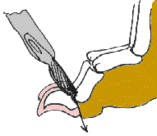
This is probably the most common method used by veterinarians to declaw cats as it is associated with the fastest surgery time. It involves the use of a sterile nail trimmer to cut through the bone of the third digit of the toe. The cat loses the part of the bone from which the claw grows. The incision is either sewn closed with suture material or closed in surgical glue.

What to Expect / Possible Complications

  • Patients commonly spend at least one night in the hospital for bandaging, monitoring for bleeding and pain assessment.
  • Some spotting of blood is normal from the toes during the first few days at home (beware if you have white carpeting).
  • Shredded paper or pelleted recycled newspaper litter is recommended during the healing period. Conventional clay or sand litters can impact inside the tiny incisions and cause infections.
  • Pain medication is essential, especially for larger or older cats who have more weight to carry on their tender healing toes. The amount of weight carried on the feet (the size of the cat) is the biggest factor in post-operative pain. There are numerous regimens employed for declaw pain control.
  • Occasionally not enough of the third bone is removed and the claw regrows. When this occurs, infection is generally inevitable and the remaining bone must be removed. This is not a potential complication when the disarticulation method is employed.
  • A study by Martell-Moran et al published in the Journal of Feline Medicine and Surgery in 2017 found that cats declawed with this method had more back pain later in life than disarticulated cats or undeclared cats.

Disarticulation Method

This procedure is a bit more difficult to master as it involves the delicate disconnection of all the tiny ligaments holding the third bone in place. The entire third bone is removed intact, whereas in the Resco method, the bone is cut through, leaving a small piece behind.

  1. Because the entire third bone is removed, there is a zero possibility of the claw growing back; however, the cut ligaments allow for a subtle drop in the way the foot is held. Most owners do not notice this change in posture.
  2. Two nights in the hospital are required for this procedure (one night with bandages and one without).
  3. Some spotting of blood from the toes is normal during the first few days at home (be aware of this with white carpeting).
  4. Shredded paper or pelleted recycled newspaper litter  is recommended for 10 days after surgery. Conventional clay or sand litters can impact the tiny incisions and cause infections.
  5. Pain medication is a good idea, especially for larger or older cats. The amount of weight carried on the feet (the size of the cat) is the biggest factor in post-operative pain. I recommend the use of the fentanyl patch for post-op pain control as well as pre-operative local blocks to the feet for pain control.
  6. Occasionally not enough of the third bone is removed and the claw regrows. When this occurs, infection is generally inevitable and the remaining bone must be removed.
  7. If the ungual crest of the nail is not removed (the area from which the claw grows), the claw may be able to partly grow back and a second surgery will be needed.

The Laser Declaw: Another Way to Disarticulate


Recently, the laser declaw has received a great deal of attention. In this surgery, a laser rather than a scalpel blade is used to disarticulate the third toe bone. Advantages of laser surgery include virtually no bleeding during surgery or afterwards, possibly less post-operative pain, and in many cases, no bandages.

The downside is the expense of the equipment. The cost of the laser equipment itself is $20,000 to $40,000. To justify such an expense, the laser must be able to generate substantial revenue for the hospital. This means that the cost of the laser declaw to the pet owner is likely to exceed the price of the conventional declaw by an additional $50 to $150 dollars.

Tendonectomy: A Surgical Alternative to Declawing

This surgical procedure has emerged as an alternative to the bone removing declaws. Here, a tendon is cut on the underside of each toe to prevent grasping motions. The claws remain but the cat cannot extend them.

What to Expect / Possible Complications

  • Because the incisions needed for this procedure are so small, the recovery is minimal. No bandages, no special litter, no blood spotting. There are usually no stitches to remove and the tiny incisions are closed in surgical glue.
  • Because the cat can no longer make grasping motions, the claws will naturally grow in a circular manner into the foot pads causing pain and infection unless the owner is able to trim the nails on a regular basis. The tendonectomy patient will require life-long regular nail-clipping. This may not be practical in an aggressive cat and may not be the right choice for an owner seeking a low-maintenance pet.
  • The August 1, 1998 issue of the Journal of the American Veterinary Medical Association reports a study to compare the long- and short-term complications of tendonectomy vs. those of traditional declaw. Owner satisfaction with both procedures was also measured. While cats who received the tendonectomy showed significantly lower pain scores immediately post operatively, both procedures showed an equal frequency of other complications (bleeding, lameness, and infection). The number of days it took for a cat to walk normally again was not different between the declawed cats and the tendonectomy cats. There was no significant difference between the percentage of owners satisfied with declaw versus the percentage of owners satisfied with tendonectomy. In a 2001 survey, more people were satisfied with the declaw over tendonectomy.
6772964

Desensitization and Counterconditioning to Nail Trimmers for Cats

How to help your cat get used to having their nails trimmed

  1. Start by putting the trimmers in a common area like your living room where your cat can choose to explore them at their pace. Putting treats around the nail trimmers can help to create more positive associations with them. If your cat will not go near the trimmers, feed them treats at a comfortable distance. Gradually decrease the distance between them and the nail trimmers.
  1. Next, have the nail trimmers nearby when you are interacting with your cat. This interaction may be a play session or a time when your cat is comfortably settled on your lap accepting treats. You do not need to move the nail trimmers around, just have them within view of your cat when they are near you.
  2. Let your cat see you lift and put down the nail trimmers. If your cat enjoys lying on your lap, you can have the nail trimmers near, pick them up and put them down, then feed your cat a treat.
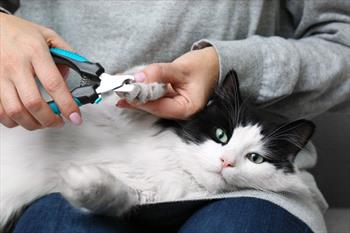
  3. Practice bringing the nail trimmers to your cat’s foot, then moving them away and giving your cat a treat. If your cat is too stressed about this step, only bring the nail trimmers part way to your cat’s foot before putting them back down and giving a treat.
  4. After your cat has learned to tolerate a single nail being isolated and examined with the trimmers nearby, cut the toenail. Then begin adding toes to individual sessions until you can cut multiple toenails in one session.

Overall, you want your cat to feel as comfortable, safe, and relaxed as possible when getting their nails trimmed. Work with your veterinarian and staff to make nail trims at home and at the clinic the most positive experience possible for your cat.

6420816

Dietary Therapy for Hyperthyroidism in Cats

There always seems to be the occasional cat for which the traditional therapies do not seem to be appropriate.

  1. Radiotherapy is not an insignificant expense and may be financially out of reach. 
  2. Some cats simply will not take oral medications. 
  3. The compounded ear ointments do not always work. 
  4. Some owners are simply unable to give medications twice daily indefinitely with meaningful regularity. 
  5. Some cats have a concurrent illness that precludes methimazole or simply does not tolerate its side effects.

Iodine is an essential ingredient your cat needs to make thyroid hormone; therefore, it should not be surprising that the production of excessive amounts of thyroid hormone requires excessive amounts of iodine (in the case of hyperthyroidism). Since iodine comes from the diet, it turns out that it is possible to create a diet that is restricted enough in iodine to preclude the production of excessive amounts of the hormone yet not so restricted that an iodine deficiency results.

Hill’s Pet Nutrition has developed such a diet, called y/d, and it has been an alternative to the more traditional therapies since 2011. The diet is available in both dry and canned formulations in some regions. Always consult with your veterinarian before changing your pet’s therapeutic diet.

How Long do you Have to Feed the Diet for the Cat Not to be Hyperthyroid Anymore?

Several studies have been done, and hundreds of cats have been evaluated. Many cats will have normal thyroid levels in the first two months of diet use; however, a full response can take up to 12 weeks. By 12 weeks on the diet, 90% will show normal thyroid levels. The diet is ineffective in approximately 10% of cats eating it.

Can a Cat Have any Treats While on this Diet?

Unfortunately, there are no acceptable treats. Feeding ANY thing other than the therapeutic diet could interfere with the effectiveness of treatment. Foods or treats meant for other pets in the home should be kept away from a cat on this form of therapy. Also, hyperthyroid cats who roam outside may be eating any number of things out in the world. It is unlikely that their diet can be controlled enough for this form of therapy to be effective. In fact, if the cat on y/d is still hyperthyroid after eight weeks, it can be assumed that the cat is finding another iodine source. The cat might simply be cheating on the diet, getting extra iodine in medication or in drinking water, or even from the surface of a food bowl.

Can Other Cats in the Household Eat this Diet Safely?

After over a decade of Y/d diet availability, it appears that normal cats may safely eat Y/d diet. No reactions or problems were found when the diet was experimentally fed exclusively to normal cats for a two-year period. Further, no issues have come up in the pet-owning population. If multiple cats are present in the home and feeding separately is problematic, it should be fine to feed all the cats the iodine-restricted diet.

The manufacturer suggests taking a week to transition the cat from his normal food to this one, not because of the iodine issue but because it is always a good idea to avoid an abrupt food change. After the transition is complete, Hills recommends a thyroid level, kidney parameters, a recheck exam, and a urine specific gravity (test for urine concentration) after four weeks and again after eight weeks on a Y/d diet. If your cat is still not showing a normal thyroid level in eight weeks, it is worth going out to 12 weeks and evaluating one more time. After your cat has achieved a normal thyroid level, an exam, and blood work should be performed every six months.

In cats with concurrent kidney disease, lab work is recommended after two, four, and eight weeks on the diet and every three to four months thereafter.

What about Switching a Cat on Methimazole Over to the Diet?

The manufacturer recommends simply switching from medication to diet directly with no transitional period. Simply discontinue the medication and start the diet.

Methimazole, surgery, and radiotherapy are well-reviewed effective therapies for feline hyperthyroidism. Where this diet fits in the picture and whether it should replace traditional therapy or be considered an acceptable last resort remains to be seen over time.

4128552

Distemper (Panleukopenia) in Cats

Feline distemper, also known as feline panleukopenia, is a very contagious, life-threatening infectious disease of cats. It commonly swoops through a group of cats, especially kittens, leaving a trail of death behind it. Fortunately, vaccination is highly effective and the “feline distemper vaccine” (which also covers upper respiratory infectious agents) is considered to be the core immunization for all cats, regardless of their lifestyle. Most people have heard of feline distemper only through discussion of routine cat vaccinations, but let’s talk about the actual disease.

The Virus Itself

The feline distemper virus amounts to a single strand of DNA surrounded by a protein coating. It is extremely stable in the environment, which leads to its characterization as ubiquitous (everywhere). It can last a year indoors at room temperature. It survives freezing as well as treatment with such common disinfectants as alcohol and iodine. Fortunately, soaking a surface in bleach (diluted 1 part bleach in 32 parts water) for 10 minutes will kill it.

Virtually every cat in the world will be exposed to this virus to some extent because the virus lives all around us.

Infection occurs when the virus enters the body through the mouth or nose. Whether illness results or not depends on the immunity in the victim vs. the number of individual virus particles (i.e. the amount of virus) entering the body.

The feline distemper virus is a parvovirus. Many people are familiar with this term as parvovirus infection is a very real concern for dogs, especially puppies. In fact, canine parvovirus is closely related to the feline distemper virus and much of the information regarding canine parvovirus holds true for feline distemper. The feline distemper virus, however, is more difficult to remove from the environment and more lethal in its victims than its canine counterpart.

Infection and Disease

An infected cat sheds large amounts of virus in all body secretions, including feces, vomit, urine, saliva, and mucus. The virus persists long after evidence of the original body secretion has faded away. The virus enters the victim’s body and proceeds to seek and infect rapidly dividing cells. The lymph nodes in the throat are first to be affected and from there, over the next two to seven days, the virus rushes to the bone marrow and intestine.

In the bone marrow, the virus suppresses the production of the entire white blood cell line, hence the term panleukopenia (literally, “all-white-shortage”). White blood cells are the immune cells needed to fight the infection, and without them, the victim is completely vulnerable to the advance of the virus. In other words, the first order of the virus’s business is to eliminate its host’s defenses. From there, it continues to the intestinal tract. 

There, the virus infects the intestinal cells, causing ulceration leading to diarrhea and life-threatening dehydration as well as bacterial infection as the barrier between the body and intestinal bacteria is lost. The patient dies from either dehydration or secondary bacterial infection. The infection can be so rapidly overwhelming that death occurs before the vomiting and diarrhea even begin.

Because most cats are exposed to this virus to some extent, it is unusual for a kitten to have no immunity whatsoever. Furthermore, the vaccine is so effective that even one dose can provide long-lasting protection. As a result, infection is largely limited to unvaccinated younger animals kept in groups such as a colony of barn cats, feral cats, or even a group of shelter cats. Viral numbers (the amount of virus) must be large enough to overwhelm a cat’s partial immunity, but once virus-laden diarrhea begins to gather in the environment, those large numbers can be reached. Death of sick cats is typically considered to be 90%, though it has been said that a kitten who survives the first 5 days is likely to survive the infection.

Recovered kittens are considered contagious for six weeks following recovery.

Cerebellar Hypoplasia

A specific syndrome occurs if infection occurs during pregnancy. If infection occurs in mid or early pregnancy, the kittens simply abort. If the kittens are fairly far along, the cerebellum is involved, leading to cerebellar hypoplasia. The cerebellum is the part of the central nervous system that coordinates balance and movement, enabling one to walk or run on an uneven surface without consciously thinking about it. 

Without a normal cerebellum, the kitten is born with marked intentional tremors: whenever he focuses on purposeful movement, he tremors so much that normal movement is impossible. Such kittens are called wobbly cats and are notably abnormal but are considered to have good life quality and can be kept as pets as long as they are looked after.

Diagnosis of Infection

Any kitten with fever, appetite loss, diarrhea, and/or vomiting is a suspect for feline distemper. Classically, a white blood cell count shows almost no white blood cells; there are few causes of white cell counts this low and the infection can be considered confirmed.

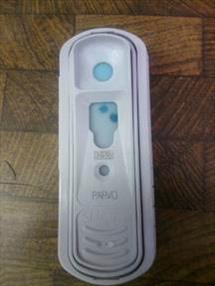
The SNAP Fecal ELISA test kit made for canine parvovirus is often used in cats as a means to reach a distemper diagnosis. This test detects parvovirus in stool and is felt to be accurate although the test is not specifically labeled for this use by the manufacturer. Vaccination 5-12 days prior to running the test can lead to a false positive test as the virus from the vaccine will be detected. It is important to keep this information in mind when using this test to make a diagnosis; recent vaccination will cause a false positive.

If a dead kitten is available for necropsy (that’s an autopsy in animals), the infection is readily confirmed by laboratory tissue analysis as there are unique tissue findings in feline distemper.

Virus isolation, PCR testing, and antibody level measurement are also potential tests for feline distemper.

Treatment

An infected cat can recover if the cat can be kept alive until the immune system recovers from the panleukopenia and can throw off the infection. This means that invading intestinal bacteria must be kept at bay with antibiotics and aggressive fluid therapy must control dehydration. Hospitalization is required as fluids and medications must be given intravenously. Blood sugar must be supported as well and control of pain, nausea, and hypothermia is crucial. This is essentially the same therapy as for canine parvovirus infection, though the feline experience seems to be more lethal. There is little chance of survival without hospitalization.

Recovery

If a cat is lucky enough to recover from this infection, generally, no permanent damage is retained, and the cat goes on with lifetime immunity.

  • Virus is shed for up to six weeks after recovery.

Disinfecting the environment after infection is a huge challenge; the best protection for newly introduced cats will be vaccination. That said, bleach diluted 1:32 in water with a 10-minute contact time will kill the distemper virus, so it would be prudent to bleach any surfaces that can be bleached. 

Prevention

Vaccination after age 12 weeks is generally effective in generating immunity against this infection, though immunity gained from mother’s milk may inactivate the vaccine through age 14 to 16 weeks. Most vaccine protocols call for at least two doses of vaccine to be given 2-4 weeks apart with the last dose being received at or after age 14 weeks. There are some vaccines that are approved for single-dose effectiveness depending on the age of the kitten.

  • Vaccination, at least with a live vaccine, should be avoided during pregnancy as cerebellar hypoplasia (see above) can result in the kittens.

Vaccination is generally given every one to three years depending on the protocol of the animal hospital. Vaccination can be given as an injection (either modified live or killed virus vaccine) in the right front leg area or can be presented as a nose drop.

Killed virus vaccine has been associated with vaccination-associated fibrosarcoma (an aggressive cancer) in rare individuals. Research is continuing in this area; however, the killed virus vaccine has largely been replaced by a modified live virus vaccine, which is not felt to have this problem.

8255511

Choosing the Right Litterbox for Your Cat

Cats are low-maintenance and clean, making them appealing pets. Kittens instinctively know how to relieve themselves in soft materials and bury their waste, making it easy for them to learn to use a litterbox. Choosing and maintaining the right litterbox setup to meet your cat’s needs helps prevent house soiling and promotes healthy elimination behaviors from the start.

“Litter-training” Cats

At about three to four weeks old, kittens begin to play, explore, and dig in loose, soft materials like dirt or litter. This exploratory behavior soon leads them to eliminate in these areas. “Litter-training” a cat is not like house-training a dog. Taking a cat to the box and moving their paws in the litter is unnecessary and may create negative associations with the box or you. Instead, provide an acceptable, accessible litterbox based on the criteria described below, determining what is acceptable and accessible from the cat’s point of view, not yours.

Consider the following factors when setting up your litterbox for the best experience for you and your cat(s):

Size Matters

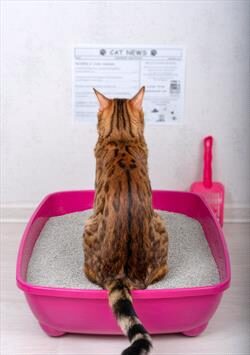
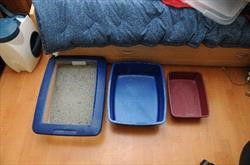
Bigger is better when it comes to litterbox size. Cats prefer a box with enough space to dig, cover their waste, and turn around without touching the sides. A general rule of thumb is that the box should be 1 1/2 times the length of the cat from their nose to the base of their tail.

Litter Depth and Type

Some caregivers believe that adding more litter reduces the need for frequent cleaning. Wild cats prefer areas with just a few loose particles for making small scrapes, not several inches of dirt. Therefore, two to three inches of litter is sufficient, allowing cats to cover their waste without sinking in. Long-haired cats may prefer even less litter or a smooth surface. A dirty litter box is a common reason for cats to eliminate outside the box, so adding extra litter does not replace the need for regular scooping and cleaning.

Most cats prefer fine-grained litter because it has a softer feel. Clumping litter is usually finer-grained than typical clay litter. High-quality, dust-free clay litter is also relatively small-grained and may be perfectly acceptable. Non-scented, clay-clumping litter is often the best choice, as some cats may not like crystals, pellets, or wood shavings.

Avoid changing types or brands once you find a litter your cat likes. Buying generic, the least expensive, or whatever brand is on sale may lead to problems. Some cat litter is developed more with the caregiver’s needs in mind rather than the cat’s. Many cats are put off by the smell of scented or odor-repellant litter, so placing a room deodorizer or air freshener near the litterbox might be objectionable. A thin layer of baking soda on the bottom of the litter box can help absorb odors without deterring the cat. If the litterbox is kept clean, odor should not be a problem.

Location is Key

Caregivers often place the litterbox in out-of-the-way locations to minimize odor and litter tracking around the house. Common placements include the basement, next to an appliance, in the garage, or on an unfinished, cold cement floor. While convenient for caregivers, these setups can be less than ideal from the cat’s perspective.

For example, young kittens may not be able to navigate long flights of steep stairs in time to use the bathroom, and newly introduced adult cats may initially forget where the box is located. Cats can also be startled if a furnace or washer-dryer suddenly turns on while they are using the box. Additionally, some cats prefer to scratch the area around their litterbox and may find a cold cement floor unappealing or uncomfortable.

To minimize the risk of your cat finding an alternative, more convenient toilet, always place litterboxes in quiet, low-traffic areas with easy access and escape routes. Make sure there is at least one box per level of the house, and keep them away from your cat’s food and water stations. One compromise is to place the box in a closet; if you do this, wedge the door open from both sides to prevent your cat from being trapped inside or outside. If the box is on a smooth, slick, or cold surface, consider placing a small throw rug underneath it.

Types of Litter Boxes

Litterboxes come in many shapes and sizes, and while larger is generally better, each cat may have individual preferences. Open boxes are typically preferred over covered boxes, although they provide less privacy. Hooded boxes offer privacy but can have poor air circulation, which might deter some cats. Self-cleaning boxes can be convenient but might scare others. Just like with location, offering different types of litterboxes helps cater to each cat’s unique needs.

How Many Boxes?

When it comes to the number of litterboxes, a good guideline is to follow the golden rule: number of cats + one. It is generally not possible to designate a personal, unique box for each cat, as cats will often use any and all available litterboxes. In multi-cat households, placing boxes in various locations around the house gives cats options if another box is occupied and prevents territorial disputes, bullying, or guarding of the box.

Maintenance

Litterboxes must be kept consistently clean. To meet the needs of the most discriminating cat, feces should be scooped out of the box daily. How often you change the litter depends on the number of cats and the number of boxes you have. Twice a week is a general guideline, but depending on the circumstances, the litter may need to be changed every other day or only once a week. If you notice an odor from the box or if much of the litter is wet or clumped, it is probably more than time for a change. Do not use strong-smelling chemicals or cleaning products when washing the box. The smell of vinegar, bleach, or pine cleaners may cause your cat to avoid the box. Washing with soap and water should be sufficient.

Liners

Some cats don’t mind having a liner in the box, while others do. You may need to see if your cat is bothered by a liner in the box. If you use a liner, make sure it is anchored in place well so it cannot easily catch your cat’s claws or be pulled down into the litter.

If Problems Develop

Elderly or arthritic cats might benefit from ramps or a lower-sided box. For cats that tend to kick litter out, use high-sided boxes and consider placing a litter-trapping mat under the box. Some cats might be sensitive to certain box materials or odors. If your cat stops using the litterbox, your first call should always be to your veterinarian. Many medical conditions can cause a change in litterbox habits, and these possibilities must be considered first. If your veterinarian determines your cat is healthy, the cause may be behavioral. When resolving house-soiling behavior in cats, environmental changes are often needed, and punishment is never the answer. For more assistance, contact a veterinary behaviorist or animal behavior professional who is knowledgeable and experienced in working with cats.

4469494

Canned Food Transition for Cats Addicted to Dry Food

Cats, like children, often resist what is best for them. The two most frequent comments that I hear from people when trying to convince them to feed their cats a healthier diet are “my cat won’t eat canned food” and “but my cat really likes his dry food.”  Children really like potato chips and ice cream, but that certainly does not mean those food items constitute optimal nutrition.

The transition process often involves much more than just plunking down a new food item.  Time, patience and tricks are often required.

One reason that cats like dry food so much is because the pet food companies do not play fair when manufacturing this sub-optimal food source.  They coat the kibble with extremely enticing animal digest sprays that are very pleasing to a cat – making a poor quality diet very desirable to the target animal.

In addition to the aforementioned coating of dry food with animal digests, another issue is one of a crunchy texture, which is very different from canned food.  Cats are very resistant to such a drastic change in the texture of their food.

If you are convinced that getting your cat off of dry food is the way to go, read on for some tips on how to accomplish this.

The key is to do it slowly and with patience and incorporate various tricks for the stubborn cats. The most important issue is actually making the change, not how fast you accomplish it. 

I must say that my cats tested every ounce of patience I had over a 3+ month period of time during their transition from dry to canned food.  They had been on dry food their entire lives and did not recognize canned food as food.  My cats ranged in age from 2 years to 10 years at the time of the transition.

The single biggest mistake I see people make time and again is to say that their cat “won’t touch” the new food and then panic and fill up the bowl with dry food.  In many cases, it is simply not that easy to get cats off of dry food.

There are two categories of cats – those that will eat canned food and those that will be extremely resistant to eating anything other than dry food.  If your cat falls into the first category, lucky you. These cats will take to it with the attitude of “finally – an appropriate diet for my species.” In this case, if your cat has been on all dry food, or only receives canned food as an occasional ‘treat,’ start by feeding canned food in increasing amounts.  Gradually decrease the dry, taking about a week to fully switch the cat over to 100 percent canned food.

Some cats may experience softer stools during the transition.  I do not worry if this happens and tend to ‘ride it out.’  If diarrhea results from the diet change you will either need to experiment with different canned foods or slow the transition down and do it over a period of several weeks.

Note that in over 40 years spent in this profession, I have never met a cat that needed dry food to stay healthy but some need to be transitioned more slowly than others.

The average cat should eat about 180 – 220 calories per day which will be found in 5-6 ounces of the average canned food.

However, note that high protein/low fat/low carb foods like Weruva Paw Lickin’ Chicken and some Tiki Cat varieties are very low in calories (see the Cat Food Composition chart, far right column) so you will need to feed much more than 5-6 ounces which can get quite expensive.

The necessary daily caloric intake should be split between 3 to 4 meals/day (or just free-fed if they are not overweight).

When determining how much you should be feeding your cat once transitioned to canned food, keep it simple.  Too fat?  Feed less.  Too thin?  Feed more.

Now….for the stubborn cats……

If you are unlucky like I was, and your cat does not recognize the fact that he is a carnivore and would live a healthier life if eating canned food, (or a homemade diet) then you will have some work to do.  Some cats that have been on dry food for their entire life will be quite resistant to the diet change and may take several weeks or longer to make the transition to a healthier diet.

For ‘resistant-to-change’ cats, you will need to use the normal sensation of hunger to help with the transition. For this reason, it is very important to stop free-feeding dry food.  This is the first, and very critical, step.  You need to establish set mealtimes. They are not going to try anything new if their bowl of junk food is in front of them 24/7.

Cats do not need food available at all times. It really is okay for them to experience a hunger pain!  That said, it was very hard for me to listen to my cats begging for food even though I was strong in my conviction that I was heading them in the best direction for optimal health. It truly was a stressful time for me and them.  Actually, I think it was harder on me!

This is where many people fail and just give in and fill up the dry food bowl.  There were a few times when I had to call my ‘sponsor’ and was instructed to “just leave the house if you can’t take looking into those eyes!”  I left the house. Those pitiful little cries of “I have not had food for two WHOLE hours!” were hard to take.  But, lo and behold, they were just fine when I returned.  Not one cat had died from hunger.

On the other hand, do not attempt to withhold food for long periods of time (greater than 24 hours) with the hope that your cat will choose the new food.  You need to ‘convince’ them that a high quality canned food  really is good for them, rather than to try starving them into it – which does not work anyway.  Allowing a cat to go without food – especially an overweight cat – for a long period of time (greater than 48 hours) can be quite dangerous and may result in hepatic lipidosis (fatty liver disease).

Hepatic lipidosis can also develop when a cat consumes 50 percent or less of his daily caloric requirements over a period of many days.  The definition of “many” varies from cat-to-cat.  For this reason it is important to understand that you need to have some idea of the calories from canned food combined with the calories from dry food that your cat is consuming on a daily basis while you are implementing the transition to canned food.

I have never seen a cat develop hepatic lipidosis when consuming at least 15 calories per pound per day. This number is figured on lean body weight, not fat weight.

If your cat weighs 18 pounds but really should weigh 12 pounds, please make sure that he is consuming about 180 calories per day.  (12 pounds lean body mass X 15 calories/pound/day = about 180 calories/day)

In reality, the cat in the above example would probably be completely safe at only 150 calories per day.

If you have a small female cat that should only weigh 9 pounds, please make sure that she is consuming at least 135 calories per day.

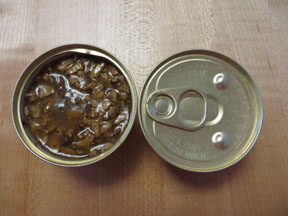
Canned foods never list the calorie content on the can but many dry foods do list this information on the bag.  A rough guideline for the calorie content of most canned foods that are 78 percent moisture is about 30 calories per ounce, but can range from 20 to 40 calories/ounce as shown by the chart linked above.

Most cats will lose some weight during the transition to canned food.  Given that a very high percentage of cats are overweight to begin with, this is a favorable result of the diet change – as long as they do not lose too much weight too fast.  A cat should never lose more than one to two percent of body weight per week.

I highly suggest that all cat caregivers weigh their cats periodically, especially if they are over 10 years of age.  This will help ensure a safe transition to a healthier diet and, in general, weight loss is often the first sign of ill health for any reason.  I make it a point to weigh my cats at least once each month, especially since they are now over 10 years of age.

Here is a scale that is reasonably priced:  Salter Baby and Toddler scale. It weighs to the nearest half ounce and has a ‘hold’ button on it that helps obtain an accurate weight even for a cat that is moving around a bit.

Here is another scale that may be even better because its base is as long as the scale.  Red Cross Baby Scale. This is important for cats that are trained to walk onto it otherwise, scales like the Salter one linked above may tip.  This would scare the cat and harm the scale.

All of my cats lost weight during the three months that it took to switch them to canned but none of them became too thin. They slimmed down to a nice lean body weight – losing fat while maintaining their muscle mass.  They also became much more active.

If your cat is overweight, please see the feline obesity article.

Resign yourself to the fact that you will be very frustrated at times and you will be wasting canned food as they turn up their nose at it.  Also, you may want to immediately switch your cat to a dry food that has fewer calories from carbohydrates than most dry foods. Talk to your veterinarian about specific brands.

The low-carb dry foods are very high in fat and therefore are very calorie dense.  These foods must be portion-controlled, otherwise your cat may end up gaining weight.  Let’s presume that a certain dry food has 612 calories per cup.  One quarter of a cup contains 153 calories so be very careful to pay attention to how much of these high calorie dry foods you feed.

The caloric needs of an average cat can range between 150 to 250 calories/day depending on their lean body weight and activity level.

The low-carb dry foods are also very high in phosphorus.  This is especially detrimental for cats with compromised kidney function.

And, of course, these low-carb dry foods are water-depleted – just like all dry foods – putting your cat at risk for serious urinary tract problems.  They are also cooked at high temperatures in order to dry them out.

I do not recommend these dry foods for long-term feeding for all of the reasons stated above. Please use them only as transition diets.

Be sure to stay away from any “light” varieties since those types of foods are very high in carbohydrates.

Here are some various tricks for the stubborn ones.

Keep in mind that different tricks work on different cats:

  1. If your cat has been eating dry food on a free-choice basis, take up the food and establish a schedule of 2 to 3 times per day feedings.  I really do prefer just twice-daily feedings when trying to transition them.  A normal, healthy hunger response after 12 hours goes a long way to convince them to try something new.
  2. If you want to take the transition very slowly, you can feed the amount that your cat normally consumes in a 24 hour period – split up into two feedings to get him used to meal feeding.  Many people, however, are unsure as to how much their free-fed cat really eats so I would start off by figuring out the calories that your cat needs to maintain his weight if he does not need to lose any weight.
  3. Leave the dry food down for 20 minutes, and then remove any uneaten portion.  Repeat in 8 to 12 hours depending on if you are feeding two or three times per day.  During the first few days of transitioning to a set schedule, you can offer canned food during the dry food meals, or in-between meals.  The stubborn ones, however, will not touch it. Do not despair – all cats will eventually eat canned food if their caregiver is determined, methodical, and patient enough.  Once your cat is on a schedule, you will notice that he is more enthusiastic about food during his proper mealtimes and will be much more inclined to try something new. 
  4. Again, most cats only need 150 to 250 calories/day. The dry food bag should tell you how many calories are in a cup of food but if it does not, you can call the company.      
  5. Once the cat has transitioned to canned food, I prefer to either free-feed them (if they are not too fat) or to put out a meal 3 to 4 times per day. Small cats in the wild eat 8 to 10 small meals per day. I do not worry about leaving canned food out for up to 12 hours at a time. Keep in mind that a lion is not going to eat his entire prey immediately.
  6. Once you have established scheduled mealtimes, you will most likely need to start feeding a bit less at each mealtime in order to get the normal sensation of hunger to work in your favor.  Again, we are trying to use the normal sensation of hunger to help us out.  We are not trying to starve the cat into the diet change.       
  7. Once your cat is on a schedule of meal-feeding instead of free-feeding, try feeding a meal of canned food only. If he will not eat it – and the very stubborn ones won’t, try not to get frustrated – and do not put down dry food.  Try some of the other tips listed below.  If he still will not eat the canned food, let him get a bit hungrier.  Offer the canned again in a couple of hours, or just leave it out.  Some cats will be more apt to try something new if they keep walking by it and seeing/smelling it.  Try a different brand/flavor or a different ‘trick.’  Once it has been about 18 hours since he has eaten anything, give him just a small amount (1/4 of a cup) of his dry food – keeping track of his daily caloric intake.
  8. Remember to be patient.      
     
  9. Exercising your cat with a tassel toy before feeding can also help stimulate his appetite.  
         
  10. Cats’ noses are much more sensitive than ours are.  They can smell the dry food in the cupboards.  I suggest either putting it in the refrigerator or putting it in a tightly sealed container.  If they can smell it, they will hold out for it.  Some people recommend getting it out of your house completely, but this is not possible when you are dealing with a very stubborn cat that needs a bit of time and patience to make the transition happen. 
         
  11. The following worked for my cats:  Sprinkle a very small amount of tuna – or any other favorite treat (some cats do not like fish and would prefer cooked chicken) – on top of the canned food and then once they are eating this, start pressing it into the top of the new food. (The “light” tuna is better than the fancy white tuna because it has a stronger smell.  Or, Trader Joe’s makes a Cat Tuna that is very stinky.)  Be careful to decrease the amount of fish as soon as possible.  Health problems can occur with a predominantly fish-based diet.  Plus, you do not want to create a situation where your cat will only eat very fishy foods.   
       
  12. Make sure that any refrigerated canned food is warmed up a bit.  Cats prefer their food at ‘mouse body temperature.
  13. Try offering some cooked (or raw – whole meats, rinsed well or partially baked) chicken or meat baby food.  One of the goals is to get your cat used to eating food that does not crunch.  He needs to get used to a different texture.  Also, chicken is a great source of protein to point him in the proper direction toward a high protein, low carbohydrate diet. If he eats the chicken, he may head right into eating canned food.  Then again….he may not.
  14. Try sprinkling some parmesan cheese on the canned food.  Most cats love parmesan cheese and this trick has been very successful for me.
  15. Try a product called FortiFlora, feline version. Most cats LOVE FortiFlora and this has recently become my favorite trick.  This is a probiotic made by Purina but you are not going to use it for its probiotic properties. You are just going to use it as a flavor enhancer. The base ingredient in FortiFlora is animal digest – the very substance that makes dry food so very enticing to cats. The directions say to use one package per day – and you can use this much if you want to – but this amount is not usually necessary.  You may only need about 1/4 of a package, or much less, with part mixed into the food and part sprinkled on top of the food just as you would use salt and pepper on your own food.
  16. FortiFlora can be purchased online but an easier product to find is Temptations treats.  I trap a lot of feral cats for spaying/neutering purposes and this is one of the best baits that I can use. These tasty treats can be found at most pet stores.  Put a few in a plastic baggie and crush them with a hammer.  Use the crushed treats as described for the FortiFlora above.
  17. There are numerous freeze dried meat treats on the market that you can also sprinkle on top of the canned food.  Halo’s Liv A Littles is a popular choice.
  18. Speaking of texture, a common question is “can I just soak the dry food in water?”  I hedge more than just a bit at this question.  Dry food often has a very high bacterial content.  Mold is also often found in dry food.  Both organisms flourish in moist environments. There have been many deaths of dogs and cats secondary to eating mold mycotoxins, vomitoxins and aflatoxins that often contaminate the grains found in dry food.  If you want to try the trick of wetting down the dry food to alter the texture, please leave it out for only 20-30 minutes then discard it.       
  19. Try dipping some dry food pieces in the juice from the canned food. Some cats may refuse to eat it if the dry food even touches the canned food.  But if he will eat it with a bit of canned juice on it, try the ‘chip and dip’ trick.  Scoop up a tiny bit of canned food onto the piece of dry food. Put them on a separate plate from his small portion of dry food.  Some cats will eat their small portion of dry and then go investigate the dry food with a tiny bit of canned on it.
  20. Going one step further, try adding a few small pieces of the canned food to the small portion of dry food.  Your cat may pick around the canned food but will get used to the smell – and texture – even if he does not eat any pieces of the new food.
  21. Crush some dry food and sprinkle it on the top of the canned food.
  22. If you do not think it will upset your cat, try gently rubbing a bit of canned food or juice on the cat’s gums  This may get him interested in the taste and texture of the new food – but do it gently.  You do not want to make this a stressful situation and create a food aversion.  (This trick is commonly used to get just-weaned kittens used to eating canned food.
  23. If you do not think it will upset your cat, use your finger to put a tiny bit of canned food or juice on his paw for him to lick off.  This has not worked for me in the two cats I have tried it on, but it is another idea.  Make sure you do it without stressing your cat.  Again, you do not want to create a food aversion. 
          
  24. If you have a multiple cat household, some cats like to eat alone in a less stressful environment, so you may need to take these cats into a separate, quiet room to think about the error of their ways – their carbohydrate/dry food addiction. Once in a quiet setting, away from the other cats, two of my cats would eat canned food/tuna ‘meatballs’ by hand.  Not from a bowl, mind you, but only from my hand. I’m not sure who was being trained. They did eventually start eating from a bowl after a few hand feedings.
  25. Try various brands and flavors of canned foods.  Try Friskies, 9-Lives, Fancy Feast, etc.  Many cats prefer the foods that are all by-products and turn their noses up when offered the by-product-free diets like Wellness, etc. You can worry about feeding a a different canned food later if you want to and you can always mix different types of food together.  The initial goal is just to get your cat used to eating canned food and not dry kibble.  And remember what I said above. I would much rather see a cat eating a canned food like Friskies, 9-Lives, or Fancy Feast rather than any dry food.
  26. Syringe-feeding is also another option but has to be done with finesse and patience so as to avoid a food aversion.  If you choose to syringe-feed, your goal is not to feed him a full meal.  Sometimes just syringing a 1-2 cc’s can ‘jump-start’ your cat into eating the canned food – maybe not the first time but it will at least get him to taste the new food and experience a foreign texture. The best way to syringe-feed is to kneel on the floor with your cat between your legs so he is facing the same way as you are.  Then, using a small (1cc/TB) syringe, slip it in the side of his mouth and give about 1/2 cc at a time.  He may spit it out but you are just trying to get him used to the taste and texture, not stress him.
  27. Few canned foods will make it through the tip of a syringe but human meat baby food works well for this trick. You can also water it down a bit if you need to.
  28. If you want to use canned cat food instead of baby food, you will need to cut the end off of the syringe so that the opening is as big as the barrel.  Make sure that the tip is smooth.  If you do not want to cut the tip of the syringe off, you will need to puree a pate (versus chunks) type of food.  I puree Wellness for this.  I run it through the blender with a small amount of water (about 3-4 tablespoons/5.5 ounce can).  Then I strain it to remove anything big enough to clog the small tip of the syringe.  Wellness is also a balanced diet, unlike human baby food.
  29. Even though human baby food is not a balanced diet for long-term use, it is a great tool that can be used to help transition a cat to a texture that he is not used to.     
     
  30. I did have to take drastic measures for a foster cat named Molly.  She was dangerously obese (20 lbs – double what she should have weighed) and would not eat canned food even after two weeks of syringe-feeding her.  She needed to go in for a dental so while she was under general anesthesia, I put in a feeding tube. This took the stress off of both of us.  After two weeks of feeding her via the tube she started licking the canned food from my fingers then suddenly decided it was time to eat it.  She then started to finally lose weight.  Before the 7-pound weight loss, she could barely walk, could not clean herself, and was quite possibly headed for diabetes.
  31. Don’t give up.  One of my barn cats ate dry food for the first 12 years of her life.  She would never touch the canned food that the other cats ate. Then, one day, she found her ‘inner carnivore’ and started eating canned food out of the blue!  I was shocked.  That was 4 years ago and she has been on a 100 percent canned food diet since she made the switch.

These are just a few tricks that you can try.  Different tricks work on different cats.  The key is to be patient.  Remember, it took me three months to get my cats on 100 percent canned food.  Most cats, however, will not take this long.

4299044

Cytauxzoonosis in Cats

Cytauxzoon felis infection is highly seasonal and takes place in spring and early summer when the tick population is active.

What is Cytauxzoon felis?

Cytauxzoon (pronounced “sight-oz-o-un”) organisms are blood parasites that were first recognized in Africa as a parasite of antelopes and other ruminants. Cytauxzoon organisms were not discovered in the U.S. until 1976, when Cytauxzoon felis was first described as a feline blood parasite affecting and killing cats from forested areas.  Initially, there was concern that livestock were soon to be next as this was a ruminant infection as far as anyone knew, but research showed only cats could be infected. It appears that in the U.S., the natural host of this infection is the bobcat, where most of the time, the infection is minor, and it is only the domestic cat for whom infection is a disaster.

Cytauxzoon felis is a single-celled organism that infects both the blood and tissues of the cat. The blood cell stage of the parasite called a piroplasm, is not particularly harmful; it is the tissue stage, called a schizont, that is the problem. The schizont infects immune cells that line blood vessels, which causes them to swell and block off the blood vessels in which they reside. Any tissue that has blood vessels (which is basically every tissue in the body) can be affected, but most symptoms seem to relate to the resulting red blood cell destruction and inflammation. Symptoms start small with listlessness and fever but quickly progress to jaundice, spleen enlargement, pain, and death within one week with a two to three-week incubation period from the time of initial infection.

How do Cats get this Infection?

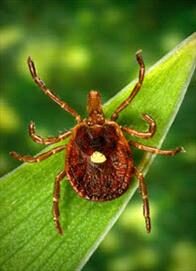
Cytauxzoon felis is spread by tick bites. The usually implicated ticks are the American Dog Tick (Dermacentor variabilis) and the Lone Star Tick (Amblyomma americanum). Bobcats and infected domestic cats carry the Cytauxzoon piroplasms in their blood; ticks feed on the bobcats and then drop off and molt to their next life stage. They are still carrying the Cytauxzoon piroplasm when they attach to their next host, and if that next host is a domestic cat, a lethal infection results.

The organisms are home to the immune cells lining the blood vessels as described above, and if the host lives long enough, the schizonts will eventually produce offspring (the piroplasms). Bobcats do not get sick during this process. It is the local bobcat population that infects the local tick population.

Cats cannot be infected without a tick bite.

How is the Diagnosis Made?

The cat typically has a fever, with or without jaundice, and is brought to the veterinarian for evaluation. In most cases, the piroplasms are fairly obvious when the blood sample is evaluated. Because the tissue phase of the infection with the schizonts comes first and the blood infection with piroplasms comes after, it is possible that at the time the blood is tested no piroplasms are yet present. Because of the rapid progression of the infection, piroplasms will likely be seen in a few days if they are not at first, so sometimes a second blood evaluation is needed.

Because piroplasms sometimes have variable sizes, they are sometimes mistaken for Mycoplasma hemofelis, a much more treatable infection.

Cytauxzoon organisms are larger and have a thick “dot” on their ring shape.

If the diagnosis is to be made post-mortem (after death), it is usually easy to find the schizonts in many body tissues.

Is There any Treatment at all?

In one study, a combination of atovaquone and azithromycin yielded a 60 percent survival rate in experimentally infected cats. Atovaquone, an anti-malarian drug, is not readily available but can be obtained through compounding pharmacies, and another drug, imidocarb, can be used in the meantime. Cats must be hospitalized, supported with intravenous fluids, and have their blood anti-coagulated so as to prevent inappropriate clotting and vessel clogging with schizont-laden macrophages.

A milder strain of Cytauxzoon felis seems to have emerged in west Arkansas and east Oklahoma, where a number of cats have survived without treatment (as do most bobcats). These cats continue to have piroplasms in their blood but seem to have no effect from this. It is yet unknown how this is able to happen. (Different strains of Cytauxzoon, effective medication, and genetics are all theories.)

Prevention

Since mortality is quite high with this infection and treatment is still highly investigational, prevention is paramount. The most effective prevention is to keep the cat indoors where there is no tick exposure. The next best prevention is to use a tick control product on the cat; note that there are not nearly as many tick products for cats as there are for dogs. Most canine tick products are toxic to cats and cannot be safely used so meticulous label reading is crucial. Just because a product works on fleas definitely does not mean it also works on ticks and the feline label is needed to ensure safety. New products are being approved and released every year, so ask your veterinarian.

6019917

Cutaneous Lymphoma in Cats

Lymphoma is common in cats, but is seen in so many ways and different places that it is confusing. It can be seen in almost any organ. When it affects the skin, it is called cutaneous lymphoma.

Lymphocytes, or lymph cells, are white blood cells and part of the immune system. Lymphocytes travel throughout the body. Some lymphocytes line organs to provide immunity against infection. When the lymphocytes become malignant with cutaneous lymphoma, however, skin tumors can develop almost anywhere on the skin. 

Besides the haired parts of the skin, these tumors can be seen at the lip margins, the eyelids, the anus/rectum, the vulva, and the prepuce of the penis (the fold of skin covering the penis). A specific, poorly understood form of cutaneous lymphoma seems to occur near the hock, which is the ankle of a back leg. A cat can also have skin tumors and lymphoma elsewhere in the body at the same time; often it’s seen in the lymph nodes, gastrointestinal tract, liver, spleen, kidneys, mouth, or nasal passages. As with non-cutaneous lymphoma in cats, each case is different.

The disease is complex and there are several forms of it. Unfortunately, there is no overall consensus from the veterinary community on what the best course of action is in any individual cat.

The cause is unknown in most cases. Feline leukemia virus and feline immunodeficiency virus can cause lymphoma in cats, but don’t seem to be involved in most cases of cutaneous lymphoma. Lymphoma in cats can rarely happen at a vaccine site, but most vaccine-associated tumors are other kinds of cancer, not lymphoma.

Cutaneous lymphoma can look like skin nodules, masses, ulcers, or just areas of skin that are flaky, bald, or changed in color. Some of the skin tumors can be large.  As time goes on, the skin often becomes thick, red, ulcerated, and may ooze fluid. Cats can also have signs of internal disease such as swollen lymph nodes, a lack of appetite, weight loss, vomiting, diarrhea, and general weakness.

For diagnosis, a piece of tissue is taken from the skin tumor, usually with either a biopsy or a fine needle aspirate. It is examined under the microscope. Cutaneous lymphoma can look like some other skin diseases, so enough testing must be done to ensure accuracy. Blood tests and a urinalysis may be needed. More tests like X-rays, ultrasound, or tissue samples may be used to see if other organs besides the skin are involved.

Treatment is much like other cancers. Surgery can sometimes remove skin masses or lesions. This surgery can be useful to get tissue to make the diagnosis. If the cat is lucky and the lymphoma is ONLY at one place on the skin, surgery may also help for treatment, but this situation is rare. It’s much more common for lymphoma to involve lots of different organs at once. Even if only the skin is affected, there are usually too many sites for surgery to help.

Chemotherapy is the main form of treatment for that reason as it can help multiple areas of the body at once. If all goes well, it can be really effective at reducing the lesions even in a short time, although this result may not last. Radiation may occasionally be helpful for skin lesions occurring in just one spot. Rarely, cases with lymphoma in multiple spots on the skin have also been treated with a superficial form of radiation that treats the skin without affecting deeper organs. Corticosteroids pills such as prednisolone are often part of chemotherapy for cutaneous lymphoma. If the corticosteroids are used by themselves when more effective therapy isn’t an option, they may give some temporary relief.

Sadly, there is no cure and the long-term prognosis is poor. However, chemotherapy can slow progression and temporarily improve a cat’s quality of life. On average, cats treated for cutaneous lymphoma will only survive for less than a year. Some cats live longer, though, and cats whose disease starts out at only one spot might be likely to do better.

4128976

Cholangitis and Cholangiohepatitis in Cats

Diseases associated with the liver, gallbladder, and/or bile duct system can be confusing for pet owners because these diseases can have really vague symptoms. It’s not always clear why they happen, and the terminology used to describe them tends to sound like a foreign language. Cholangitis/cholangiohepatitis, the second most common type of liver disease seen in cats, is a prime example. This disease is sometimes referred to as cholangitis, sometimes cholangiohepatitis, and sometimes cholangitis/cholangiohepatitis syndrome. In addition to these names, several different forms of the disease exist, which all have their own names. To add to the confusion, sometimes other diseases can occur at the same time as cholangitis/cholangiohepatitis, which makes figuring out the cause for the symptoms and diagnosing the problem pretty difficult. 

Helpful Definitions

Cholangitis means inflammation of the biliary tree (also called the biliary tract or bile duct system), which connects the gallbladder and liver and helps these organs make, process, store, and secrete bile. Bile is used to break down fat from food in the intestines. Cholangiohepatitis means inflammation of the biliary tree as well as the surrounding liver cells. Cholangitis/cholangiohepatitis can be caused by bacterial infection, in which case the disease may be called neutrophilic cholangitis. It can also be caused by a parasite known as a liver fluke, which causes inflammation after it invades the liver. Another type is called lymphocytic cholangitis. It is associated with lymphocytes, a type of white blood cell involved with the immune system, and it likely occurs because of an overreaction by the immune system.

Pancreatitis, or inflammation of the pancreas, and inflammatory bowel disease, an immune-mediated condition associated with inflammation, poor digestion, and poor absorption of nutrients within the gastrointestinal tract are common conditions that occur in cats that develop cholangitis/cholangiohepatitis. Veterinary scientists don’t know exactly why these diseases happen together, but over 50% of cats have one or both of these diseases in addition to cholangitis/cholangiohepatitis. 

Clinical Signs and Symptoms

Depending on what type of cholangitis/cholangiohepatitis a cat has, the symptoms may occur slowly, over a long period of time (chronic) or happen suddenly (acute). Common signs include poor appetite, throwing up, diarrhea, acting tired, drinking and urinating a lot, fever, weight loss, belly pain, swollen belly, and a yellow tinge (jaundice) to the skin, gums, and eyes may be seen.

Diagnosing Cholangitis/Cholangiohepatitis

Lab tests will be run on the cat’s blood to see how the red blood cells, white blood cells, and platelets are handling the disease. This type of test is called a complete blood count or CBC. A chemistry lab test will also be run, which will show the disease’s effects on the liver as well as other organs. Findings that point towards cholangitis/cholangiohepatitis include high liver enzymes. Increased levels of bilirubin, which is a product of the breakdown of red blood cells by the liver, can also be seen. At high levels, bilirubin can cause jaundice (yellow-tinged skin, eyes, and gums). Other tests include abdominal x-rays and ultrasound to examine the liver, gallbladder, and biliary tree. Ultrasound can also be used to sample the bile to check for and culture bacteria. Finally, to officially diagnose cholangitis/cholangiohepatitis, biopsies of the liver tissue are needed. These can occasionally be done with abdominal ultrasound, but often surgery is needed to get large enough pieces of diseased tissues for a pathologist to properly examine. 

Treatment

Treatment may depend on the cause or reason for the cholangitis/cholangiohepatitis (e.g. immune-mediated vs. bacterial infection). If the cat has pancreatitis or inflammatory bowel disease, those will require treatment as well. Antibiotics are commonly used although they may be switched to different kinds depending on the bile culture results. Antibiotics are usually needed for at least 1-2 months and should be continued even once the pet starts feeling better. Steroids to suppress the immune system may be needed. Supplements or medications to help support the liver and biliary tree may also be prescribed, including ursodiol, vitamin E, and SAMe. Do not start any supplements without consulting your vet.

In addition to medications, very sick cats may need hospitalization, IV fluids, a feeding tube, and/or surgery to remove the gallbladder. Surgery is usually only needed if an obstruction or blockage occurs within the biliary tree/bile ducts. Prognosis, or chance for improvement, varies depending on the cause. Cats with acute neutrophilic cholangitis, which is a sudden onset bacterial infection of the biliary tree, usually recover. Those with chronic or long-term forms, or lymphocytic forms of cholangitis, tend to respond poorly to medications and the disease can worsen over time to the point of liver failure. 

If you suspect your cat has a form of cholangitis/cholangiohepatitis, or you have questions about the disease, call your veterinarian for further information.