Tag: Prognosis

4128649

Bad Breath in Dogs and Cats

What Is Halitosis?

Halitosis, also called bad breath, is as an offensive odor emanating from the oral cavity. Bad breath is a common presenting pet odor complaint. Common causes may be related to the mouth or, rarely, related to other health problems.

What Causes Halitosis?

The most common cause of halitosis is periodontal disease caused by plaque (bacteria). Bacteria is attracted to the tooth surface within hours of teeth cleaning. Within days, the plaque becomes mineralized producing calculus. As plaque ages and gingivitis develops into periodontitis (bone loss), bacteria changes from somewhat irritating strains to bone destroying types that produce hydrogen sulfide causing halitosis.

Other causes include eating malodorous food; metabolic disease (diabetes, uremia); respiratory disease (rhinitis, sinusitis, neoplasia); gastrointestinal (megaesophagus, neoplasia, foreign body); dermatologic (lip fold pyoderma); dietary (fetid foodstuffs, eating stool); non-periodontal oral disease (orthodontic, pharyngitis, tonsilitis, neoplasia); foreign bodies; trauma including electric cord injury; open fractures; caustic agents; infectious agents including bacteria, fungi, and viruses; autoimmune diseases; and eosinophilic granuloma complex.

What Are The Signs Of Halitosis?

Periodontal disease is painful. Some dogs and cats will have problems chewing hard food, others will paw at their mouths. Unfortunately most will not show any signs.

How Is Halitosis Diagnosed?

Halitosis is easily diagnosed by smelling your dog or cats breath. If there is a disagreeable odor, halitosis is present. A veterinary examination is necessary to diagnose the specific cause of bad breath. If the diagnosis is not obvious after oral examination, blood tests will be taken to check for internal disease.

How Is Halitosis Treated?

Halitosis treatment depends on the cause. There are four recognized stages of periodontal disease. The first two (early gingivitis and advanced gingivitis) are treated by professional teeth cleaning. As the disease advances bone loss occurs causing periodontitis, which may require surgery or tooth extraction.

Odor neutralization of hydrogen sulfide occurs with the use of zinc citrate.

What Is The Prognosis For Halitosis?

Once the underlying disease has been treated, halitosis will disappear. If due to periodontal disease, daily tooth brushing will help maintain good oral health and sweet breath.

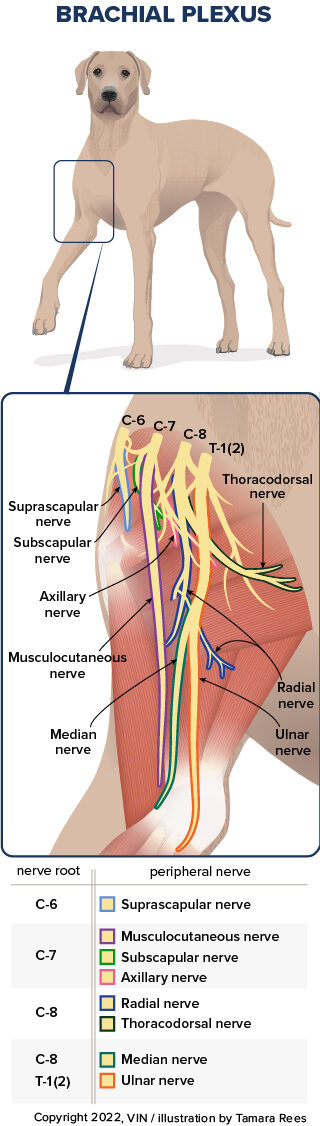
canine_Brachial Plexus_brachial_plexus_closeup_2

Brachial Plexus Avulsion in Dogs and Cats 

Brachial Plexus avulsion or brachial plexus injury can occur when an animal suffers an injury involving the front limbs or shoulders.

Caused by trauma such as an automobile accident, a bite or gunshot wound, a surgical complication, or a fall, brachial plexus avulsion or injury can happen to any breed or age of dog or cat.

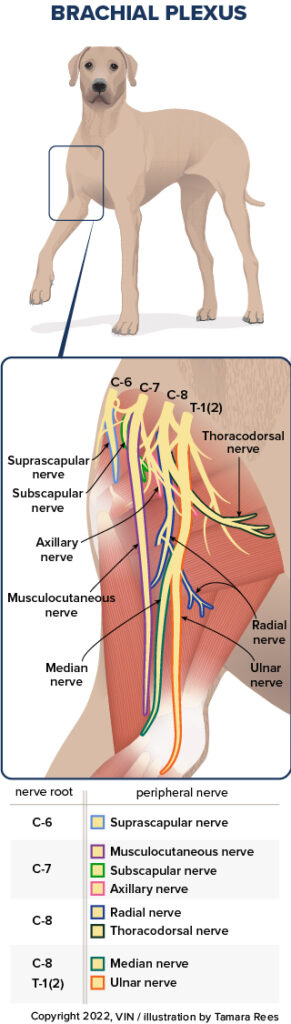
Like people, dogs and cats have a network of nerves that arise from the cervical spinal cord in the region of the neck, cross each other in the armpit of the dog, and extend to supply stimulation to the muscles of the neck, shoulders, and front limbs. These nerves convey sensation from this region to the brain via the spinal cord. The brachial plexus is the term for the bundle of nerves in the armpit.

In the case of injury, damaged nerves can affect the function of a front leg. Usually, the damage is on only one side. 

Brachial plexus injuries usually involve more than one nerve. Nerve roots which arise from the spinal cord and contribute fibers to one or more nerves are more apt to be damaged than the nerve itself because the roots are less elastic.

When the nerve roots in the neck region are torn away from the spinal cord, the injury is called a brachial plexus avulsion. When the nerves located in the armpit are stretched or torn, the injury is called a brachial plexus injury.

Depending on the severity of the injury and which nerves are involved, your dog may be unable to move the injured shoulder or leg, may not be able to flex the elbow or toes, or may not put weight on the injured leg. They may lose feeling in the leg or paw. The seriousness of this type of injury depends on what kind of nerve damage your pet has.

How is it Diagnosed?

After hearing your pet’s history, a neurological examination will help your veterinarian determine if your pet has suffered a brachial plexus avulsion or brachial plexus injury and, if so, which type and how severe it is.

canine_Brachial Plexus_brachial_plexus_closeup_2

X-rays, ultrasound, and advanced imaging tests such as computed tomography (CT) and MRI may be recommended.

Treatment

Your veterinarian will treat any life-threatening injuries resulting from the accident or trauma first. If one or more nerves have been stretched rather than torn away from the spinal cord, recovery may occur given time. Treatment involves mainly supportive care. This care should be started early. Your veterinarian may prescribe analgesic drugs for pain as needed. Range-of-motion exercises to do when your pet is ready may be discussed and demonstrated for you. 

Monitoring

Watch your pet closely after this type of injury. An abrasion to the front of the paw may occur if the pet drags the limb. You may find a wound that was not visible at first. Your pet may fuss at or lick a wound or the affected leg. E-collars or other protective measures can be used if your pet starts to self-mutilate.

Your veterinarian will continue to check your pet’s progress and evaluate pain perception and the use of the injured leg.

Prognosis

How well your pet does will depend on the type and location of the injury and how severe it was. A mild injury may show signs of improvement within 1-2 weeks after the trauma happened. In severe cases, the affected leg may not improve even after several months. If there has been avulsion of multiple nerve roots, loss of sensation to the limb, or no progress is seen after several months, and lack of normal limb function is resulting in poor quality of life for the pet, amputation may be recommended.

Prevention is best: do not let your pets have free access to traffic or other hazards, and don’t let your dog ride in open truck beds.

5770367

Alcohol Poisoning

Dogs and cats can get more than just drunk when they drink ethanol, isopropanol, or methanol — they can get a trip to the emergency room. Pets can die from ingesting alcohol. 

What are ethanol, isopropanol, and methanol?

Ethanol (ethyl alcohol) is most commonly formed from the fermentation of sugars. Ethanol is found in alcoholic beverages, some liquid medications and mouthwash bases, rotting/fermenting fruits, and rising (raw) yeast-containing bread dough. The “proof” of ethanol is twice the percentage of alcohol concentration (i.e. 80 proof = 40% ethanol). Although ethanol is also in some household inks, cleaners, and solvents, the levels are low enough to generally be of no clinical significance if these products are ingested by pets.

Isopropanol (isopropyl alcohol) is in rubbing alcohol (70%), some anti-freezes, some detergents, glass/window cleaners, perfumes/colognes, and alcohol-based topical sprays, including some pet flea-control and grooming products. Isopropyl alcohol is more than twice as potent as ethanol or methanol.

Methanol (methyl alcohol, wood alcohol) is most commonly found in automotive windshield washer fluids (20-80%) but is also in some gasoline additives, “canned heat” fuels (e.g., Sterno®), and some household solvents (e.g., paint removers).

Although the strength of these three alcohols varies, the clinical signs associated with their ingestion by dogs and cats are quite similar.

All poisoning problems boil down to the amount of alcohol ingested compared to weight, just like a dosage of medicine. Thus, when pets drink an alcoholic beverage that was left within reach or that was given to them intentionally by someone, it can cause a significant toxicity problem. In addition, significant absorption can occur through the skin or by inhalation.

Dogs are highly susceptible to the effects of alcohol. Signs of mild inebriation may occur with even minor exposure. Within 15 to 30 minutes after the pet has drunk the alcohol on an empty stomach (or within 1 to 2 hours on a full stomach), central nervous system (CNS) signs, such as staggering, excitement, or decreased reflexes, can begin. Behavioral changes can be seen, as can an increased need to urinate. As the problem gets worse, the pet may become depressed, have a slow respiratory rate, or go into cardiac arrest. Puppies and kittens are at particular risk because of their small size and immature organ systems. 

Alcohols are depressants, so many of the clinical signs associated with them are due to their effect on the CNS. Alcohols irritate the gastrointestinal tract. They also act as diuretics, and the alcohol and its metabolites are eliminated by the kidneys. Liver damage may occur after exposure, although it is much more common in animals that have repeated or chronic exposure. 

Clinical Signs

Clinical signs of intoxication can occur within 15-30 minutes of ingestion of alcohol. Signs include nausea, vomiting, thirst, urination, dehydration, lethargy, incoordination, disorientation, becoming cold (hypothermia), low blood pressure, and alcoholic bad breath. In severe cases, blindness, tremors, tetraplegia, respiratory depression, coma, or seizures may develop. Death is uncommon but may occur, especially if the pet has severe respiratory and cardiovascular depression, low blood pressure, and/or hypoglycemia. 

Diagnosis

Diagnosis is based on a history of exposure, combined with appropriate clinical signs and laboratory tests.  

Treatment/Management/Prevention

The treatments your veterinarian may use can include assisted ventilation, intravenous fluids (to improve elimination of the alcohol/metabolites, to provide cardiovascular support, and to correct electrolyte abnormalities), seizure control, and other supportive therapies. In addition, if the alcohol toxicosis is due to the ingestion of bread dough, your veterinarian may need to wash out your pet’s stomach with cold water to inhibit further alcohol production and to break up the dough mass for removal. In addition, your pet will be confined to prevent accidental self-injury.

Prognosis

Most dogs with alcohol intoxication can recover with adequate symptomatic and supportive care. Recovery may take 8-12 hours and tends to take longer if it was a severe intoxication or if isopropanol was involved.

Preventing Alcohol Toxicosis

All alcoholic beverages and alcohol-containing fluids should be kept out of reach of your dogs and cats. Consult your veterinarian before giving any ethanol-containing liquid medications.

Do not feed raw bread dough to your pets or leave bread dough out to rise in areas that can be reached by them. Always dispose of discarded bread dough carefully. 

The ASPCA National Animal Poison Control is available 24 hours a day at 888-426-4435. Expect an initial consultation fee of around $100.00 and additional follow-up is at no charge. You will be assigned a case number your veterinarian can use to communicate with a toxicology specialist before beginning treatment.