
 Ali Hamza
Cat Anxiety: Signs, Causes, and How to Help Your Cat Feel Calm | Grove Center Vet
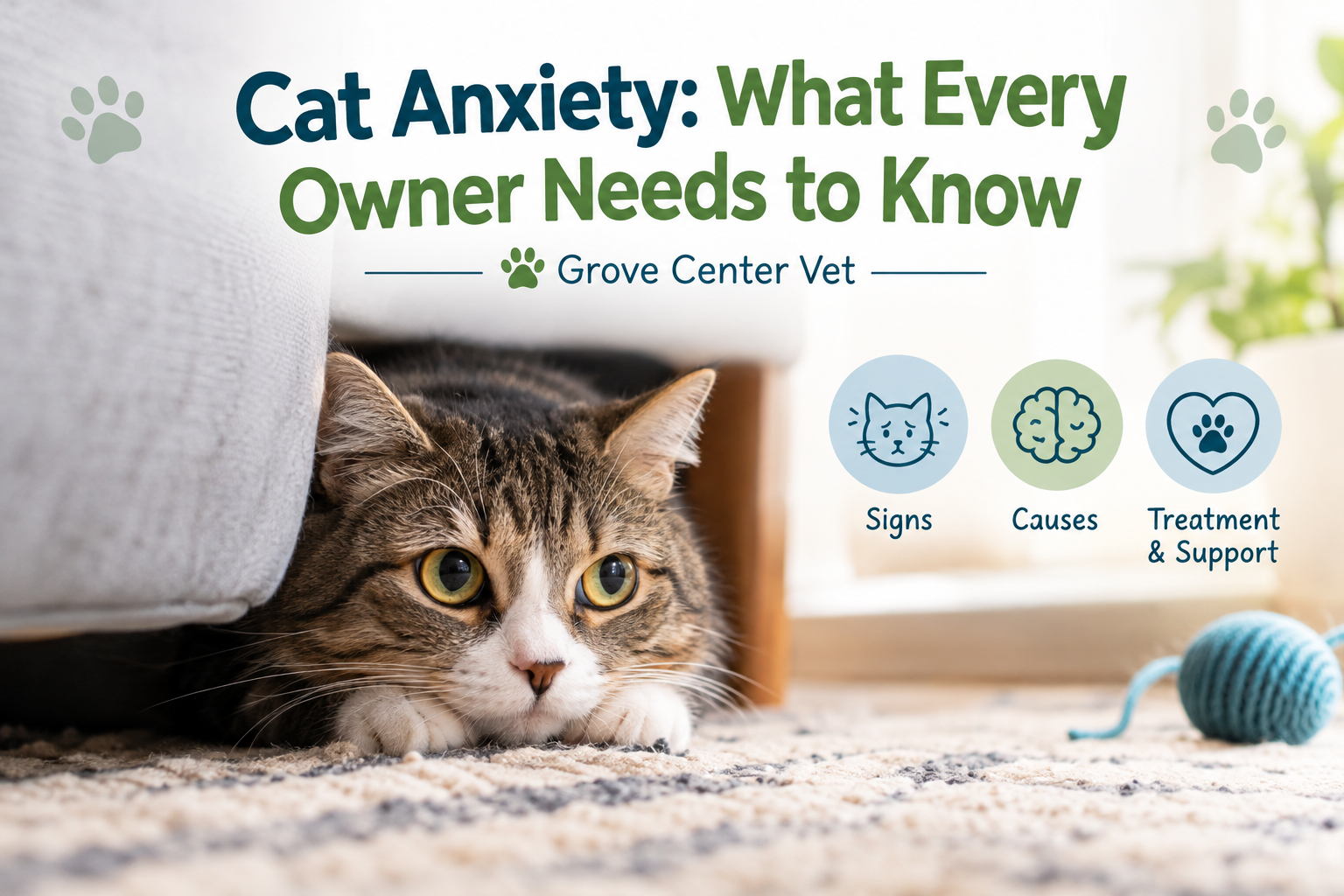
Cat Anxiety: What Every Owner Needs to Know
Cats are a self-sufficient and unconcerned breed, but many cats suffer in silence from fear and stress that you may not notice. Anxiety in cats is more prevalent than you might think, and cats tend to be very good at hiding their discomfort until it affects their behavior, health and/or quality of life.
At Grove Center Veterinary Hospital, we see cat anxiety regularly and can assist owners in determining and addressing their cat’s anxiety to help them feel safe, secure, and comfortable at home. It is the most frequently observed symptoms of cat anxiety, how it usually happens, and the methods that veterinarians suggest for relieving an anxious cat.
What is “Cat Anxiety”?
Cat anxiety is a feeling of fear, worry or unease that lasts longer than a normal, brief response to an unexpected event. A cat’s anxiety is when a stressful situation occurs repeatedly or persists longer than usual and it becomes a way of life, impacting their behavior, appetite and wellbeing.
Cat anxiety can be as a result of specific events, such as going on trips or going to veterinarian visits, or as a more generalized nervousness that seems to be a constant state. If left untreated, anxious cats may develop behavioral problems and physical ailments in the long run.
The common signs of cat anxiety are:
Common signs of cat anxiety include: Since cats are unable to communicate their emotions to us, it is often a matter of observing slight changes in their behavior to catch signs of cat anxiety. Here are the most typical signs to look out for.
- 1. Hiding More Than Usual
A cat that is anxious will more often go into hiding places, whether under furniture, in an enclosed closet or behind appliances, than a relaxed cat would. Cats like quiet places where they can hide, but hiding more than usual is an obvious indication that there is something causing cat anxiety.
- 2. Excessive Grooming
A common physical symptom of cat anxiety is over-grooming, which can lead to balding and/or skin irritation. Grooming may be self-soothing for a cat, and doing it too much may be an indicator of underlying stress.
- 3. Changes in Appetite
Cats with anxiety may eat less or more than normal. Sudden changes in behavior often go hand-in-hand with anxiety in cats, particularly when they involve an eating change, such as moving to a new home or a new pet entering the household.
- 4. Litter Box Issues
One of the most frequent behavioural indicators of cat anxiety is urinating and defecating outside the litter box. Stress can also manifest as such as illnesses as feline idiopathic cystitis, which is a condition associated with painful, frequent urination and is heavily associated with cat anxiety.
- 5. Increased Vocalization
If your cat is letting out too much meowing, yowling or crying, particularly at odd hours of the day, they may be anxious. This is especially seen in cats that are stressed by separation or as they age and are experiencing cognitive changes.
- 6. Aggression or Irritability
If your cat is swatting more frequently, becomes more defensive, or is being aggressive towards handling when he or she was once easygoing, it’s likely that the cat is feeling anxious, not changed. Chronic stress in cats causes fear-induced aggressiveness, which is a well recognized reaction.
- 7. Pacing or Restlessness
Anxious cats may seem to have trouble calming down, pacing around the house or relocating their position several times without resting. This restless behavior is one of the behavioral symptoms of cat anxiety.
- 8. Dilated Pupils, Flattened Ears
The physical signs of body language can give a lot of clues to cat anxiety at the time. A flattened ear, a lowered body posture, pupils that are dilated and a tucked tail are all characteristic feline signs of fear or overwhelm.
- 9. Excessive Shedding
Cats sometimes shed more due to stress, called a “fear shed.” Another, less well-known symptom of cat anxiety is that owners will notice that their cat is dropping clumps of fur at particularly stressful times, like when they’re in their car or going to the vet.
- 10. Avoiding social interaction
If a cat is not seeking attention from their owner, or does not engage in typical social interaction, they may be suffering from cat anxiety instead of just being aloof. This withdrawal may be confused as a personality characteristic instead of a sign of distress.
Here are some of the reasons why cats get anxious.
There are many causes of an anxious cat and figuring out the cause may be the determining factor in the effective treatment. Common causes include:
- Moving in and out of the house and changing the furniture.
- Adding a new pet or family member to the home.
- Bringing in a new pet or family member to the house.
- Any loud noises including thunderstorm, fireworks, construction, etc.
- Other schedule changes, such as:
- Rescued, stray or past trauma
- Both separation from a bonded owner or companion animal may be considered.
- Both separation from a bonded owner or companion animal can be considered.
- Osteoporosis, diverticulitis, heartburn, arthritis or other medical issues that lead to pain or discomfort.
- Cognitive aging in older cats
Since there are many different factors that can cause anxiety, a detailed discussion with your veterinarian about your cat’s past and environment is a great first step in helping him feel better.
How is Cat Anxiety Diagnosed?
There is no definitive test for cat anxiety and usually it is diagnosed by a combination of behavioral history and excluding medical causes. There are various options your veterinarian may recommend:
- A comprehensive physical exam to rule out any underlying pain, illness, or discomfort that may be causing anxious behaviors
- Blood tests to rule out conditions that may cause cat anxiety, such as hyperthyroidism
- A thorough behavioral history (when symptoms began and what situations appear to trigger them)
- Body language observations, litter box behavior to determine if cat anxiety is a behavioral or medical concern
There are many physical issues that can cause symptoms that resemble cat anxiety, so it’s important to rule out medical issues before beginning a behavioral treatment program.
How you treat and manage cat anxiety.
Fortunately, cat anxiety is highly responsive to treatment and is especially effective if it is treated early. Vets usually suggest that all of the following measures are used.
- Environmental Enrichment
Say goodbye to cat anxiety and hello to a happy cat with a sense of control over their environment by using vertical spaces, scratching posts, hiding spots and interactive toys. Enrichment can be one of the easiest things you can do to help calm cat anxiety as a first step.
- Consistent Routine
Cats like routines and consistency, so sticking to the same meal schedule, play schedule and daily routine helps to minimize cat anxiety. A common trigger is when schedules change suddenly, with stability at home going a long way.
- Pheromone Therapy
Synthetic feline facial pheromone products, which come in diffusers or sprays, are often used to help reduce some of the stress of cats, by simulating natural, calming pheromones cats emit to indicate safe areas.
- Behavioral Modification
Slowly exposing cats to certain triggers, coupled with positive reinforcement, can help them become accustomed to things that often trigger their cat anxiety, like car rides or new people in the house.
- Medication
If cat anxiety is chronic, vets may prescribe anti-anxiety medication if environmental and behavioral adjustments fail to alleviate the condition. These medications are usually combined with behavioral strategies, rather than replacing them.
If your cat is acting anxious, but it is warranted, a vet might have to intervene.
Occasional stress is a healthy part of life, but if you notice any changes in your cat’s eating, litterbox use, grooming or social interactions that last for extended periods of time, consult a veterinarian. Anxious cats can develop a long list of physical health problems if their condition is not addressed, such as urinary issues or skin damage caused by overgrooming. If you notice your cat’s anxiety is increasing or it is really affecting his life, do not wait to seek help.
Make Your Cat Feel at Home
Anxiety is a frequent problem in cats and may require constant management. Over time, knowing what triggers your cat and sticking to a calm and predictable routine can make a big difference and working closely with your veterinarian can do the rest. Once the right mix of strategies is discovered, many cats that suffer from anxiety will become safe and sound.
Conclusion
Anxiety is actually a genuine curt cat issue that may have a substantial impact on a cat’s quality of life and is frequently overlooked. The symptoms of cat stress can be fleeting or mistaken for normal cat behaviours such as hiding, over-grooming, litter box problems, and aggression. If you’ve observed any behaviors that indicate underlying stress, the Grove Center Veterinary Hospital team is here to help determine the cause and to develop a plan to help your cat feel calm, safe and comfortable once again.
Frequently Asked Questions
- What are the signs of cat anxiety?
Common signs of anxiety in cats include hiding, excessive grooming, changes in appetite, avoiding the litter box, excessive vocalization, or aggression. Other physical cues may include dilated pupils and flattened ears, which are signs of anxiety.
- What is causing anxiety in cats?
Environmental changes, new pets or family members, loud noises, trauma, being separated from a feline companion, and underlying medical issues are common triggers for cat anxiety.
- Does a cat’s anxiety have physical effects?
Yes. Excessive feline anxiety may be associated with feline idiopathic cystitis, over grooming, resulting in skin irritation, and appetite disorders which can lead to other health problems.
- What are the methods used to treat anxiety in cats by vets?
Environmental enrichment, establishing routines, pheromone therapy and behavioral training are all used to treat cat anxiety, and in more severe cases, anti-anxiety medication prescribed by a veterinarian may be used.
- Does a cat’s anxiety differ from its fear?
While occasional fear in response to a shocking event is just fine, cat anxiety is the pattern of stress that happens more often or is more intense, impacting a cat’s everyday actions and wellbeing.
- When should I take my cat to the vet for anxiety symptoms?
Any behavior changes that cause your cat to become less sociable, to have an aversion to routine grooming, change litter box habits, or not eat should be evaluated by your veterinarian.
